What Is An Ro System For Water

So, you’ve heard the term “RO system” thrown around, and you’re thinking, “Is that, like, a fancy robot butler for my water?” Close, but not quite. RO stands for Reverse Osmos...
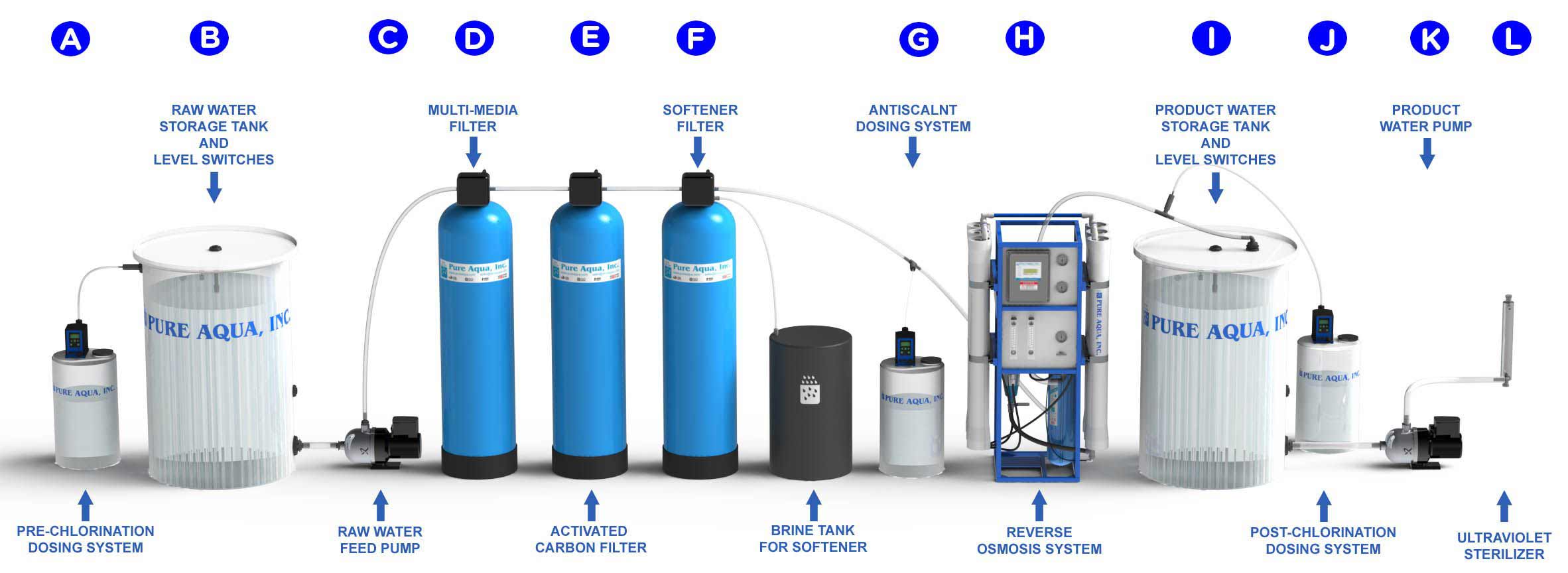
So, you’ve heard the term “RO system” thrown around, and you’re thinking, “Is that, like, a fancy robot butler for my water?” Close, but not quite. RO stands for Reverse Osmosis, and it’s basically a superhero filter that turns ho-hum tap water into something so pure, it’s almost ridiculous. Think of it as the water world’s version of a VIP lounge, where only the tiniest, most well-behaved molecules get in.
What’s The Big Deal With Reverse Osmosis?
Imagine you have a very picky bouncer at a club, and that bouncer is a semi-permeable membrane. That’s the heart of an RO system. Normal filtration catches big stuff like sand or rust—easy peasy, right? Reverse osmosis goes full super-spy mode and catches things you can’t even see, like lead, chlorine, fluoride, and other weird-sounding chemicals.
It does this by using pressure to force water through that super-tight membrane. Only pure water molecules (and maybe a few very tiny gas molecules that snuck in) get through. Everything else—nasty stuff and nice stuff alike—gets flushed away down a separate drain. It’s like saying, “Sorry, lead and arsenic, you’re not on the guest list tonight.”
Must Read
But… Doesn’t It Waste A Ton Of Water?
Okay, let’s address the elephant in the room—or the water in the drain. Older RO systems can be a bit thirsty, wasting about 3-4 gallons for every gallon they make. But modern ones? They’ve gotten much smarter and more efficient. Some now have a booster pump that wastes almost nothing, or even a permeate pump that recycles the reject water.
Think of it like this: you’re paying a little extra in water to get crystal-clear, contaminant-free bliss. And honestly, the taste difference is like comparing a soggy dish sponge to a fresh spring morning. You’ll never look back.
Why Your Tap Water Needs An Upgrade
Let’s be real: municipal water is safe—mostly. But it’s traveled through miles of pipes, picked up some funky flavors, and been treated with chlorine that smells like a swimming pool. An RO system strips all that nonsense away. You’ll taste the real water, and it’s shockingly clean.
And if you’re a coffee snob or a tea enthusiast—buckle up. Using RO water makes your morning brew taste incredible. No more metallic aftertaste or weird film on your espresso. It’s like your taste buds just got a promotion.
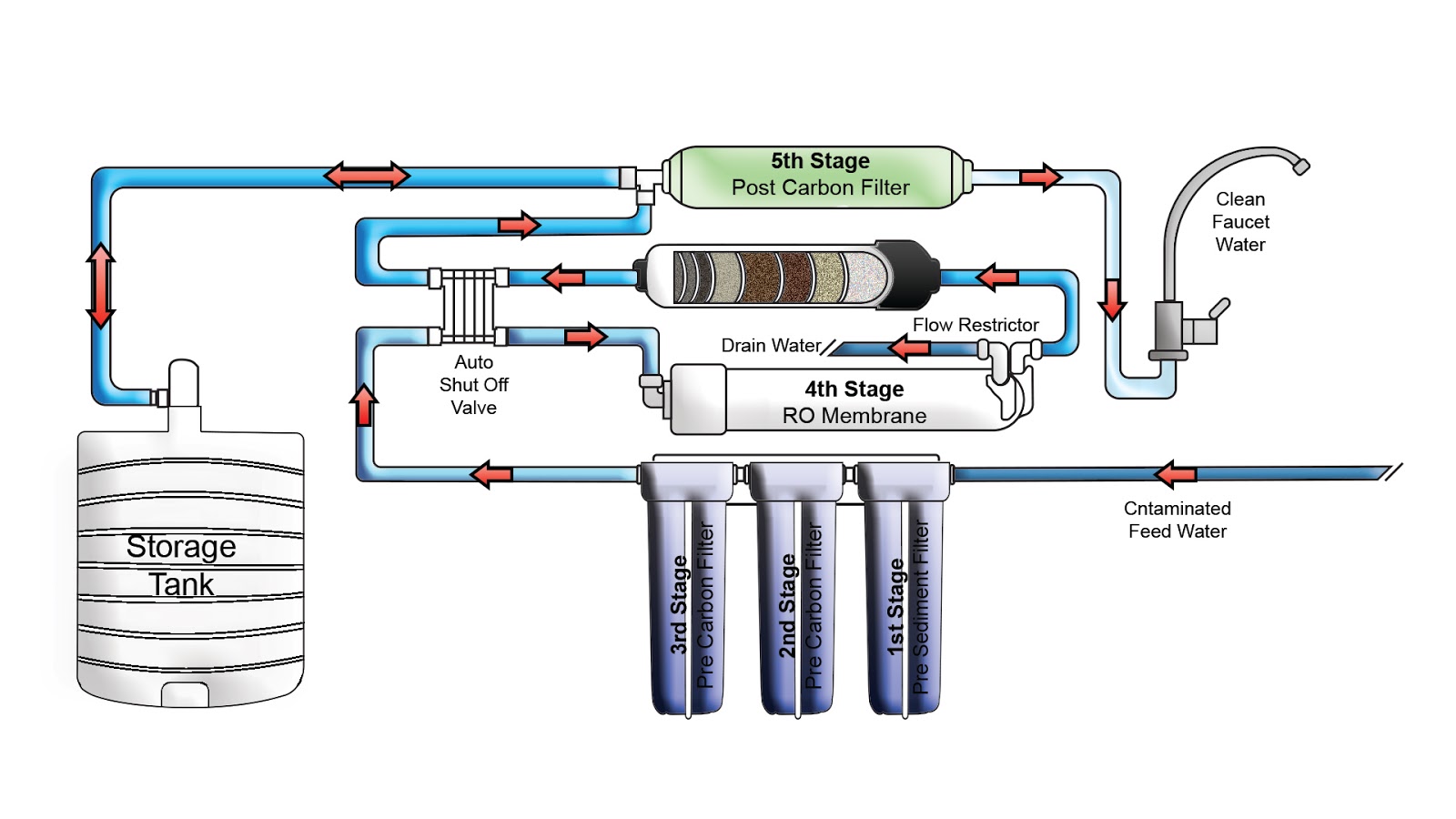 Reverse Osmosis Drinking Water System Installation at JENENGE blog
What About The Minerals? Are You Stealing From Me?
People worry that RO removes good minerals like calcium and magnesium. And yes, it does. But here’s the secret: you get most of your minerals from food, not water. Broccoli, cheese, and almonds are way better sources than any glass of tap water. Your body thanks you for the veggies, not the calcium in the H₂O.
That said, some RO systems have a remineralization filter that puts a tiny bit of good stuff back in. So you get pure water and a tiny mineral hug. It’s like having your cake and eating it, but the cake is water, and the eating is drinking. You get the idea.
Setting It Up: Not As Scary As It Sounds
Most RO systems sit under your kitchen sink, hidden away like a secret agent. They have a little storage tank (about the size of a small soccer ball) that fills up with pure water. When you twist the fancy dedicated faucet, out comes a stream of liquid gold. Installation isn’t rocket science, but if you’re not handy, a plumber can do it in under an hour. Trust me, it’s cheaper than buying bottled water for the next twenty years.
Maintenance is a breeze, too. You change the filters once every 6–12 months, and the membrane lasts 2–3 years. It’s like changing the oil in your car, but you don’t need a jack or a greasy rag. The instructions are usually super clear.
The Joke’s On The Bottled Water Companies
Think about it: you’re paying a fortune for bottled water that’s often just tap water in a fancy label. With an RO system, you get better water for pennies per gallon. And you save the planet from all those plastic bottles! You become an eco-warrior with every sip. Feel that warm glow of superiority? That’s pure, filtered pride.
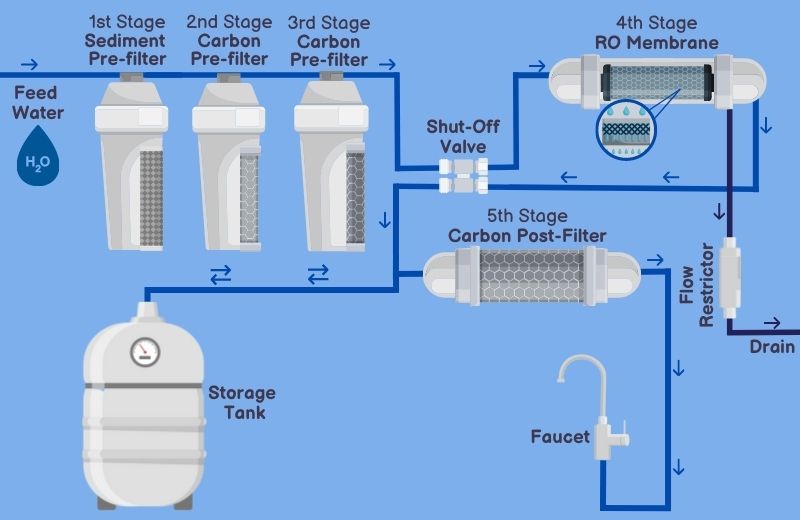 The Perfect Pairing: Reverse Osmosis With Water Softener
Plus, no more lugging heavy cases of water from the grocery store. Your back and your wallet will throw a little party. The only downside? You might start judging other people’s water. “Oh, you still have fluoride in your glass? How quaint.”
The Unbeatable Taste Test
I dare you to do a blind taste test: pour a glass of tap water and a glass of RO water. Your tongue will instantly give the gold medal to the RO. It’s so smooth, so crisp, it’s like sparkling water but without the fancy bubbles. You’ll find yourself drinking more water just because it’s fun. Hydration has never been this entertaining.
And here’s a weird bonus: soups and sauces made with RO water taste cleaner and brighter. Your pasta won’t have that weird starchy chlorine note. Your ice cubes will be crystal clear, not cloudy. You might even start using them in cocktails just to show off. “Oh, this ice? Yeah, it’s from my RO system. No big deal.”
Final Sip: Why You’ll Love It
An RO system isn’t just a gadget—it’s a quality-of-life upgrade. It’s the difference between a regular Tuesday and a Tuesday where your water tastes like a mountain stream. You deserve that. We all deserve water that doesn’t make us scrunch up our faces. So go ahead, get that system. Give your taste buds a vacation.
And remember: every time you pour a glass of that gloriously pure water, you’ve won. You outsmarted the pipes, the chemicals, and the mediocre water gods. You are the CEO of Clean Water. Now go hydrate with a smile. Cheers!
