What Is A Decaffeinated Coffee

So there I was, 11 PM, jittering like a leaf in a hurricane after my third "small" cup of something dark and dangerous. My friend, looking smug with her chamomile tea, said, "...

So there I was, 11 PM, jittering like a leaf in a hurricane after my third "small" cup of something dark and dangerous. My friend, looking smug with her chamomile tea, said, "Why don't you try decaf?" I snorted. Decaf? Why not just drink warm, sad water? But curiosity, that sneaky little beast, got the better of me.
Let’s rip the band-aid off right now: decaffeinated coffee is not caffeine-free coffee. Shocking, right? I know, I know—it sounds like a lie your ex would tell you. Legally, to be called "decaf," at least 97% of the original caffeine has to be removed. So, your cup still has a tiny ghost of caffeine lurking in it. About 2 to 15 milligrams per cup, compared to the 95 milligrams in your usual rocket fuel.
The Great Caffeine Heist: How They Steal the Buzz
You might picture a tiny barista with tweezers plucking caffeine molecules out of beans. Nope. It’s actually a lot weirder—and more scientific—than that. There are three main ways they do this dirty deed, and each one is a little bit bonkers.
Must Read
The European Water Dance (Swiss Water Process)
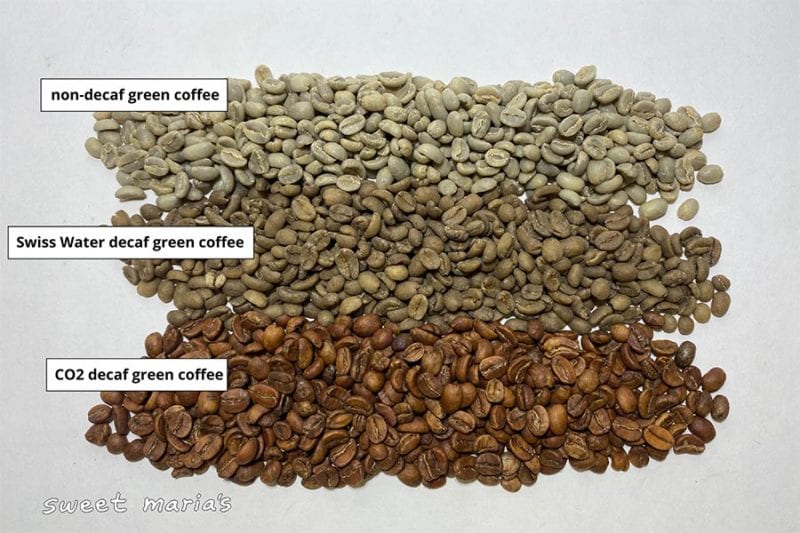
First up, the fancy method: Swiss Water Process. It sounds like a spa treatment, and in a way, it is. They soak the green beans in hot water, which pulls out the caffeine along with some flavor. Then, they pass that water through a special carbon filter that grabs the caffeine but lets the tasty bits stay.
They reuse that same "flavor-charged" water on a new batch of beans. It’s like a washing machine for coffee that learns your favorite scent. Fancy, right? No chemicals, just water and carbon. Your coffee beans get a bath, and you get a mellow cup.
The Chemical Bath (Direct Solvent Process)
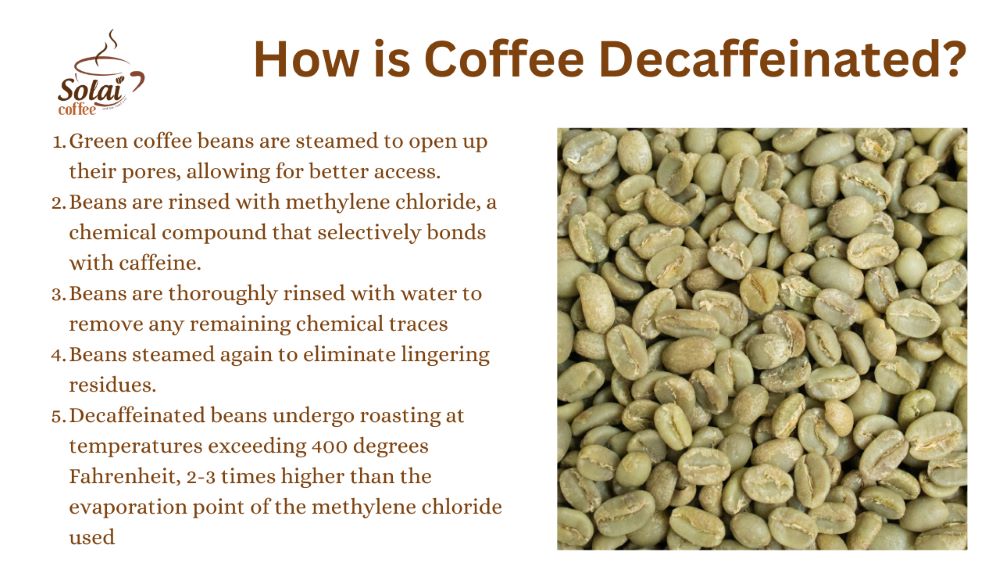
Okay, full disclosure: this is the one that makes people freak out. They steam the beans, then rinse them with a solvent—often ethyl acetate (naturally found in fruit) or methylene chloride. The solvent binds to the caffeine and then gets removed.
I can see you making a face. "Chemicals? In my coffee?" But relax—the beans are steamed again afterward to evaporate any leftover solvent. Most health agencies say it’s perfectly safe. Doesn’t mean I’m not side-eyeing my cup, though.
The CO2 Method (Supercritical Clickbait)
This is the James Bond of decaffeination. They use liquid carbon dioxide under high pressure to suck the caffeine out. It’s expensive, technical, and sounds like something from a sci-fi movie. The result? A clean, caffeine-free bean that keeps most of its original flavor.
 What is Decaf Coffee? | Solai Coffee
Only the fanciest roasters drop this cash. But if you see "CO2 processed" on a bag, give yourself a little nod of approval. You’re drinking cutting-edge, pressurized art.
But Does It Actually Taste Good? (Spoiler: It Can)
Let’s be brutally honest with each other. A bad decaf tastes like burnt cardboard soaked in regret. It can be flat, musty, and vaguely metallic. I’ve had decaf that made me question all my life choices. You know what I’m talking about.
But the good stuff? Oh, the good stuff is a revelation. Specialty roasters have realized that decaf deserves the same love as regular coffee. They source high-quality beans and use gentle decaffeination methods. When done right, a light-roast decaf can have notes of milk chocolate, toasted nuts, or even a hint of red berry.
Don't buy pre-ground, dusty decaf from the grocery store. Buy whole beans fresh from a roaster. Grind them yourself. You’ll be shocked at the difference. Your taste buds will send you a thank-you note.
Who Needs This Magic (Besides My Anxious Self)?
Honestly? A lot of people. Pregnant folks are often told to limit caffeine, but they still miss the ritual of a warm mug. People with acid reflux find decaf easier on the stomach. And then there’s us: the 8 PM coffee lovers who want to sit with a cup without hearing our own heartbeat.
My grandmother drinks decaf because regular coffee makes her "too chatty." I’ve seen her chatty. It’s not a bad thing, but she prefers to save her energy for arguing with the TV. Respect.
 What Is The Meaning Of Decaf Coffee at Elizabeth Ashworth blog
A Note on the Chemical Fear (Let’s Get Real)
Every time decaf comes up, someone in the room brings up methylene chloride like it’s poison. Look, the levels used and residues left are minuscule—smaller than what you’d find in a bag of potato chips. But if you’re paranoid, choose Swiss Water or CO2 processed beans. Your peace of mind is worth the extra dollar.
Personally, I think the real danger is the brown sludge at the bottom of a diner’s decaf pot. That’s the stuff of nightmares.
How to Order Decaf Without Being Judged
You walk into a hipster cafe. The barista has a handlebar mustache. You feel the judgment radiating. Say this: "I’d love your single-origin decaf, pour-over." Boom. They’ll respect you. They might even nod.
Don’t apologize for wanting less caffeine. It doesn’t make you a traitor to the coffee gods. It makes you a person who knows what they want. And what you want is the ritual, the warmth, the flavor—just without the shaky hands.
So, is decaf coffee real coffee? Yes. It’s coffee with the volume turned down. It’s coffee for the evening, for the sensitive, for the curious. Give it a real chance. You might find it’s not "warm, sad water" after all.
Now, if you’ll excuse me, I’m going to pour myself a cup of Swiss Water decaf. At 10 PM. And I’ll sleep like a baby. Don’t judge.
