Does Water In A Bottle Go Bad

You’re standing in your kitchen, staring at a half-empty bottle of water you found wedged behind your microwave. You don’t remember buying it. It might be three weeks old, or...
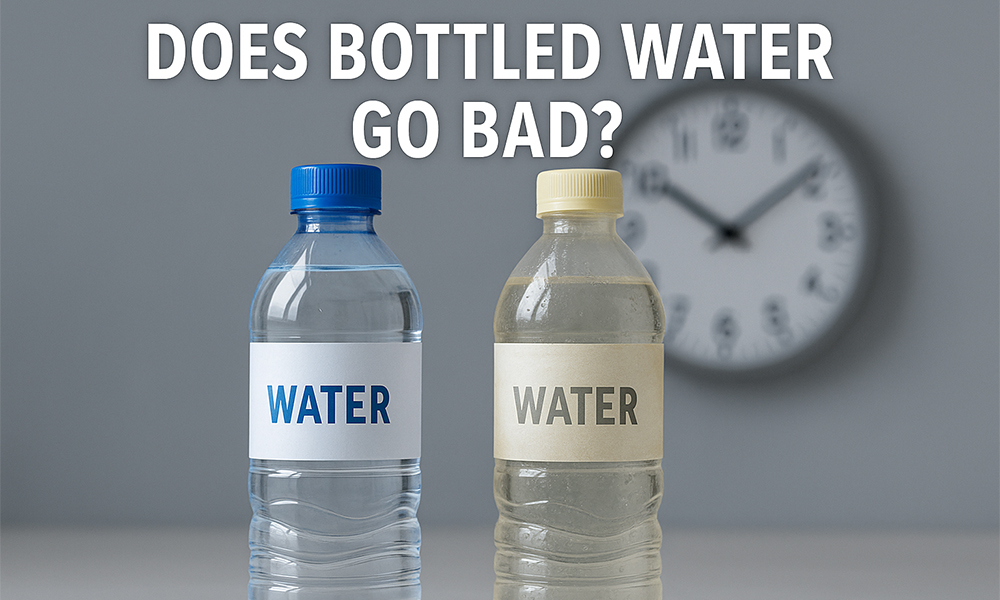
You’re standing in your kitchen, staring at a half-empty bottle of water you found wedged behind your microwave. You don’t remember buying it. It might be three weeks old, or three months. A small voice whispers, “Does this stuff go bad?” Welcome to the club of overthinkers who’ve Googled the expiration date on their own hydration.
The short, boring answer (and why we hate it)
Technically, plain water doesn’t “go bad” in the way milk turns into a science experiment or bread grows a tiny green beard. Water molecules are basically immortal. They were around during the dinosaurs, and they’ll be around long after you’ve traded your reusable bottle for a heavenly fountain.
But here’s the catch: the water in that bottle feels different. It tastes flat. Stale. Like someone bottled the forgotten corner of a basement. That’s not the water betraying you—it’s the plastic playing tricks on your tongue.
Must Read
What actually happens inside that bottle
The real villain here is time, air, and your unattended car. Once you crack that cap, you let in tiny dust particles, airborne bacteria, and the ghosts of a thousand snacks. It’s not magic; it’s just life being gross. The water starts absorbing carbon dioxide from the air, which lowers the pH and makes it taste faintly like a swimming pool that’s given up.
If the bottle has been sitting in your back seat during a heatwave, you’ve also got plastic migration. Heat encourages the bottle to share its chemical personality with the water. It’s not enough to hurt you, but it’s enough to make you mutter, “Ugh, this tastes like a yoga mat.”
The flavor timeline (a tragicomedy)
Day one: crisp, proud, mountain-clean. Day three: still fine, you goblin. Day ten: you start noticing a faint “plastic whisper.” Day thirty: Congrats, you’re now drinking from your gym bag’s soul. It won’t make you sick, but it will make you remember to buy new water.
It’s like that friend who stays at a party too long. They’re not dangerous, but the vibe gets weird. Stale water is the awkward silence of beverages. You can still drink it, but why would you want to?
 Can Bottled Water Go Bad? | Open Video
Ever found a bottle under your car seat in July?
Oh, we’ve all been there. You reach down, fish out a warm bottle from three summers ago, and see the water is slightly cloudy. You sniff it. It doesn’t smell like death. It smells like regret. The CDC says it’s probably fine, but your brain says, “No, we are not doing that today.”
Here’s the truth: warm, sun-baked water is a breeding ground for nothing worse than disappointment. Bacteria can grow if you’ve already drunk from it and backwashed your lunch into the stream. If it’s sealed and just sun-faded, it’s safe, albeit sad.
The “unopened vs. opened” rule (your common sense will love this)
An unopened bottle of water doesn’t expire like yogurt, but manufacturers stamp a date on there anyway. That date is more about the plastic than the water. After a couple of years, the bottle itself starts to break down, and nobody wants a water-flavored microplastic smoothie. It won’t kill you, but it’s not a premium dining experience.
Once you open it, the clock starts ticking. I’d give it about three or four days in the fridge before it tastes like “better than nothing.” After a week, even your dog looks at it sideways. Your best move? Treat an open bottle like a leftover burrito: if you wouldn’t trust it on taco night, don’t trust it for hydration.
 Do Water Go Bad at Lori Francois blog
A personal anecdote that will make you nod
Last year, I found a bottle of fancy spring water I’d saved for “a special occasion.” It was a year past its printed date. I opened it, took a sip, and immediately went, “Why does this taste like the inside of my grandmother’s attic?” I didn’t get sick. I just got retroactively annoyed. That’s the whole experience in a nutshell.
Another time, I drank from a bottle that had been sitting on my nightstand for two weeks, only to realize it was actually my wife’s from her bedside table, and she’d sipped from it. I felt a primal, caveman-level betrayal. Water doesn’t go bad. But relationships? That’s another story.
So, does water in a bottle go bad?
The final verdict: Not really, but your taste buds absolutely will. If the bottle is sealed and stored away from direct sunlight, you could drink it a decade later and live to tell the tale. You just won’t enjoy telling it. You’ll sound like a survivor of a minor inconvenience.
If it’s been open, drink it within a few days or pour it on your plants. Your ficus won’t complain about the “yoga mat” flavor. And if you’re ever in doubt, remember: your tap water is surrounded by pipes, your bottle is surrounded by plastic, but both are just water having a bad day. Drink it, dump it, or use it to clean a dish. Just stop worrying. It’s water. It’s fine. You’re fine. Now go find that bottle behind your microwave and make a decision like the brave, hydrated adult you are.
