How Does Water Treatment Work

Let’s be honest: water treatment doesn’t sound like a party. But think about it—that refreshing glass of water you just gulped down? It was once something far less appealing....
Let’s be honest: water treatment doesn’t sound like a party. But think about it—that refreshing glass of water you just gulped down? It was once something far less appealing. Turns out, the journey from “yuck” to “yum” is one of the most ingenious, life-saving, and yes, fun processes on the planet. Ready to geek out on some wet, wild science? Let’s dive in.
The Not-So-Pretty Beginning
First, imagine a river or a lake. It’s chock-full of leaves, dirt, tiny critters, and microscopic nasties you’d rather not meet. This is source water, and it’s not exactly spa-worthy. But don’t worry—water treatment plants are like superhero teams for your tap.
They start with a simple trick: screening. Think of it as a giant, fancy colander that catches sticks, trash, and fish unlucky enough to drift in. One pass, and the water is already visually less gross, though still far from drinkable.
Must Read
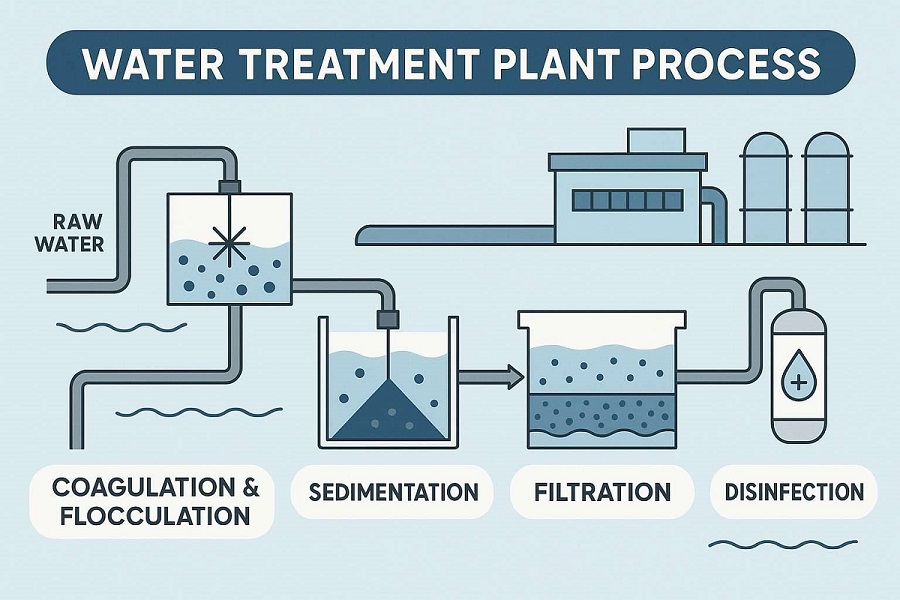
Coagulation & Flocculation: The Magic of Sticking Together
Next up is where nature meets chemistry. Tiny particles like clay and bacteria are too small to sink. So, workers add a chemical like alum, which acts like super-glue. This makes the particles clump into soft, fluffy balls called floc. It’s like making a snowball in a blender—satisfyingly weird, but totally deliberate.
These flocs are then gently stirred—a process called flocculation. They grow bigger and heavier, ready for the next stage. You could say the water is learning to settle down.
Sedimentation: Letting the Mud Take a Nap
Now the water flows into a huge, quiet basin. Here, the heavy flocs do what we all want to do on a Sunday: they sink. Gravity does all the heavy lifting, pulling the muck to the bottom. After a few hours, the water on top is clear enough to see through.
That sludge at the bottom? It gets scraped away and often turned into fertilizer. Talk about turning trash into treasure—you’re basically drinking the leftover of a very productive nap.
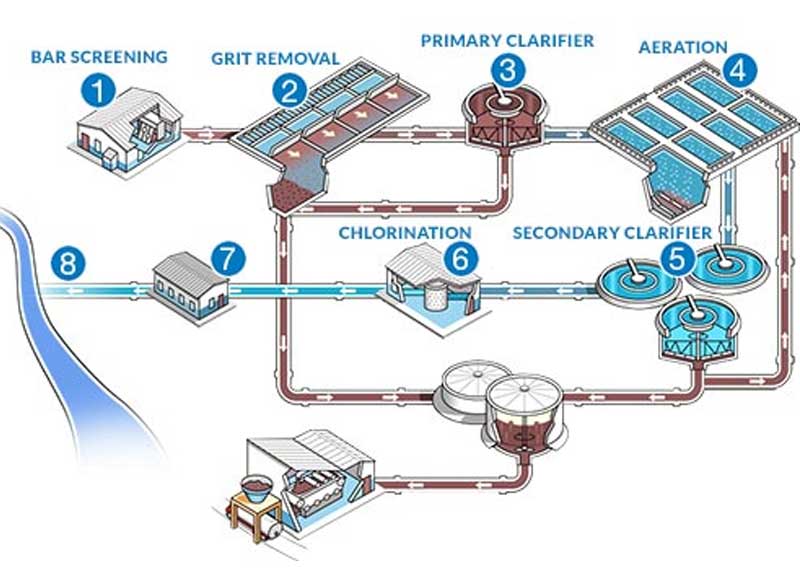 Wastewater Treatment Plant How Does It Work at Adrienne Maldonado blog
The Filtration: Pool Party for Sand and Charcoal
But we’re not done yet. That clear-ish water still has microscopic particles and odors. Enter filtration. The water trickles through layers of sand, gravel, and activated carbon—yes, the same stuff in your Brita filter, but on steroids. This carbon is like a sponge for bad tastes and smells.
Think of it as sending your water through a mile-long, super-tight colander. Everything that’s left is basically invisible, but we’re not trusting our taste buds just yet. A good filtration system can capture particles as small as one micron, which is one-thousandth of a millimeter.
Disinfection: The Final Showdown
Now for the climax: killing any leftover germs. Most plants use chlorine, ozone gas, or powerful UV light. UV light is especially cool—it zaps the DNA of bacteria and viruses, turning them into harmless, inactive husks. It’s like a laser tag arena for microbes, and they always lose.
Some places add a tiny bit of chlorine to keep the water safe all the way to your faucet. That’s why your tap water might smell a bit like a swimming pool—it’s the whisper of protection.
Bonus Round: The Coolest Treatment Tricks
In some towns, they take it further. Reverse osmosis pushes water through a membrane so tight that only water molecules get through—not salt, not fluoride, not even most minerals. It’s the same tech used to make space station water and fancy “sea-salt” removal.
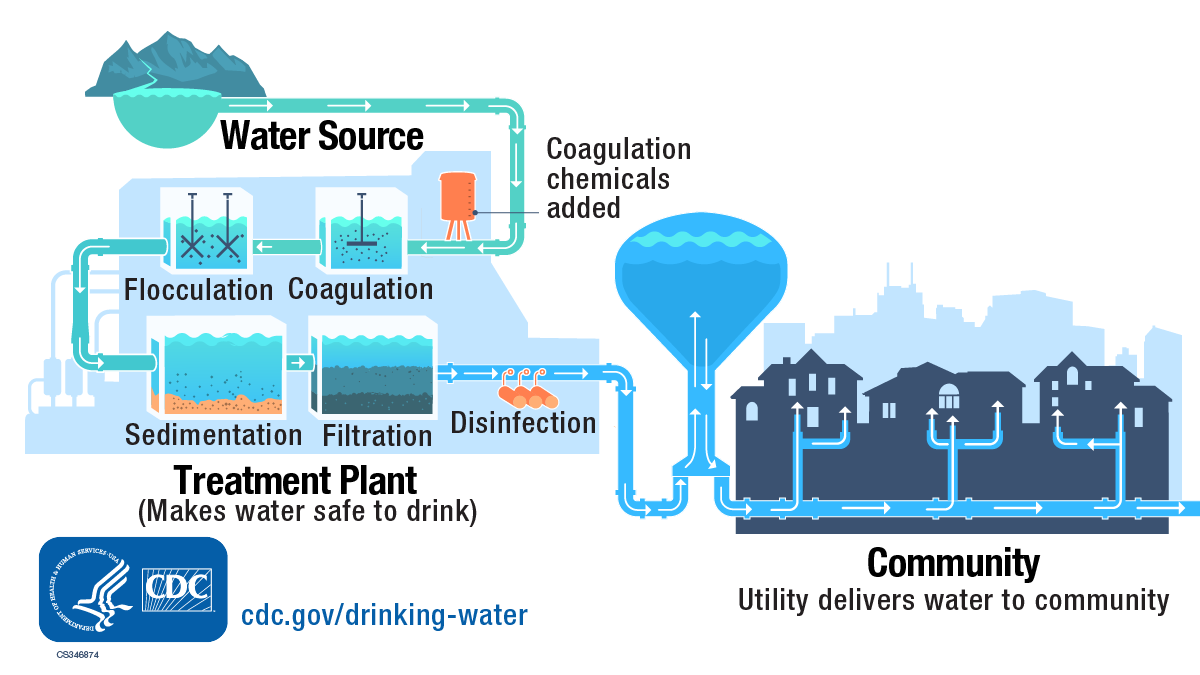 How Water Treatment Works | Drinking Water | CDC
And if you live near a coast, you might be getting water from a desalination plant. They turn ocean water (too salty to drink) into freshwater. It’s energy-hungry, but it’s literally making drinkable water from the sea. How epic is that?
Why This Matters for Your Happy Life
Here’s the kicker: all this happens every single day, usually without you noticing. You turn on the tap, and clean water flows. That’s not just convenience—it’s a triumph of human ingenuity and teamwork. It means you can take a long, hot shower, make your morning coffee, or fill up a water balloon without a second thought.
Think about it: you could literally fill a bathtub with water that was once full of fish poop and dead leaves, and it’s now crystal clear and safe to drink. That’s not science—that’s sorcery with a permit.
So, Go Ahead—Raise a Glass
Next time you sip from a public fountain or brew a pot of tea, give a little nod to the treatment plant operators, the chemists, and the engineers. They’ve got your back. And now you know the secret story behind every drop.
Feeling inspired? Here’s your challenge: Google how your local water treatment plant works. Maybe even take a tour. Because the next time you turn on the tap, you won’t just see water—you’ll see a miracle made by human hands, gravity, and a dash of chemistry. Go ahead, hydrate like a hero.
