How Much Should Water Bill Be

Let’s be honest: nobody enjoys staring at a water bill. It’s one of those monthly rituals that feels both inevitable and mildly irritating, like folding fitted sheets or prete...

Let’s be honest: nobody enjoys staring at a water bill. It’s one of those monthly rituals that feels both inevitable and mildly irritating, like folding fitted sheets or pretending to enjoy small talk at the office. But here’s the thing—your water bill doesn’t have to be a mystery wrapped in an enigma. Understanding what it should cost can actually feel pretty empowering, even a little bit fun.
The Baseline: What’s “Normal” Anyway?
First, let’s get real about averages. In the United States, the typical household water bill hovers between $35 and $70 per month, according to recent data from the EPA. That’s for a family of four using around 12,000 gallons of water monthly. But before you start comparing your bill to your neighbor’s, remember: geography is destiny. Water rates vary wildly from city to city, thanks to local infrastructure, supply sources, and even the weather.
For example, folks in sunny, drought-prone places like Phoenix or Los Angeles often pay more than those living in rain-soaked Seattle or humid Atlanta. A 2023 study by Circle of Blue found that the most expensive water in America can cost over $100 per month for basic use, while the cheapest can dip below $20. It’s a patchwork, not a monolith.
Must Read
The Hidden Influencers (Besides Your Shower Length)
You might think your bill is all about long showers and leaky faucets, but there’s a whole backstage drama. Seasonal changes matter—summer sprinklers and pool top-offs can double your usage. Household size is obvious, but what about your appliances? An older toilet can use six gallons per flush, while a modern low-flow model uses just 1.6. That’s a difference of nearly 75% per trip to the porcelain throne.
Cultural references help here: remember the iconic scene in “Mad Men” where Don Draper casually leaves the water running while shaving? In 1960, nobody cared. Today, that would be a minor scandal—and a minor leak in your budget. Consciousness has changed, and so should your approach.
Practical Tips to Tame the Flow
Let’s get to the good stuff: how to actually lower your bill without living like a Victorian-era hermit. Start with the toilet test. Drop a food coloring tablet (or a few drops of blue dye) into your toilet tank. If color seeps into the bowl without flushing, you’ve got a silent leak. That drip can waste 200 gallons a week. Fix it, and you’re basically giving yourself a raise.
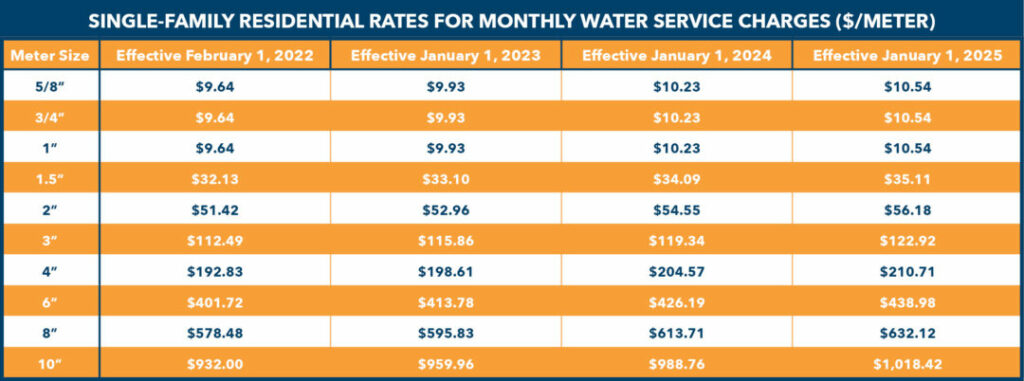 Water and Wastewater Rates - MNWD
Next, rethink your watering schedule. Water early in the morning or late in the evening to avoid evaporation. A simple $20 timer for your hose can save you a small fortune over a single summer. Also, check your showerhead: a standard model uses 2.5 gallons per minute, while a low-flow version uses 1.5. If you shower for 10 minutes, that’s a saving of 10 gallons per day. That’s like turning off the tap for a whole Olympic-sized pool every six months. (Okay, not quite, but it’s a lot.)
A Fun Fact to Impress Your Friends
Here’s a little trivia: the average American uses about 80-100 gallons of water per day. That’s enough to fill a bathtub nearly twice over. In contrast, the average person in the United Kingdom uses about 40 gallons, while in parts of sub-Saharan Africa, it can be less than 5. Perspective is everything, isn’t it? Your water bill isn’t just a number—it’s a cultural artifact of your lifestyle.
When to Worry (and When to Chill)
If your bill suddenly spikes by 30% or more, don’t panic—investigate. Check for a running toilet, an outdoor spigot left on, or a dishwasher that’s running a pre-rinse cycle where it doesn’t need to. Most utility companies offer hassle-free assistance to help you hunt down the culprit. On the flip side, if your bill is consistently lower than $30 for a household of two, you might be doing something amazing—or you might have a faulty meter. Either way, it’s worth a look.
And for renters: remember that landlords are typically responsible for fixing leaks. Don’t let a dripping faucet become your problem—send a polite email. Channel your inner Jane Austen, and be firm but charming. The water bill is your frontier, not theirs.
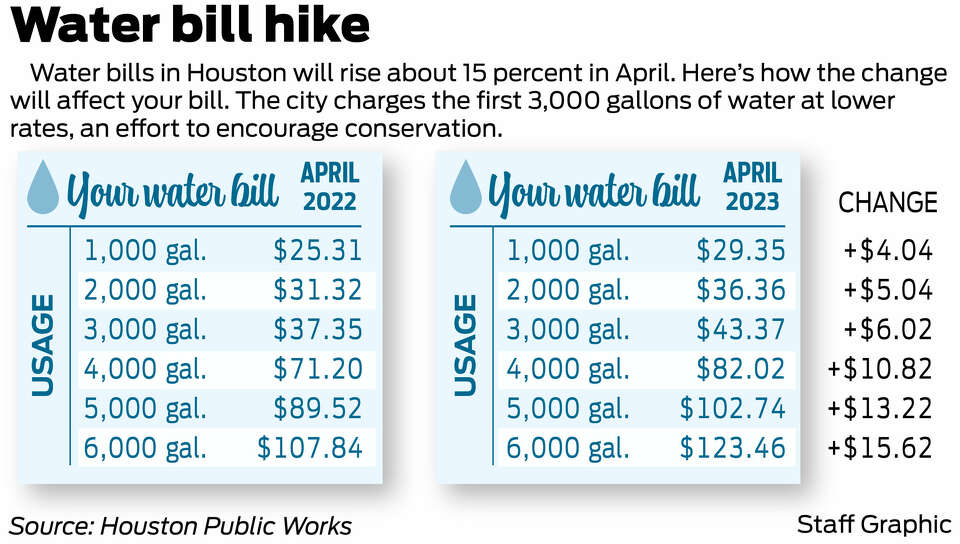 Houston water bills will increase $11 on average in April. Here's why.
The Bigger Picture: Water as a Luxury
We often forget that clean, running water is a modern miracle. Before 1900, most homes in the U.S. had none. Today, we get indignant about a $50 monthly charge. The average cup of coffee runs you about $3 now, and one Starbucks latte equals two days of water for a person in some parts of the world. It’s not to guilt-trip you, just to widen the lens.
When you think about it, your water bill is really a convenience fee for civilization. You’re paying for the pipes, the treatment plants, the meters, and the crew guys who fix main breaks at 3 AM. It’s a bargain for the price of a streaming subscription.
Final Reflection: Small Drips, Big Peace
At the end of the day, your water bill is a gentle teacher. It invites you to be more present with your habits. That five-minute shower, the wash of dishes after a good meal, the glass of water on your nightstand—these are small, daily graces. Lowering your bill isn’t about deprivation; it’s about alignment. It’s about noticing where your attention—and your water—goes.
So next time the bill arrives, don’t flinch. Pour yourself a glass, read the numbers, and smile. You’ve got the knowledge, the tools, and the perspective. And if all else fails, just remember: Don Draper paid less, but he also had to smoke in his office. We’re winning, friends.
