What Is The Ph For Pure Water

Let’s be honest—most of us don’t spend our Tuesday mornings wondering about the pH of water. We’re too busy scrambling for coffee, hunting for socks, or trying to remember if...

Let’s be honest—most of us don’t spend our Tuesday mornings wondering about the pH of water. We’re too busy scrambling for coffee, hunting for socks, or trying to remember if we fed the cat. But here’s the thing: pure water has a very specific pH, and it’s actually a little secret about how our world works. Stick with me for a minute—it’s easier than you think, and it might even make your next glass of water taste a bit more interesting.
What exactly is pH?
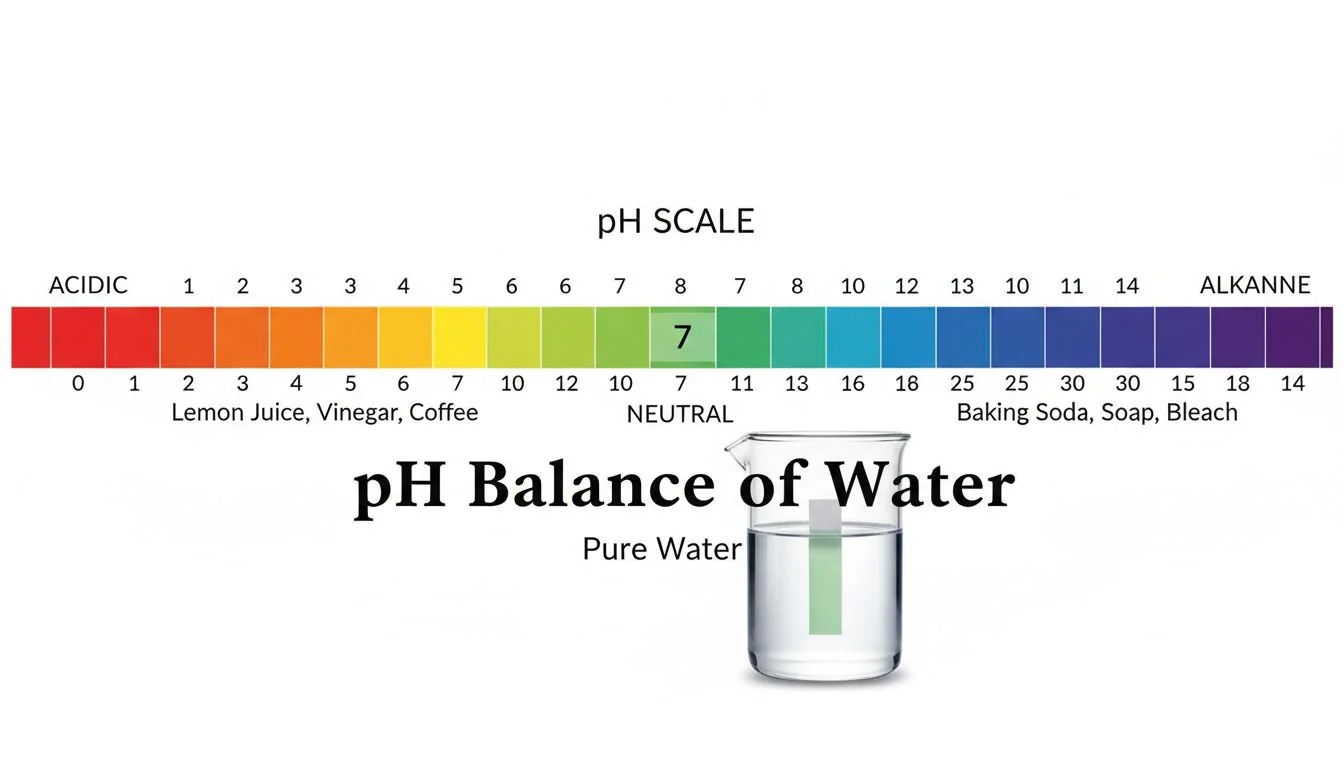
Think of pH as a popularity scale for hydrogen ions. It measures how acidic or basic (the opposite of acidic) something is, from 0 to 14. Seven is right in the middle—like the Switzerland of chemistry.
Your morning lemon juice? That’s around a pH of 2—very acidic. Your baking soda for cookies? That’s a pH of 9—pretty basic. Most things in your kitchen fall somewhere in between.
Must Read
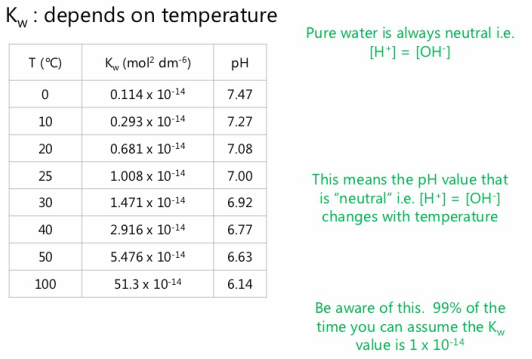
So, where does pure water land? Right at 7.0—exactly neutral. It’s the goldilocks of liquids: not too acidic, not too basic, just right.
But wait—is your tap water really “pure water”?
Nope, not even close. The water from your faucet has minerals like calcium and magnesium, plus chlorine to keep it clean. That’s why tap water usually has a pH between 6.5 and 8.5. It’s still safe to drink, but it’s not the same as that textbook-perfect pure water.
Pure water is actually a bit of a science fiction in real life. You need special equipment to remove everything—every single dissolved gas, mineral, and impurity. It’s like trying to find a friend who has zero opinions on pizza toppings. Rare, but theoretically perfect.
 Mineral-Rich vs Ultra-Pure Water: What's Best for You?
I remember in high school chemistry, our teacher poured a sample of pure water into a beaker. It looked like any other water. But when we measured it, the pH meter read 7.00 exactly. We all stared at it like it was a magic trick. Spoiler: it wasn’t magic—just chemistry doing its quiet, reliable thing.
Why should you care about pH in your everyday life?
Honestly, you probably don’t need to worry about pure water’s pH at the grocery store. But understanding it helps you with things like garden soil, pool maintenance, or even why your coffee tastes different at different places. Coffee is about pH 5, which is slightly acidic—that’s why it can wake up your taste buds.
Ever had a glass of water that tasted a little weird? Maybe it was too flat or a bit metallic. That could be a pH thing. The human tongue is surprisingly sensitive—we can detect minor differences in acidity. Pure water tastes, well, empty. Some people describe it as “clean” or “neutral,” but it’s not exactly exciting.
Here’s a fun story: Last summer, my neighbor bought a fancy water filter that claimed to make water “more alkaline” with a pH of 9. She was convinced it would cure her headaches. I didn’t have the heart to tell her that the human stomach is extremely acidic (pH 1.5 to 3.5) and immediately neutralizes any alkaline water. That fancy water? It just becomes normal water in your belly. But she felt healthier, which counts for something, right?
 pH and pOH - Senior Chemistry @ Saints
The real reason to remember pH 7
Pure water’s pH of 7 is a reference point for the whole world. Scientists, farmers, and even pool guys use it as a baseline to check everything else. If your fish tank water drops to pH 6, your goldfish might get stressed. If your hot tub jumps to pH 8, your skin might feel slimy. Pure water is the anchor.
It’s also a reminder that balance matters. Too acidic and things corrode; too basic and they get slippery. Your own body works hard to keep your blood pH around 7.4. That’s why it’s called homeostasis—your internal pH is more stubborn than a cat on a sunny windowsill.
So the next time you pour a glass of water, give a little nod to the number 7. That tiny, invisible scale is what makes lakes livable for fish, your stomach able to digest a spicy burrito, and your morning tea taste just right.
And if you ever catch yourself staring at a bottle of distilled water, wondering what all the fuss is about—just smile. You now know the secret: it’s the real neutral, the quiet friend in the corner, the one who never takes sides. Pure water’s pH is exactly 7, and that’s its superpower. Now, go drink something—pH 7 or not, hydration is the real winner here.
