How To Remove Thick Limescale

Let’s be honest: limescale is the uninvited guest that just won’t leave. You know the one—it shows up on your shiny kettle, clings to your faucet, and builds a white, crusty f...

Let’s be honest: limescale is the uninvited guest that just won’t leave. You know the one—it shows up on your shiny kettle, clings to your faucet, and builds a white, crusty fortress in your showerhead. It’s not just ugly; it’s a silent energy thief, making your appliances work harder and last shorter. But don’t worry, you don’t need a chemistry degree or expensive products to send it packing.
I remember the first time I saw a thick, chalky ring inside my coffee maker. I thought I’d have to buy a whole new machine. Then my neighbor, a lovely woman named Pat, handed me a bottle of white vinegar and said, “Just let it sit, dear.” That was my wake-up call: you already have the tools to win this battle, and most of them are in your pantry. The secret is simple: acids are limescale’s natural enemy.
Think of limescale like a stubborn scab of calcium carbonate. It forms when hard water evaporates, leaving its mineral deposits behind. Over time, those deposits harden into a rock-like layer that can clog your shower, ruin your kettle’s efficiency, and even make your taps look crusty and sad. But here’s the good news: with a little patience and some common household items, you can bring the sparkle back.
Must Read
The Kettle: The First Victim
That kettle of yours probably gets more action than any other appliance in your kitchen. And if you’ve ever poured a cup of tea with tiny white flakes floating in it, you know the pain. Here’s the fix: fill the kettle halfway with equal parts water and white vinegar (or use lemon juice if you like the smell). Boil it, then let it soak for an hour—or overnight for really thick crusts.
After the soak, rinse it thoroughly, boil plain water once, and pour that out. You’ll see the difference immediately: the inside will look like a brand-new kettle. Don’t worry about the vinegar smell—it completely disappears after a rinse. I still remember the first time I did this; I felt like a kitchen wizard.
Faucets and Showerheads: The Ugly Spots
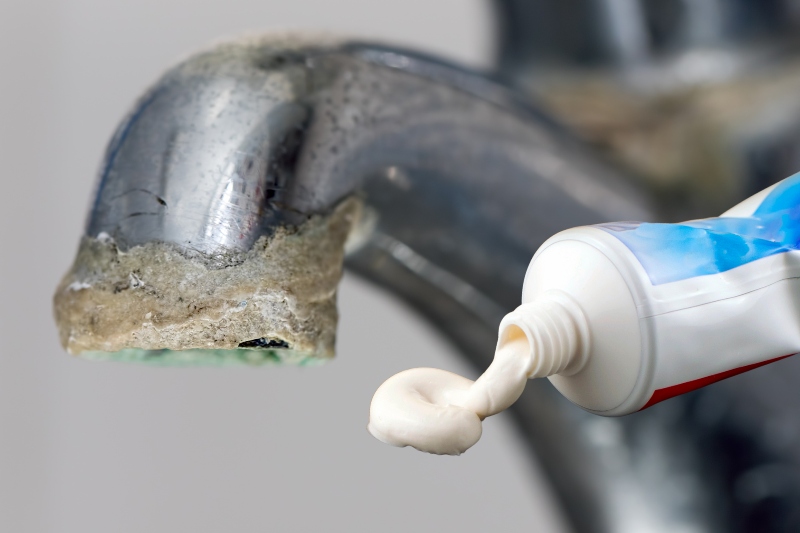
Now, let’s talk about those drippy, white-encrusted faucets. They make a beautiful bathroom look like a rental apartment from the 1970s. For this, grab an old plastic bag, fill it with undiluted white vinegar, and tie it around the faucet head with a rubber band. Let it soak for a few hours or overnight while you sleep.
 How to Get Rid of Really Thick Limescale
When you remove the bag, scrub gently with an old toothbrush. The limescale will flake off like magic—like peeling dried glue from your fingers after a craft project. For showerheads, you can do the same trick, or simply remove the head and soak it in a bowl of vinegar. Your morning shower will feel ten times more powerful afterwards.
One tip: if your limescale is really old and crusty, you might need to repeat the process twice. Patience is your friend here—it took months for that scale to build, so give it a few hours to dissolve.
The Toilet Bowl: The Final Frontier
Oh, the toilet bowl. It’s the place limescale loves to hide, forming a dark, rusty ring that no brush seems to touch. This is where you bring out the big guns: citric acid powder (found in the baking aisle) or a paste of baking soda and vinegar. Pour the citric acid into the bowl, let it sit for 10 minutes, then scrub with a pumice stone or a stiff brush.
 How To Get Rid Of Limescale On Fridge Water Dispenser at Loretta Cyr blog
I once spent an entire afternoon scraping a toilet bowl with a plastic scraper, and I nearly gave up. Then I tried citric acid—the ring dissolved in fifteen minutes. It felt like winning a small but meaningful war. The key is to never use metal tools on porcelain, or you’ll scratch it. Stick to pumice stones (wet them first!) or plastic scrub pads.
Why You Should Care (Besides the Obvious)
Thick limescale isn’t just an eyesore—it’s an energy sucker. A kettle with a thick layer of scale takes longer to boil, costing you money and electricity. The same goes for your washing machine, dishwasher, and water heater. By removing it, you’re not just cleaning; you’re giving your appliances a second life.
Plus, there’s a weird satisfaction in seeing that white gunk disappear. It’s like scraping ice off a car windshield—you know you’ve made a real, visible difference. And the best part? Your coffee will taste better, your glasses will dry spot-free, and your shower will feel like a spa again.
So next time you see that crusty ring forming on your kettle or faucet, don’t sigh. Grab that vinegar, put on some music, and let it soak. Your future self—the one pouring a clean, flake-free cup of tea—will thank you.
