Why Is My Water Yellow Brown

You walk into the kitchen, grab a glass, and turn on the tap. Instead of crystal-clear water, you’re staring at something that looks like iced tea gone wrong. Before you panic...
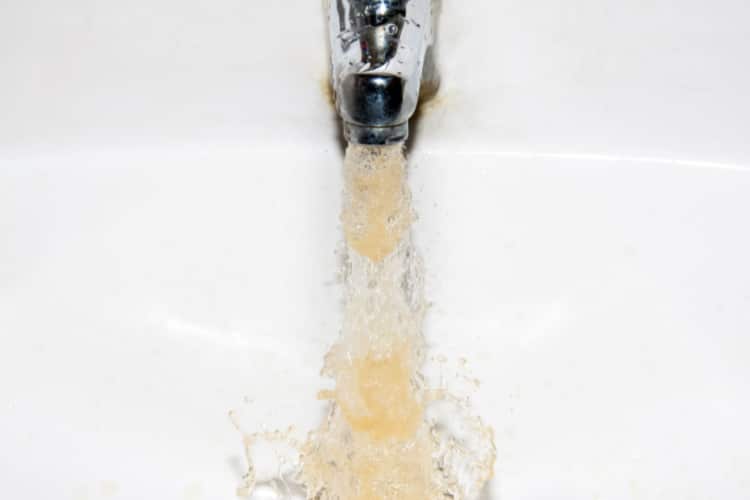
You walk into the kitchen, grab a glass, and turn on the tap. Instead of crystal-clear water, you’re staring at something that looks like iced tea gone wrong. Before you panic, take a breath. That yellow-brown water is actually pretty common, and it usually isn’t a sign of aliens or a plumbing apocalypse.
Let’s be honest: nobody wants to brush their teeth with what looks like rusty puddle water. But here’s the good news—most of the time, it’s harmless. It’s just your water pipes having a little meltdown, literally.
Think of your home’s plumbing like an old pair of jeans. Over time, the fabric wears thin and the color fades, but it still fits fine. Your pipes are the same. When iron and manganese in the water build up inside them, they rust. Rust flakes break loose, and voilà—yellow-brown water.
Must Read
The Usual Suspect: Old Pipes
If your house was built before the 1990s, you probably have galvanized steel or iron pipes. These guys are tough, but they age badly. When sediment or rust shakes loose, your water gets that amber glow.
It’s a bit like shaking an old, dusty rug. The moment you give it a good jostle—like when the city flushes the fire hydrants nearby—all that gunk comes out. So, if your water suddenly turns brown after a neighbor’s yard work or street repair, don’t worry. It’s just the system clearing its throat.
Sometimes it’s only the hot water that looks like molasses. That’s a clue: your water heater might be the culprit. Over years, sediment collects at the bottom of the tank. When it gets stirred up, you get what I call “sunset soup.”
The “Pumpkins at Dawn” Scenario
Imagine you’re making your morning coffee, and the water runs brown. You remember you forgot to run the garden hose last night after a long drive. That’s a classic case of stagnant water sitting in the pipes for too long.
Water that sits still for hours, like when you get back from vacation, can pick up minerals from the pipes. It’s not spoiled, just a bit moody. A few minutes of flushing the tap—kind of like shaking hands with the faucet—usually clears it right up.
Parents will love this: it’s exactly like when you forget to stir the morning oatmeal. The top looks fine, but the bottom is all gummy. Just give it a good stir, and it’s ready to go.
 Erin Brockovich explains why water across the US is turning brown
Is It Dangerous? Let’s Be Real
Most yellow-brown water is safe to drink, but it doesn’t taste great. The metallic flavor is like licking a fence post. But if the water looks more like chocolate milk (cloudy brown) or has tiny specks floating in it, stop drinking.
Cloudy brown water can mean a broken main line or bacteria. That’s not a “wait and see” situation—that’s a call to your water company. They’ll appreciate you letting them know, because they hate rusty complaints as much as you hate rusty glasses.
One funny truth: You probably already drank weird water and survived. Remember that time at a relative’s house where the water smelled like eggs? Same deal. Our bodies are pretty forgiving, but your taste buds are not.
How to Make It Stop (Without Drama)
First, let the water run for 10-15 minutes from the lowest faucet in the house—usually the outdoor spigot or a basement sink. This flushes out the loose junk. Then check the color again. If it goes clear, you’re golden.
If it doesn’t, or if it happens every week, consider a whole-house water filter. These aren’t as scary as they sound. Think of it like a Brita pitcher, but stronger and for your whole house. It catches the rust and minerals before they reach your toothbrush.
For a quick fix, use a faucet-mounted filter for drinking and cooking. That’s the cheap, lazy, and totally valid option. You don’t need to be a plumber to enjoy clear water.
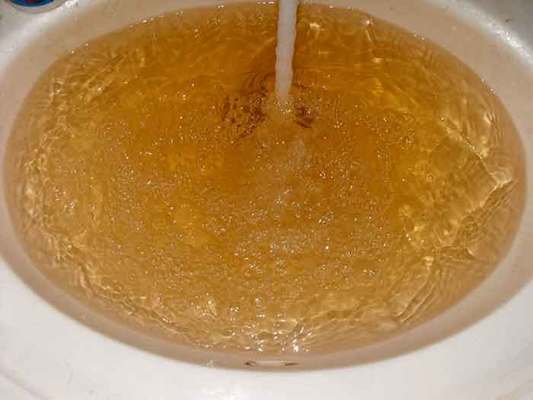 Why is My Water Brown? Is it Safe or Harmful? - Amarco Plumbing
When the Water Stays Yellow All Week
If your water looks like it’s been steeping in a tea bag for days—and flushing doesn’t help—the problem might be the city supply. Call your local water utility. They often have a recorded message about “main breaks” or “hydrant flushing” that explains everything.
You might even become the neighborhood hero. When you call and say, “Hey, my water is yellow-brown,” they’ll say, “Yeah, we’re fixing a main on Elm Street.” Now you can tell your neighbors and save them from panicking.
Honestly, half the time it’s a simple fix. Like that one time I thought my car was dying, but it just needed gas. Same vibe.
The Takeaway (It’s Not Rocket Science)
Yellow-brown water is usually just rust, sediment, or a little plumbing tantrum. It’s annoying, but it’s rarely a health emergency. You can flush it, filter it, or laugh about it.
The next time you see that amber flow, remember: your pipes are just telling you they’ve lived a full life. Give them a little attention—maybe a filter or a quick flush—and you’ll be back to clear water and a happy morning coffee.
And if all else fails? Just pretend you’re at a fancy spa that serves “mineral water.” It works most of the time.
