Does Houston Have Hard Water

You’re standing in your Houston bathroom, watching your morning coffee brew—or, more accurately, watching your showerhead spit out a stream that looks like it’s been on a bend...
You’re standing in your Houston bathroom, watching your morning coffee brew—or, more accurately, watching your showerhead spit out a stream that looks like it’s been on a bender. You reach for that spotless glass, fill it up, and notice a thin, chalky film on the surface. Welcome to the Bayou City, where the water is as iconic as the humidity, and just as stubborn.
The short answer is yes, Houston absolutely has hard water. In fact, the city routinely ranks among the hardest in the nation, with a mineral content that makes your skin feel like you’ve been to the beach and your dishes look like they’ve been through a dust storm. But don’t panic—this isn’t a crisis; it’s just a lifestyle quirk, like learning to love the Astros or navigating the 610 loop during rush hour.
What Makes It So Hard?
Hard water is simply water that’s high in dissolved minerals, primarily calcium and magnesium. Houston’s water sources—the Trinity River, Lake Houston, and several underground aquifers—are natural mineral sponges, picking up limestone deposits as they travel. It’s not dirty or unsafe; it’s just enthusiastic about leaving a mark.
Must Read
Consider this: a typical glass of Houston tap water contains around 15 to 18 grains per gallon of hardness. The U.S. average hovers around 10. That’s like comparing a gentle rain to a Sudsy Armstrong concert—both get the job done, but one is definitely more intense.
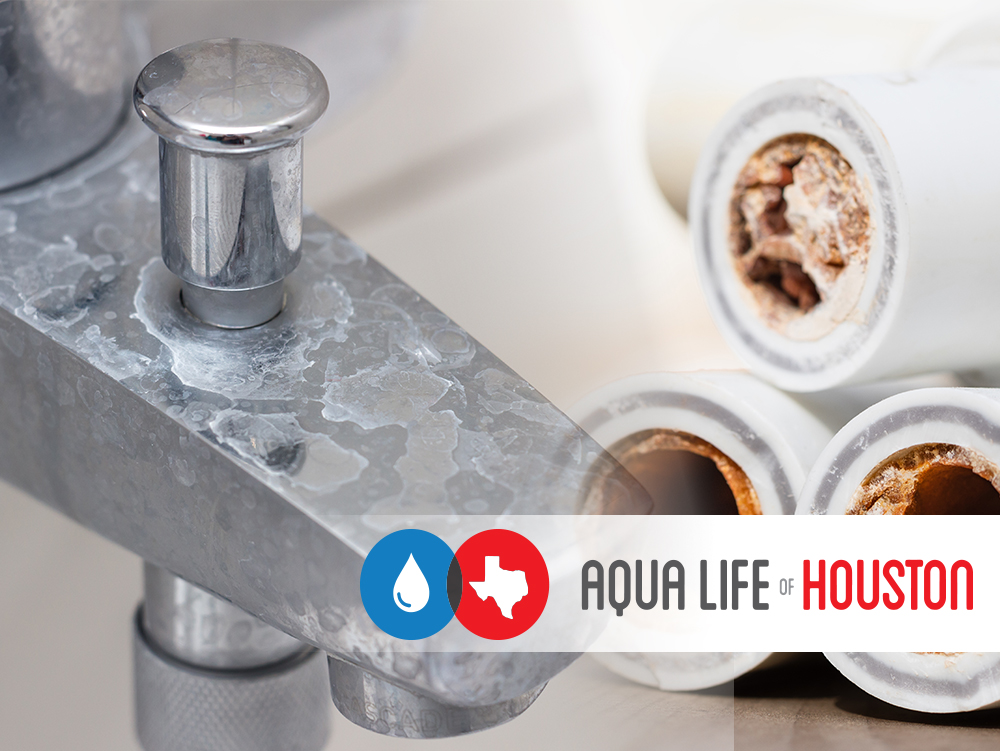
And here’s a fun fact: that white crust on your faucet? It’s literally the same mineral compound that builds up in your kettle and your coffee maker. It’s not a sign of failure; it’s a sign that your water is just very committed to its chemistry.
The Telltale Signs in Your Home
You know you’ve got hard water when your shampoo refuses to lather like it did in that Instagram ad. That’s because minerals bind to soap, creating a stubborn film that leaves your hair feeling like straw and your skin craving a tropical vacation. If your laundry comes out feeling stiff or your whites look dingy, blame the calcium, not your detergent.
Another classic Houston giveaway: the dishwasher dilemma. You run a load, open the door, and find your glasses are covered in a white, powdery haze—like they’ve been dusted with powdered sugar. It’s not a baking accident; it’s just your water’s signature on your stemware.
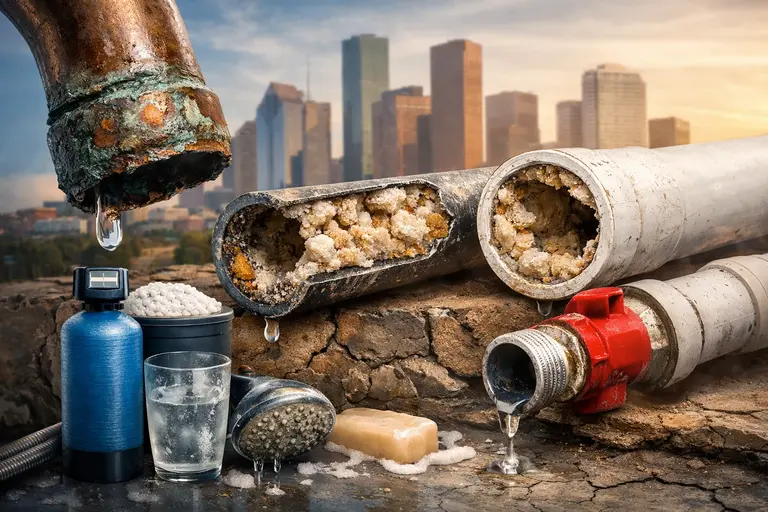
And then there’s the plumbing. Hard water leaves scale inside your pipes, slowly narrowing them over time. That’s why older homes in the Heights or Montrose might have reduced water pressure—not ghosts, just geology.
Cultural Myths and Home Remedies
Houstonians have a proud history of battling hard water with whatever’s on hand. Some swear by adding a quarter cup of white vinegar to their laundry rinse cycle—an old-school trick that works because the acid dissolves the mineral deposits. Others, in a moment of Texas pragmatism, just shrug and say, “it’s fine, that’s why we have lemonade.”
 Water Quality in Houston - AquaLife of Houston
You’ll also hear people claim that Houston’s hard water is what gives our barbecue its distinct taste. While that’s not scientifically proven—and please don’t try watering your brisket with tap water—it does make a great story at a backyard cookout. Texans love a good origin myth, and our water is no exception.
For the truly committed, there’s the water softener route. A whole-house softener system exchanges those calcium and magnesium ions for sodium, giving you silky water and gloriously sudsy showers. It’s a bit like getting a personal assistant for your plumbing—expensive, but oh-so-smooth.
Practical Tips for Everyday Life
First, install a simple showerhead filter. These are cheap, easy to swap out, and they dramatically reduce the mineral load hitting your hair and skin. You’ll notice the difference in about a week—your conditioner will actually start working again.
Second, use a dishwasher rinse aid religiously. It’s not just a fancy extra; it breaks the surface tension of the water, letting those mineral droplets slide off instead of baking onto your glassware. Brands like Jet-Dry or even plain white vinegar in the rinse compartment can save your wine glasses from looking like they belong at a dusty garage sale.
Third, consider a water pitcher with a mineral filter. Brita and Pur are great, but look for one specifically designed to tackle calcium and magnesium—not just taste. Pour yourself a glass of filtered water, and suddenly your morning coffee actually tastes like coffee, not like a rock quarry.
And here’s a quirky life hack: if you’re a houseplant parent, hard water can actually be a blessing. Many tropical plants—like pothos, snake plants, and monsteras—thrive on the extra calcium. Just let the water sit out for 24 hours to let the chlorine dissipate, and your plants will think they’re in a rainforest spa.
 Why Houston’s Hard Water Damages Plumbing & Fixtures
The Silver Lining
Hard water isn’t all bad. Some studies suggest that the calcium and magnesium in hard water can contribute to your daily mineral intake, especially if you drink it unfiltered. It’s basically a free, invisible multivitamin—just one that leaves a mess.
Also, Houston’s water is rigorously treated and tested by the city. It consistently meets federal safety standards, so you’re not worrying about lead or bacteria. The hard minerals are a minor annoyance, not a health hazard. You can relax.
That said, if you’re considering a water softener, be aware that it adds sodium—so if you’re on a low-salt diet, you might want a reverse osmosis system for your drinking water. But for most of us, a little extra sodium in the water is barely a blip compared to the salt on our tortilla chips.
Connecting to Daily Life
The next time you dry off from a shower and feel that familiar tightness on your skin, remember: you’re not alone. Every Houstonian is in the same boat—or, more accurately, the same hard-water tub. It’s a shared experience that binds us, like surviving a summer without air conditioning or knowing the best kolache spot in your neighborhood.
And maybe that’s the real point. Hard water teaches us something about life in this sprawling, sweaty, beautiful city: things aren’t always perfect, but they’re ours. The chalky film on your glass, the stubborn residue on your shower door, the way your hair behaves unpredictably in July—these are the tiny imperfections that make a home feel lived in.
So pour yourself a (filtered) glass of water, sit on your porch, and watch the sunset over the petrochemical haze. Your faucet may be crusty, but your heart is full. That’s Houston—hard water and all.
