What Is The Ph Of Pure Water

So, picture this. I’m at a fancy dinner party, trying to sound smart, and someone asks, “What’s the pH of pure water?” I froze. My brain screamed, “Seven! Obviously seven!” Bu...
So, picture this. I’m at a fancy dinner party, trying to sound smart, and someone asks, “What’s the pH of pure water?” I froze. My brain screamed, “Seven! Obviously seven!” But then I hesitated, because that felt too easy, like a trick question. You know that feeling when you’re sure of an answer, but suddenly doubt everything you know about chemistry?
Turns out, I was right. Mostly. But the real story of pure water’s pH is a sneaky little thing that loves to defy our simple answers. Let’s dig into this weirdly fascinating rabbit hole together—no lab coat required.
The Classic Answer: Why 7.0 is the “Neutral” Goldilocks
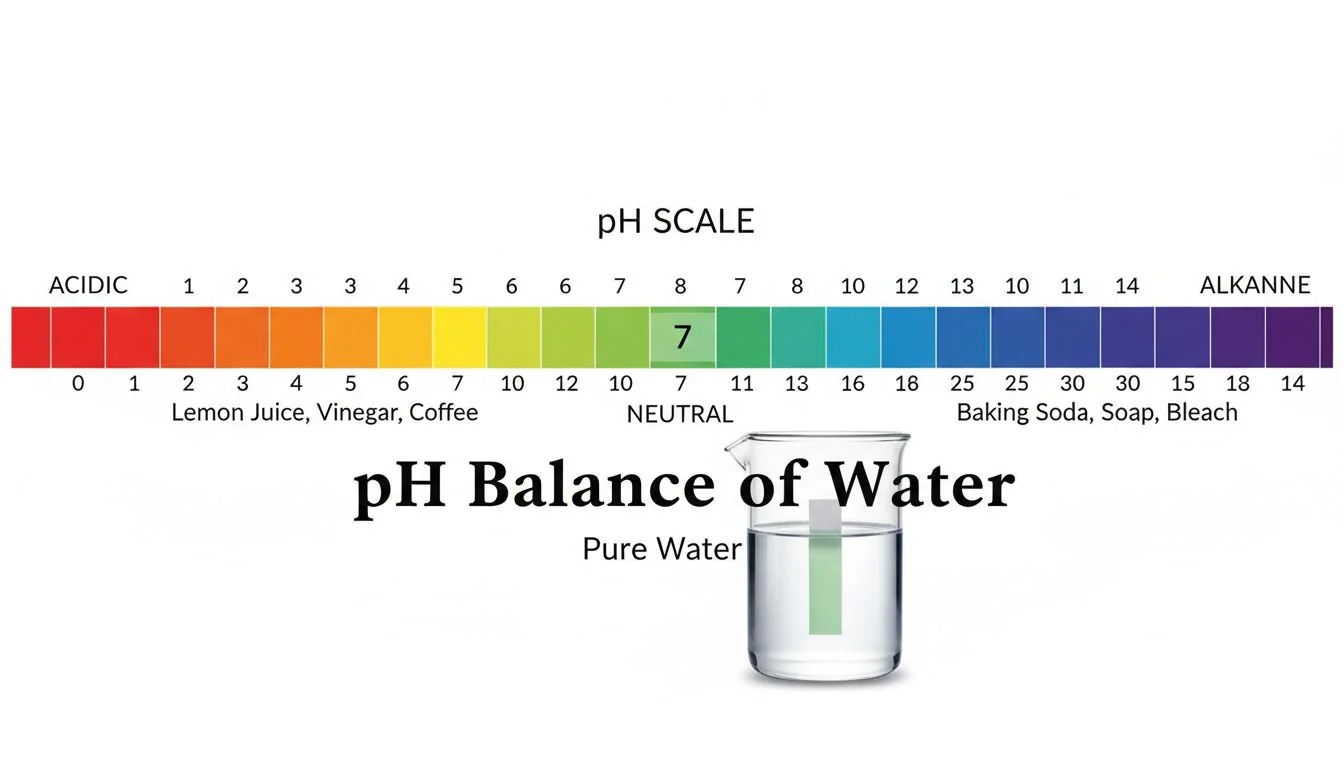
By definition, pure water has a pH of 7.0 at 25°C (room temperature). That’s the scientific sweet spot where it’s neither acidic nor basic. It’s the baseline—the measuring stick for everything else in the universe.
Must Read
Why exactly? Because pure water self-ionizes. Oh, fancy term—don’t let it scare you. It simply means that water molecules occasionally bump into each other and swap a hydrogen atom, creating a tiny number of H⁺ (acidic) and OH⁻ (basic) ions. In pure water, these two ions are perfectly balanced, and that balance is what gives us that legendary pH of 7.
But Here’s Where It Gets Ironic (And Annoying)
Here’s the kicker: pure water is almost impossible to test reliably in the real world. If you pour distilled water into a glass, it instantly starts grabbing carbon dioxide from the air. That CO₂ turns into carbonic acid, dropping the pH to around 5.5 or 6.0. Your “pure” water just became a weak acid.
So when you stick a pH meter in tap water or bottled water? That’s not pure water. That’s a polite fiction. True pure water is a laboratory hermit—it hates being in contact with air, dirt, or your grubby finger.
Temperature: The Invisible Saboteur of pH
Did you know that pure water’s pH changes with temperature? No joke. At 0°C, pure water has a pH of about 7.47 (slightly basic). At 100°C, it drops to about 6.14 (slightly acidic). Wait—does that mean boiling water is acidic?
 How to choose a home water test kit? — Wateriga
Relax. It’s a measurement technicality. The number moves because the self-ionization of water changes with heat, but the water itself stays neutral. Think of it like a chameleon: the color changes, but the lizard is still a lizard. Neutral is a relationship, not a fixed number.
So if someone smugly tells you “pure water is always pH 7,” gently remind them that at your kitchen’s boiling point, it’s not. (Then watch their brain short-circuit.)
The Side Comment You Need: Why This Matters Outside a Lab
Why should you care about the pH of something you’ll never drink? Because it’s the foundation of all water chemistry. Your swimming pool, your fish tank, even your coffee’s acidity—it all traces back to this one number.
Plus, it’s a great party trick. Next time someone boasts about their “alkaline water,” you can casually mention that pure water is neutral, and any alkalinity comes from added minerals. Watch their guru-crystals crumble.
 What is pH of Water?- Everything You Should Know About Water
The Dirty Little Secret: Even “Pure” Water Has Dissolved Stuff
Ultra-pure water—the kind labs use—is a monster. It’s so hungry for ions that it will strip them from whatever it touches. It can even corrode glass over time. Seriously, it’s called “hungry water” in chemistry circles.
That means the pH of ultra-pure water is almost meaningless outside a controlled system. The moment you open the bottle, it’s already changed. Pure water is a liar. It pretends to be simple, but it’s a drama queen that reacts to everything.
So, What’s the Final Answer?
If you’re writing a test: pH 7.0. If you’re a chemist: “It depends on temperature and purity.” If you’re at that dinner party? Just say “7, but don’t trust it out of the bottle.” You’ll sound like a wise, slightly cynical wizard.
Remember: pH is just a log scale—nerd-speak for “how many acidic particles are floating around.” Pure water has just the right amount to call a truce. It’s balanced, but fragile. Like your sanity after reading this article.
Now go measure something acidic (like lemon juice, pH ~2) and appreciate how much chemical gymnastics pure water does to stay neutral. Or just drink your tap water and ignore all this—I won’t judge. Much.
