How To Choose A Water Filter

So, you're thinking about getting a water filter. Maybe your tap water tastes a little like a swimming pool, or you just want to drink from a fancy glass bottle without the gu...

So, you're thinking about getting a water filter. Maybe your tap water tastes a little like a swimming pool, or you just want to drink from a fancy glass bottle without the guilt of buying plastic. Whatever the reason, you've stumbled into a surprisingly cool little world of science and convenience.
Let’s be real: water is basically nature’s original software update. It hydrates your cells, your brain, and even your skin. But sometimes, that software comes with a few bugs—like chlorine, lead, or that weird metallic tang. A filter is just a way to debug your drink.
First, ask yourself: what are you actually trying to remove?
This is the big one. Are you worried about taste, safety, or just convenience? Each filter type has a secret superpower, and you need to match it to your enemy.
Must Read
If your water smells like a public pool, you're fighting chlorine. That’s actually the easiest battle. A simple activated carbon filter (like a Brita pitcher) will knock that out faster than a superhero in a laundry room.
But if you're dealing with heavy metals like lead or mercury, you need something tougher. Think reverse osmosis or a specialized filter with ion-exchange resin. It sounds fancy, but it’s basically a bouncer at a nightclub who only lets the H₂O molecules through.
Pitcher vs. Faucet vs. Under-sink: the real debate
Let’s compare these contenders. Pitcher filters are the chill friend who shows up with snacks. They’re cheap, easy, and perfect for a single person or a small family. But they’re slow—like watching a slug race.
Faucet-mounted filters are the extroverts. They clip right onto your tap and give you filtered water instantly. The catch? They can block your faucet’s swivel, and sometimes they burble like a sleepy dragon when water pressure is low.
Then there’s the under-sink filter. This is the upgrade—like going from a folding chair to a leather recliner. It hides under your cabinet, connects directly to your cold water line, and gives you a dedicated faucet. It’s more expensive, but it’s also a set-it-and-forget-it dream.
What about the “fancy” stuff? Reverse osmosis and UV light.
Okay, time for a quick sci-fi moment. Reverse osmosis (RO) is like a microscopic colander with holes so tiny that even dissolved salts can't squeeze through. It’s brilliant for removing everything—including minerals. That means your water might taste a little “flat” unless the filter adds minerals back in.
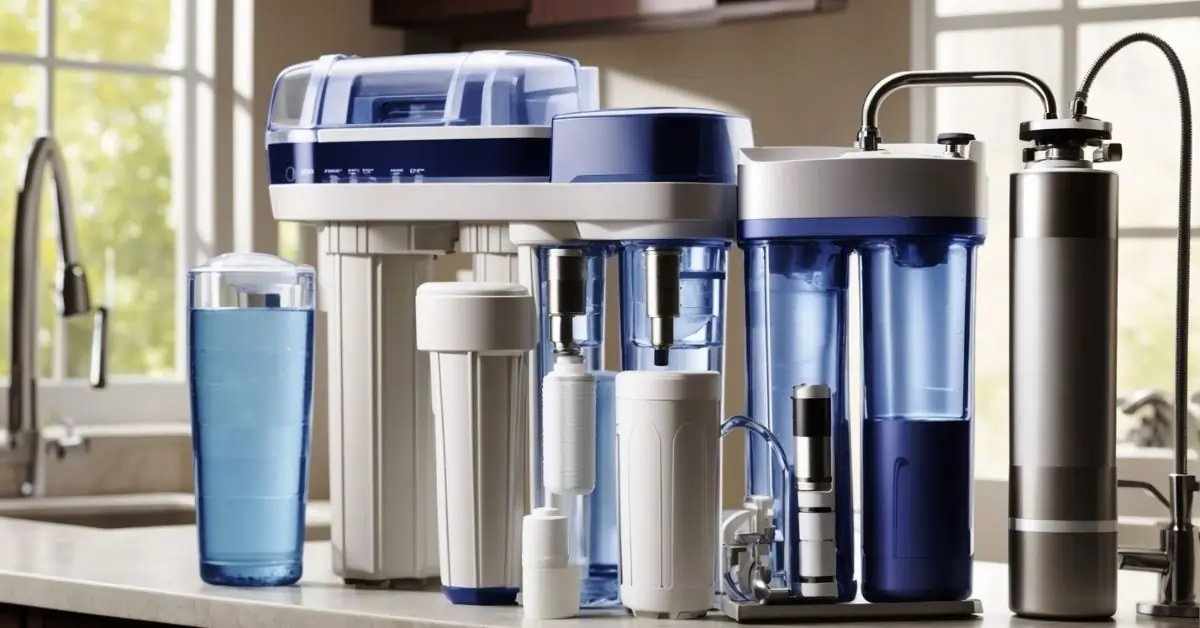 Types Of Home Water Filtration Systems: Top 5 Powerful Filters
And UV filters? They’re like a tanning bed for bacteria. They zap microorganisms with ultraviolet light, which is incredible if you’re on a well or worried about cysts like Cryptosporidium. But they won't remove chemicals or bad taste—so you usually pair them with a carbon filter.
Honestly, if you’re a city water user, you probably don’t need a UV filter. But if you’re a prepper or a camper, it’s a gold star gadget.
Don’t forget the nastiest enemy: sediment
If your water sometimes looks cloudy or leaves grit in your glass, you’ve got sediment. That’s just sand, rust flakes, or tiny pipe debris. A simple sediment filter (often a spun polypropylene cylinder) catches that stuff like a net catching jellyfish. It’s cheap and acts as a bodyguard for your fancier filters.
Pro tip: if you skip this and go straight to a carbon filter, the gunk will clog it up fast. It’s like wearing a t-shirt to battle a sandstorm.
Check the label: what’s the certification?
Here’s where you get to play detective. Look for a stamp from NSF International or the Water Quality Association (WQA). These guys test filters to make sure they actually do what they claim. A filter saying “removes 99% of lead” means nothing if it’s not certified.
Think of it like a movie review. An uncertified filter is a self-published indie film—maybe it’s great, maybe it’s a two-hour music video. Certification is your Rotten Tomatoes score.
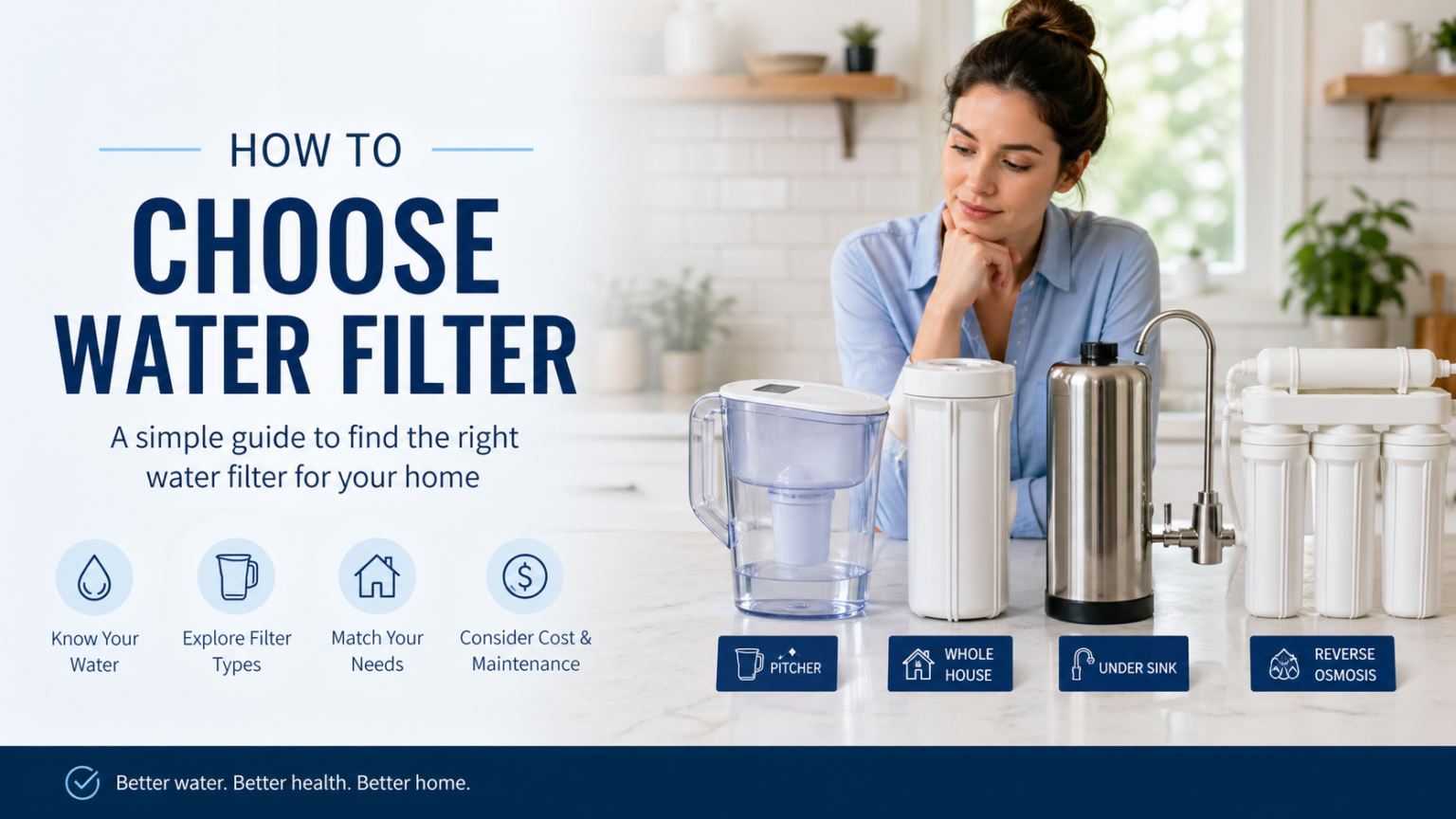 How to Choose a Water Filter: Complete Buyer's Guide (2026)
How often do you really need to change the filter?
Here’s the part nobody likes: maintenance. A dirty filter is actually worse than no filter. It becomes a petri dish where bacteria throw a party. Most carbon filters need swapping every 2-3 months, and RO membranes can last a year or two.
If you ignore the reminder sticker, your water will start tasting like a swamp. And your filter will silently weep.
What about the coolest filter of all: the countertop gravity filter?
These are the hipsters of the water filter world. You pour water into the top chamber, and gravity does the work through a ceramic or carbon block. They’re slow, but they look incredible on your kitchen counter—like a glass terrarium for science.
They’re also great for power outages because they don’t need electricity. Fancy, functional, and a conversation starter at brunch.
So, what’s your move? Start by testing your water (you can buy a simple kit online), then pick the filter that fights your specific enemy. Whether it’s a pitcher under $30 or a full under-sink system, you’re already winning because you’re thinking about it.
And hey, worst case? You’ll get a cooler-looking way to hydrate and a fun fact for your next dinner party. Cheers to clean, un-swampy water.
