How To Measure Water Quality

So, you want to know how to measure water quality? Maybe you’re testing your well water, checking out a local swimming hole, or just trying to prove to your goldfish that you’...

So, you want to know how to measure water quality? Maybe you’re testing your well water, checking out a local swimming hole, or just trying to prove to your goldfish that you’re a responsible fish-parent. Whatever the reason, it sounds way more complicated than it actually is.
Think of it like a science experiment for your kitchen counter, except you don’t need a lab coat. You just need a few basic tools and a willingness to get your hands a little wet. Let’s dive in—pun absolutely intended—and I promise we’ll keep the jargon to a minimum.
Step 1: The “Is This Water Alive?” Test
First, ask yourself: What’s the vibe? Is the water clear, murky, or does it look like it’s hiding a secret? Your eyes are actually a fantastic first tool. If it looks like swamp tea with floaty bits, that’s a red flag.
Must Read
Give it a sniff too. Water should smell like… well, nothing. If it smells like a swimming pool, rotten eggs, or a dirty fish tank, stop right there. That’s your nose screaming, “Nope, not today!”
This is the gut check, folks. It’s not scientific, but it’s the first step before you break out the fancy gear.
Step 2: The Gadgets (Don’t Worry, They’re Easy)
Okay, now we get a little technical, but I’ll hold your hand. The easiest way to measure water quality is with a multiparameter test kit or a digital meter. Think of them as a Swiss Army knife for water—except instead of opening beer bottles, it checks for nasty stuff.
You can buy these at any hardware store or online for about the price of a nice dinner out. They’ll measure the big three: pH, total dissolved solids (TDS), and sometimes hardness. Just dip, wait, and read the number. Boom, you’re a water detective.
Pro tip: Don’t be that person who tests water right after a rainstorm. That’s like checking your blood pressure after a sprint. Wait for a calm day to get accurate numbers.
pH: The Drama Queen of Chemistry
pH is a scale from 0 to 14 that tells you how acidic or basic your water is. Pure water is a boring 7—neutral, like toast without butter. Fish and plants prefer a pH between 6.5 and 8.5. If your water is super acidic (like lemon juice) or super basic (like bleach), things die. Sorry, flora and fauna.
 How to Test Water Quality at Home: Your Complete Guide – World Water
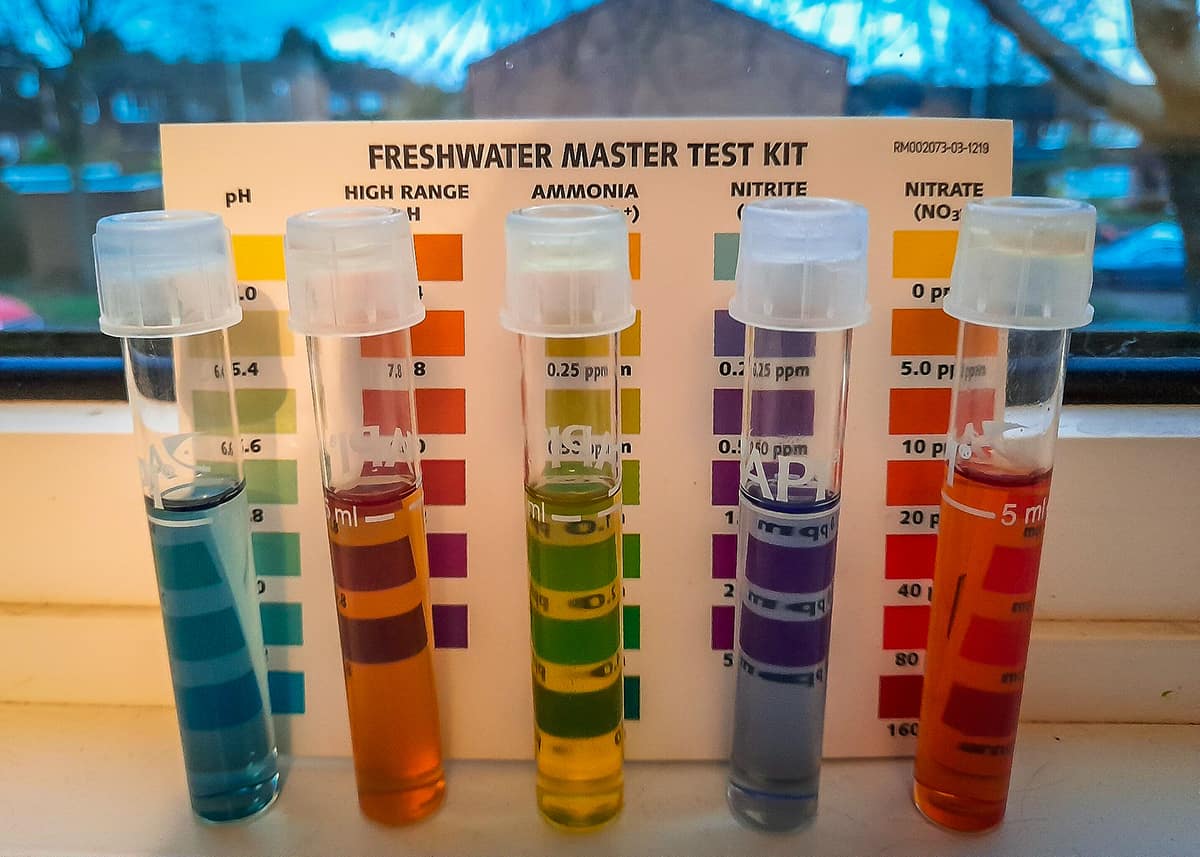
Testing pH is as easy as dipping a strip or sticking in a probe. The strip changes color. You match it to a chart. It’s literally coloring for grown-ups.
Fun fact: If your water’s pH is too high, your pipes might start dissolving. Your plumber will not find this funny.
Total Dissolved Solids (TDS): The Ghostly Gravy
TDS measures all the invisible stuff floating in your water—like minerals, salts, and metals. It’s the secret life of your water. A high TDS number means your water is “hard” (think chalky residue on your coffee pot). A low number means it’s soft and pure.
You test this with a TDS meter (they look like a fat thermometer). Dip it, wait five seconds, and read the number. Ideal drinking water is under 500 ppm (parts per million). If it’s over 1,000, you might as well be drinking mouthwash.
My tap water once tested at 850 ppm. I now hug my water filter every morning.
Nitrification and Bacteria: The Uninvited Party Guests
This is where it gets a little ickey. If you’re testing water from a lake, river, or old well, you want to check for nitrates and bacteria. Nitrates come from fertilizer or septic leaks—they’re bad news for babies and pregnant folks. Bacteria like E. coli are the rowdy party guests that ruin the whole weekend.
To test these, you’ll need a special kit that involves mixing a water sample with a powder and waiting 24–48 hours. It’s like baking bread, but you’re hoping the yeast doesn’t grow. If it does, you’ve got poop in your water. (I said it. It’s important.)
 Best Digital Water Quality Testers: Accurate & Easy Measurements
Pro tip: If you test for bacteria and the color changes to cloudy yellow, do not drink that water. Not even as a dare. Call a professional.
Step 3: The “Do-It-Yourself” Gross Meter
If you don’t want to buy gadgets, you can try the shrimp test. Yes, shrimp. Aquarium shrimp are incredibly sensitive to pollutants. If you drop a ghost shrimp into your water sample and it survives for an hour, your water is probably fine. If it curls up and says goodbye, well… you have your answer.
Please note: This is not the official scientific method. But it’s fun, and shrimp are cheap. Just don’t tell PETA I suggested it.
Alternatively, you can look for macroinvertebrates in a stream. If you find dragonfly nymphs or caddisfly larvae, the water is excellent. If you only find leeches and mosquito wrigglers, maybe don’t go swimming.
The Joy of Finally Knowing
Measuring water quality is basically playing detective with a glass of water. You get to ask, “What are you hiding, H2O?” And then you get to find out. It’s empowering, it’s educational, and it makes you look like a wizard at parties.
And here’s the best part: You don’t need a PhD to do it. You just need a little curiosity, a few cheap tools, and a willingness to trust your nose. The water in your glass has traveled through pipes, rivers, or ancient glaciers to get to you. It deserves a check-up now and then.
So go ahead—test your tap water, your pond, or your neighbor’s suspicious puddle. Learn its secrets. And when you find that perfect, clean, balanced sample? Raise a glass to yourself. You’ve earned it, you brilliant water-sleuth, you. Cheers!
