How Does A Water Meter Work

Let’s be honest: most of us ignore the water meter. It’s that mysterious, dusty gadget in the basement or buried under a metal lid in the yard. But this little box is silently...
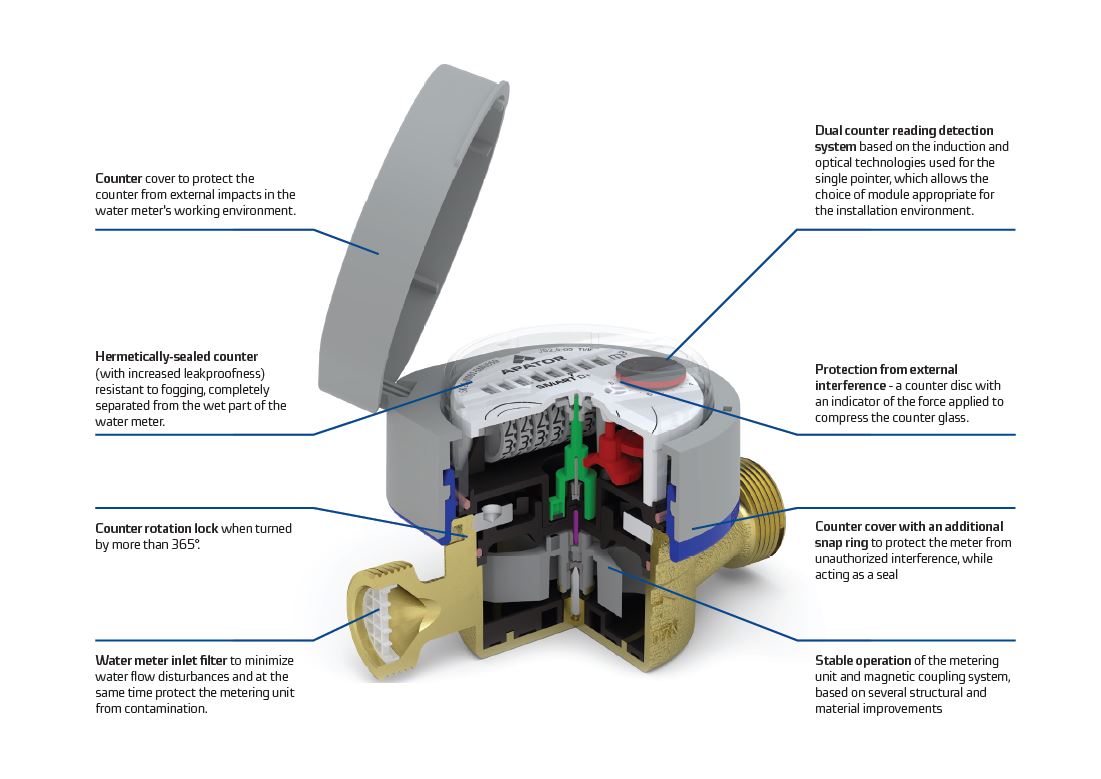
Let’s be honest: most of us ignore the water meter. It’s that mysterious, dusty gadget in the basement or buried under a metal lid in the yard. But this little box is silently working harder than your neighbor’s leaf blower. Today, we’re going to crack the code and laugh a little while doing it.
Your Water Bill’s Secret Agent
Think of a water meter as a tiny accountant with a job you never wanted. Its only mission? To count every single drop that flows into your pipes. No judgment if you take a twenty-minute shower—this device just logs the data.
The brilliant part? It does all this without any batteries or electricity in most cases. Yep, it’s powered by the water itself as it rushes by. That’s basically free labor, courtesy of your plumbing.
Must Read
So how does a box with no brain track a liquid? It uses clever physics and a spinning gizmo that would make a pinwheel jealous.
Inside the Magic Box: The Flow of the Spin
Open up a typical residential meter, and you’ll find something called an impeller. Imagine a tiny plastic fan or a propeller. When water flows through the pipe, it pushes the blades of that fan, making it spin like a windmill in a hurricane.
Each spin represents a specific volume of water—like a little bucketful. The meter’s job is to count these spins using a set of gears. It’s the same principle as your car’s odometer, but instead of miles, we’re measuring gallons or cubic feet.
And here’s the kicker: the meter doesn’t care if you’re washing dishes or watering a prize-winning tomato. Water is water, and every spin gets logged. No exceptions, no mercy.
The Two Main Types: Analog and Digital (and Sassy)
You’ll find two flavors of water meters out there. The old-school analog meter has a row of dials that look like tiny clock faces. Reading them feels like you’re deciphering an ancient treasure map, which is probably why we all avoid it.
Then there’s the modern digital meter, the cool kid on the block. It uses a magnetic sensor or ultrasonic waves to measure flow, then displays the number on a little screen. Some even have radios to beam the data straight to the water company—so you can’t cheat by hiding your leaky faucet.
 How a Water Meter Works - YouTube
Let’s be real: even the digital meters are a little shy. They hide under a heavy lid, waiting for a utility worker to peek in once a month. But they always know the truth.
Why It’s So Accurate (and a Little Judgy)
Water meters are legally required to be accurate to within a tiny percentage—usually around 1.5%. That’s stricter than most bathroom scales. So if you think taking a sip from the tap doesn’t count, think again. The meter is counting every molecule.
They use a special mechanism called a positive displacement chamber in many designs. Inside, a rotating disk partitions the water into precise, equal volumes. Each rotation is like a handshake: one shake, one unit of water passed.
If you ever hear a clicking sound when you flush the toilet, that’s the meter going “Yep, got it, thanks!” It’s surprisingly chatty for a device that lives in a damp hole.
The Leak Detective You Didn’t Hire
Here’s a fun party trick: if all your faucets are turned off and the little triangle or star on your meter is spinning, you have a leak. That spinning indicator is like a red flag waving at a bull. It’s saying, “Water’s moving, and it ain’t your dog drinking!”
A slow leak—like a dripping faucet—can waste hundreds of gallons a month. Your meter will catch that and charge you accordingly. It’s basically the snitch of the plumbing world. But hey, it saves you from a bigger surprise on bill day.
 What Does An Ultrasonic Do at Anita Sosebee blog
So next time you hear that phantom drip, give your meter a sarcastic salute. It’s doing its job with silent, unyielding precision.
The Future of Water Metering: Smarter, Fancier, Wi-Fi Enabled
We’re entering the age of the smart meter. These beauties can tell you exactly when you used water, down to the second. They might even send a text to your phone saying, “Hey, your sprinkler ran for 47 minutes. You might want to check the forecast.”
Some use ultrasonic pulses to measure flow without any moving parts. No spinning fan, no gears—just sound waves bouncing through the water like dolphins asking, “How much is there?” It’s both genius and vaguely sci-fi.
Soon, your meter might talk to your washing machine and suggest a better cycle time. The future is weird, but at least our bills will be accurate.
Uplifting Conclusion: A Toast to the Hard Worker
So there you have it. The humble water meter is a combination of a tiny fan, a stubborn accountant, and a leak-snitching sidekick. It works 24/7 without complaint, buried in dirt or tucked in a chilly basement, just to make sure you pay for what you use and nothing more.
Next time you see that metal lid in the sidewalk, give it a grateful nod. That device is the reason you can enjoy a long, hot shower without thinking about it too much—though it is counting every drop. But that’s okay, because you’re a human who deserves hydration and baths.
And remember: water meters don’t judge, they just measure. So go ahead, fill up that kiddie pool, water your garden, or take a glass of water at 3 a.m. The meter is happy to help, one spin at a time. Cheers to the silent hero under your feet.
