How Does A Water Metre Work

Ever wonder what that metal disc under your sink is doing? It’s not a tiny alien spaceship. It’s a water meter—your home’s very own liquid accountant. Most of the time, we ig...
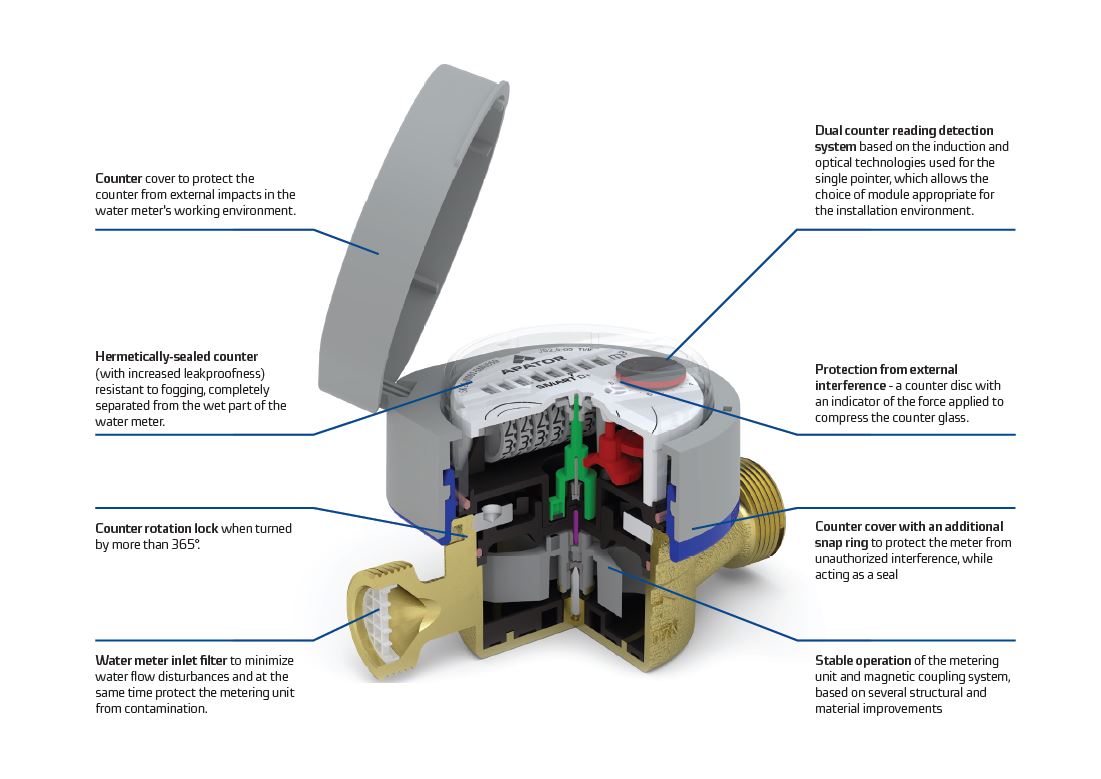
Ever wonder what that metal disc under your sink is doing? It’s not a tiny alien spaceship. It’s a water meter—your home’s very own liquid accountant.
Most of the time, we ignore it. It just sits there, quietly spinning. But that little whirring gizmo is a master of secrets.
It’s the reason your water bill exists. And yes, it’s secretly kind of cool.
Must Read
The Magic Inside the Box
Let’s pop the hood. Inside, there’s a small turbine or a nutating disc—think of a spinning top that wobbles in a circle. Water flows in, hits that disc, and makes it dance.
Every rotation equals a specific amount of water. It’s like counting raindrops with a ferris wheel.
That motion gets transmitted up to a dial. The dial’s little hands tick away, marking every single gallon that passes through.
No batteries needed. It’s pure, stupidly simple physics. Isaac Newton would totally approve.
Your Secret Water Detective
Here’s the fun part. Your water meter can tell you if you have a leak—even before you notice. Turn off every tap, every appliance. Go outside to the meter.
Look at the little triangle or star-shaped indicator. It’s often called a “leak detector.” If it’s spinning while everything is off, you’ve got a sneaky drip somewhere.
A single dripping tap can waste 3,000 gallons a year. That’s enough to fill a kiddie pool every single week.
Your meter is basically a detective that snitches on your plumbing. What a star.
The Numbers Game
Your meter doesn’t speak English. It speaks in cubic feet or cubic meters. One cubic foot equals about 7.48 gallons.
That’s a weird number, right? Why not 7 or 8? Blame the ancient Romans and some deep math about cubic space.
 How a Water Meter Works - YouTube
So when your bill says “10 units,” you actually used 74.8 gallons. It’s math magic for your wallet.
And guess what? The meter reading you see is cumulative. It counts everything since the day it was installed. Your new reading minus your old reading equals your usage.
It’s like an odometer, but for H₂O. You are driving a car made of pipes.
Quirky Fact: The “Dancing” Hand
If you’ve got an old analog meter, look at the big sweep hand. It moves in a smooth, steady glide—until someone flushes a toilet. Then it jerks forward like a startled cat.
That jerk is the sound of money leaving your pocket. Or at least, the sound of water leaving your tank.
Some modern meters are digital. They use a magnetic sensor instead of gears. But the old-school mechanical ones are pure art—tiny metal clockwork that works for decades without complaint.
They’re the unsung heroes of indoor plumbing. They deserve a standing ovation. Or at least a polite nod.
Funny Failures
Water meters can get weird. Sometimes air bubbles in the pipe make the meter spin faster than it should. You pay for air. It’s like paying for a ghost drink.
Other times, meters can jam. A little pebble or a dead cockroach gets stuck in the turbine. Then your water runs free, and the meter sits there, blissfully clueless.
The water company will test your meter for free if you suspect it’s broken. They don’t want to overcharge you. They just want to be accurate cheats.
 What Does An Ultrasonic Do at Anita Sosebee blog
And here’s a wild hidden fact: In some cities, water meters are read using radio waves. A truck drives by and your meter shouts “I used 400 gallons!” through the wall. It’s like a spy movie, but for your sprinkler system.
Why You Should Care (Even If You’re Bored)
Water meters are the reason your lawn doesn’t turn into a swamp. They measure exactly how much you use, so the city can treat and return that water. It’s a closed loop of liquid love.
Also, watching your meter can save you money. Take a 5-minute shower instead of 15, and your meter slows down. It’s instant gratification.
You can literally see your conservation efforts in action. It’s a fitness tracker for your household.
And finally, water meters are ancient tech. The first one was invented in 1857 by a man named William Siemens. It used a pendulum. Yes, a swinging pendulum measured your water bill.
We’ve come a long way, but the principle is the same: Count every drop, charge every sip, and keep the planet hydrated.
The Takeaway
Next time you walk past that little metal box, give it a wink. It’s working harder than your microwave. It’s reading liquid history.
Water meters are boring in the best way. They’re reliable, smart, and slightly weird. Plus, they keep your shower bill honest.
So go ahead. Find your meter. Watch it spin. Feel a little electrical thrill of discovery.
You now know how your water meter works. You’ve unlocked the secret. Go forth and be the cool friend who explains the plumbing at parties.
Just don’t get too excited and lick the meter. That’s not how you read it.
