How Much Water Bill A Month

Last Tuesday, I stood in my kitchen, staring at the water meter like it had personally betrayed me. A thin, steady drip-drip from the bathroom faucet had become a rhythmic acc...

Last Tuesday, I stood in my kitchen, staring at the water meter like it had personally betrayed me. A thin, steady drip-drip from the bathroom faucet had become a rhythmic accusation. My fiancée handed me the bill—and I swear, the number laughed at me. $87 for a month of showers, dishwashing, and one leaky pipe? I felt like I’d been charged for a swimming pool I didn’t own.
Sound familiar? Maybe you’ve opened your own bill, squinted at the total, and thought, “Is my house secretly watering the neighbors’ lawn?” You’re not alone. The average water bill varies wildly—from a modest $40 in some towns to a jaw-dropping $150 in others. But here’s the kicker: most of us have no clue why we’re paying what we do.
The baseline shocker: what’s “normal”?
Let’s get real. According to the EPA, the average American family uses about 300 gallons of water per day—that’s nearly 9,000 gallons a month. If that number makes you gasp, wait for the price tag: typically, it’s $70 to $100 per month for a family of four. But “typical” is a lie we tell ourselves—your neighbor could pay half that while using twice as much water.
Must Read
The secret sauce? Geography and your utility’s pricing structure. In drought-prone California, you might see $120 for the same usage that costs $45 in rainy Portland. And if your city has tiered rates (use more, pay more per gallon), a long shower becomes a luxury tax.
The hidden culprits in your home
I learned this the hard way. That leaky faucet? It wasted 10 gallons a day—300 gallons a month. At my rate, that added $12 to my bill. Toilet ghosts are worse: a silent leak can flush away 200 gallons a week without a sound. Check your toilet by dropping food coloring into the tank—if color seeps into the bowl, you’ve got a phantom flusher.
Then there’s the lawn sprinkler. Oh, the irony of watering grass while your water bill grows taller. A typical system runs 1,000 gallons per hour. Run it twice a week, and you’ve added $30–$50 to your monthly bill. Your lawn isn’t thirsty—it’s just a diva.
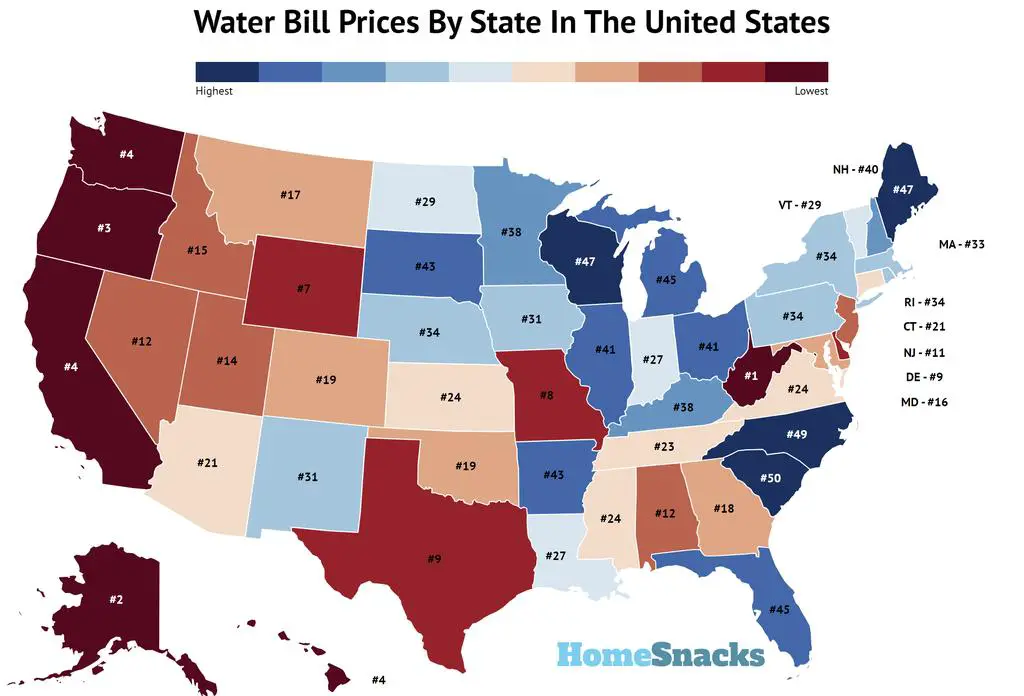 Average Water Bill By State In The US For 2023
Your own water bill: how to decode it
Flip that statement over. You’ll see three key numbers: the fixed charge (a flat fee for being connected), the volumetric charge (what you actually used), and sometimes a sewer surcharge (because dirty water costs money to treat). The sewer charge often equals or exceeds your water usage—so you’re paying twice for the same H2O. Sneaky, right?
Most bills also show your usage history in hundreds of cubic feet (CCF) or gallons. One CCF equals 748 gallons. If your usage spiked last month, ask yourself: “Did I host a pool party? Leave a hose running? Or did the washing machine just launch a rebellion?” Side note: my washing machine once added $25 to my bill because the sensor broke and it kept filling.
Cutting the bill without cutting your showers
You don’t need to live like a desert monk. Start small: fix that drip (YouTube tutorials work, I promise). Install low-flow showerheads—they save 2.5 gallons per minute. That’s 15 gallons per 10-minute shower. Over a month, one person saves 450 gallons. Your bill will drop by $8–$15 just from that swap.
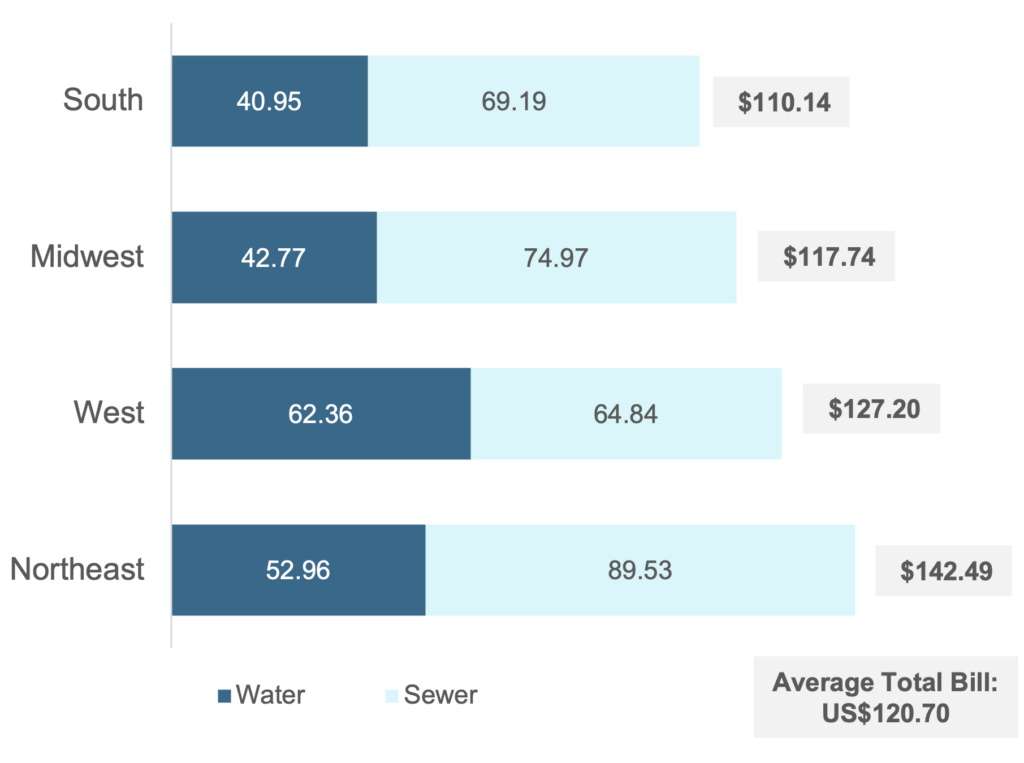 Local Water Challenges Drive US Water Utility Rates Up 4%
Next: run full loads only. A dishwasher uses 6 gallons per cycle; a washing machine uses 15–20. Half-loads are a waste. And here’s a weird tip: collect your cold shower water in a bucket while you wait for hot water. Use it to water plants. It’s free, and your plants will stop judging you.
The big picture—your sanity matters
I’ll be honest: after fixing that faucet and swapping to a low-flow showerhead, my bill dropped from $87 to $62. That’s $25 a month saved—enough for a pizza night (or two, if you’re cheap like me). But the real win? I stopped freaking out every time the bill arrived. Water bills make us anxious because they feel invisible—until they land in your hands with a number you can’t ignore.
So, how much is your water bill a month? It’s whatever you let it be. Track your usage for a month. Look for those leaks. And remember: the average household spends about 1% of its income on water. If yours feels higher, you’re probably overpaying for waste. Or your house is secretly a submarine. Either way, you’ve got this. Go turn off that faucet.
