What Is An Ro Filter System

Imagine your tap water is a party, and not everyone invited is welcome. Chlorine, lead, and microplastics are the uninvited guests crashing the fun. That’s where an RO filter...

Imagine your tap water is a party, and not everyone invited is welcome. Chlorine, lead, and microplastics are the uninvited guests crashing the fun. That’s where an RO filter system steps in—it’s the velvet rope for your hydration.
RO stands for reverse osmosis, and it sounds more like a science lab than your kitchen, but stick with me. At its core, it pushes water through a superfine membrane that catches nearly everything but pure H2O. Think of it as a bouncer with a very strict guest list.
How It Actually Works (The Fun Part)
You don’t need a chemistry degree to get this. Water enters the system, passes through a sediment filter to catch dirt, then a carbon filter to grab chlorine and bad tastes. The real magic happens when it hits the semi-permeable membrane—a material with pores so tiny, only water molecules squeeze through.
Must Read
Everything larger—like arsenic, fluoride, and even some bacteria—gets flushed away. It’s the Marie Kondo of water filters: if it doesn’t spark joy in your glass, it’s gone.
Fun fact: the technology was originally developed for desalination on ships. Your morning coffee is now benefiting from the same science that kept sailors hydrated in the 1950s.
Is It Overkill for Regular Tap Water?
Maybe, but that’s like asking if a cashmere sweater is overkill for a chilly Tuesday. If your tap water tastes like a swimming pool or leaves white spots on glasses, an RO system is pure upgrade.
For city dwellers, it removes the trace pharmaceuticals and chlorine byproducts that sneak through municipal treatment. For well water users, it’s a lifesaver against nitrates and heavy metals.
A quick reality check: RO systems do waste some water. Old models could dump three gallons for every one they produce. Modern units are smarter, with ratios closer to 1:1, so don’t let the eco-guilt stop you.
The Cultural Shift Toward Clean Water
Remember when everyone carried a reusable bottle and argued about Brita vs. Pur? That was the prequel. Now, water snobbery is real, and RO systems are the home barista of hydration.
 A Visual Guide to RO DI System Components
In Los Angeles and Portland, it’s practically social currency to have a filter under your sink. Guests don’t just ask for water—they ask what kind. It’s the new trust fall: “Try my RO water. You can taste the difference.”
And yes, it’s not just for drinking. Chefs swear by RO water for coffee and tea. The lack of minerals means your espresso’s flavor profile isn’t competing with limestone. It’s like letting the coffee sing solo.
What About the Minerals? The Zinc Debate
Here’s the trade-off: RO removes everything, including good minerals like calcium and magnesium. You’re basically drinking a blank slate. Some people add a remineralization cartridge to put the good stuff back in.
Is it necessary? Not really, unless you’re living on pure RO water and zero food. You get plenty of minerals from spinach, almonds, and that overpriced avocado toast.
Still, if you’re a wellness maximalist, you can buy mineral drops or alkaline boosters. It’s your water—make it your canvas.
Practical Tips for the Uninitiated
Tip one: Don’t buy the cheapest system on Amazon. Look for one with a NSF certification—that’s the gold standard for safety. Paying a little more here saves you from plastic aftertaste and broken parts.
Tip two: Change your filters on schedule. A clogged filter doesn’t just slow output; it can dump dirty water back into your glass. Set a calendar reminder every six months for the sediment and carbon filters, and annually for the membrane.
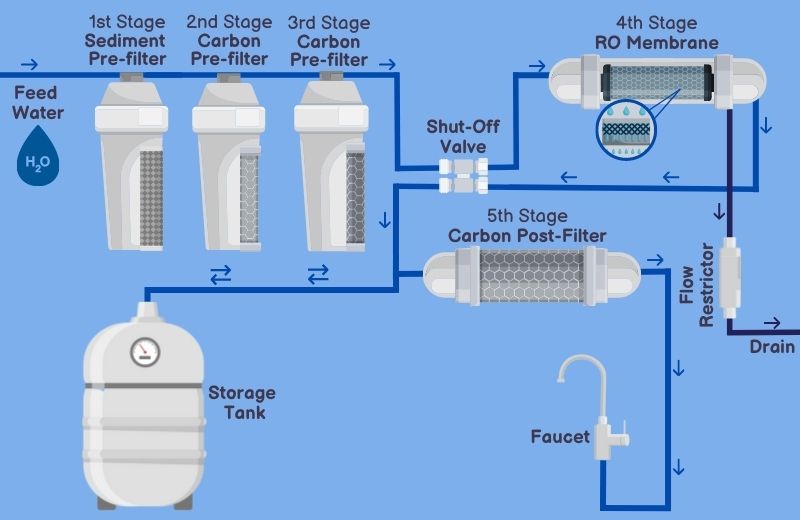 Reverse Osmosis Water Filter Diagram
Tip three: Install it yourself if you’re handy, but don’t feel bad calling a plumber. Most under-sink units come with color-coded tubes that snap together like adult LEGOs. YouTube tutorials make you look like a pro—or at least like you’re trying.
The Aesthetics Matter Too
RO systems aren’t pretty. They sit under your sink with tanks and tubes like a sleeping robot. But now there are countertop models in brushed steel and matte black that look like a piece of art.
Brands like Waterdrop and APEC make units that are whisper-quiet and compact. You can finally stop hiding that plastic jug from the 90s. Your kitchen deserves a glow-up.
And a tiny fun fact: the first RO membrane was made from cellulose acetate, the same material used in early photographic film. Your water is basically filtered through a piece of cinematic history.
A Reflection on Daily Life
When you install an RO system, you’re not just buying a filter. You’re buying the experience of reaching for a glass and knowing that every drop is as clean as a mountain spring. That trust is a small luxury, but it lands hard.
Water becomes something you sip with intention, not just gulp out of habit. It’s quiet ritual in a loud world—three seconds of pouring, one moment of clarity. And maybe that’s the real point.
So go ahead, raise a glass to your new bouncer. It’s keeping the party clean, one molecule at a time. Cheers to never tasting your pipes again.
