What Is Lime Scale Build Up

You know that chalky, white crust that builds up on your kettle’s heating element, or the stubborn film clouding your showerhead? That, my friend, is lime scale, and it’s basi...

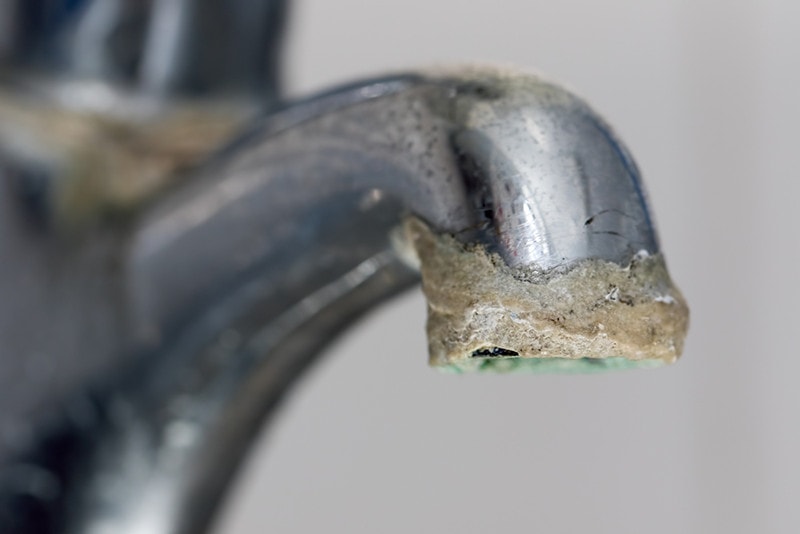
You know that chalky, white crust that builds up on your kettle’s heating element, or the stubborn film clouding your showerhead? That, my friend, is lime scale, and it’s basically the ghost of your tap water past. It’s a hard, crusty deposit left behind when hard water—water rich in calcium and magnesium—evaporates. Think of it as the mineral residue of a very slow, very stubborn tea party.
Hard water itself isn’t dangerous; in fact, many consider it beneficial for bones and teeth. But when it dries, those minerals crystallize into a stubborn, pale powder that clings to everything. It’s the geological equivalent of glitter—once it’s there, it’s really hard to get rid of.
This sneaky substance doesn’t just ruin the aesthetic of your bathroom tiles. It’s a silent efficiency killer. A mere 1.5 millimeters of scale on a heating element can increase energy consumption by up to 18%. Your water heater, your coffee machine, your washing machine—they all have to work much harder to do their jobs.
Must Read
It’s like having a tiny, invisible clog in your appliances’ circulatory system. And no one wants a stressed-out espresso machine in the morning.
The Cultural Connection: From Roman Aqueducts to Your Faucet
Lime scale is not a new invention. The Romans battled it in their aqueducts, using massive systems of settling tanks to manage hard water. They even noticed that the calcium-rich deposits could be used for plaster—perhaps the first form of upcycling.
Fast forward to today, and it’s still a universal headache, from the cobblestone streets of London to the modern glass towers of Tokyo. In fact, the UK and much of the United States are famous for their exceptionally hard water. You can spot a Brit by their epic tales of kettle descaling rituals.
Practical Tip: The "Listen to Your Kettle" Test
Your kettle is your most honest scale-detector. If it starts making a thumping, rattling sound instead of a gentle hum, you have a solid layer of scale. That noise is trapped steam trying to escape through the mineral crust.
Your coffee machine is also a tattletale. If your morning brew tastes metallic or takes forever to brew, it’s time to show that scale who’s boss.
 How to remove limescale from washing machines | Appliance Care
Where It Hides (And Why You Should Care)
Lime scale is a master of camouflage. You see it on faucets, shower doors, and the bottom of your kettle, but its favourite hiding spots are inside your pipes and your water-using appliances. It builds up slowly, like dust on a bookshelf you keep forgetting to clean.
Inside a toilet tank, it can ruin the flushing mechanism, causing that annoying, endless trickle sound. On heating elements, it acts as an insulator, trapping heat and forcing the element to overheat, eventually burning out. It’s the financial equivalent of leaving small charges on your credit card—they add up fast.
Fun Fact: Scale is Geologically Alive
Lime scale is technically a form of limestone. That same material that forms the White Cliffs of Dover is building up inside your dishwasher. Your home is, very slowly, creating its own miniature geology.
But don’t panic. You won’t wake up to a cave system in your pipes. The process is extremely slow, but over a decade, a pipe’s diameter can shrink significantly, reducing water pressure by a noticeable amount.
The Gentle Art of Descaling: Solutions That Don’t Require a Hazmat Suit
The good news? Fighting scale doesn’t require industrial chemicals. The oldest trick in the book is white vinegar or citric acid, both of which dissolve the calcium carbonate without damaging your skin or the planet. For a kettle, a 50/50 mix of water and vinegar, boiled and left to sit for an hour, works like magic.
For showerheads, fill a plastic bag with vinegar, tie it around the head, and let it soak overnight. It’s like a spa treatment for your plumbing, and the results are usually a satisfying, gushy shower the next morning.
 What Is Limescale? (And How to Get Rid of It at Home) | House Grail
Modern Weapons: The Water Softener
If you’re a homeowner with a serious scale problem, a water softener is your ultimate upgrade. It works by swapping the calcium and magnesium ions for sodium or potassium ions, essentially making your water “soft.” It’s an investment, but one that can extend the life of your appliances by years.
There are also magnetic and electronic descalers, which claim to alter the structure of the crystals so they don’t cling to surfaces. Results are debated, but many swear by them as a low-maintenance, chemical-free solution.
The Ripple Effect on Your Daily Rituals
Think about your morning: a hot shower, a perfect cup of coffee, clean glasses from the dishwasher. Scale can quietly degrade each of these experiences. A showerhead clogged with scale sprays unevenly, leaving you with a lukewarm, erratic stream. A coffee maker with scale makes bitter, weak coffee.
It’s not dramatic—it’s a thousand small annoyances. And we all have enough of those without our appliances joining the party.
So, next time you see that white crust, don’t just sigh. See it as a reminder of the extraordinary journey your water takes—from the ancient rock it dissolved on its way to your tap, to its final stop in your morning mug. It’s a little bit of geological history, right there in your kitchen.
Final reflection: Life is full of slow, invisible build-ups—stress, clutter, tiny grudges. Lime scale is a tangible reminder that small deposits, left unattended, eventually become hard deposits that steal efficiency and joy. A quarterly descaling of your kettle might just be the first step toward a larger, lighter life. Or at least a better cup of tea.
