How To Size A Water Softner

So, your water is leaving rusty stripes in your bathtub, your dishes look like they have a bad case of measles, and your skin feels like you just finished a wrestling match wi...
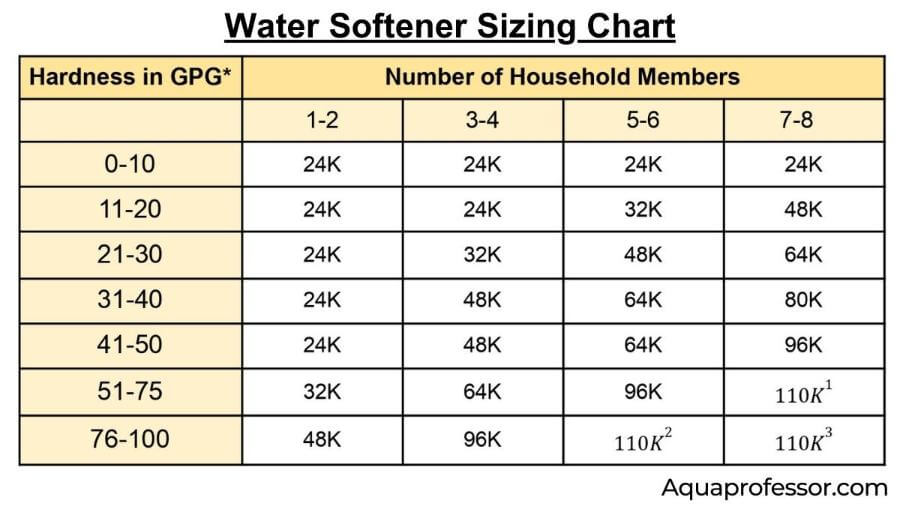
So, your water is leaving rusty stripes in your bathtub, your dishes look like they have a bad case of measles, and your skin feels like you just finished a wrestling match with a bag of chalk. Congratulations—you’ve got hard water. It might look innocent, but it’s actually full of calcium and magnesium ions that are basically tiny, angry burglars stealing your plumbing’s lifespan.
You need a water softener. But not just any water softener—you need one that’s sized right. Mess this up, and you’ll either waste money on a unit that’s as useless as a chocolate teapot, or you’ll end up with a system so small it works harder than a caffeine-addicted hamster. Let’s fix that, shall we?
Step One: Know Your Water’s Evil Level
First, you have to figure out how hard your water actually is. You can buy a test kit for pocket change, or you can call your local water utility and ask—they’re usually thrilled to talk about minerals. The number you’re looking for is measured in grains per gallon (GPG), and it’s basically your water’s “grumpiness score.”
Must Read
One grain is about the size of a single grain of rice, but in water, it’s like finding a whole bucket of rice in every gallon. If your water tests over 7 GPG, you’re in hard water territory. Over 10 GPG? You might as well be washing your hair with liquid rocks.
Step Two: Figure Out Your Family’s Water War Consumption
Now you need to know how much water your household uses daily. The standard rule is 80 gallons per person per day, but let’s be real—your teenager probably uses 400 gallons just perfecting their shower playlist. Adjust: for each person, assume 80 gallons, but if you have a teenager, double it and add a prayer.
Also, count any water-guzzling appliances. A washing machine is like a thirsty elephant, and a dishwasher is a modest camel. If you have a pool, a hot tub, or a secret underground aquarium, add 50 gallons per day for each. I’m not judging—just plan for it.
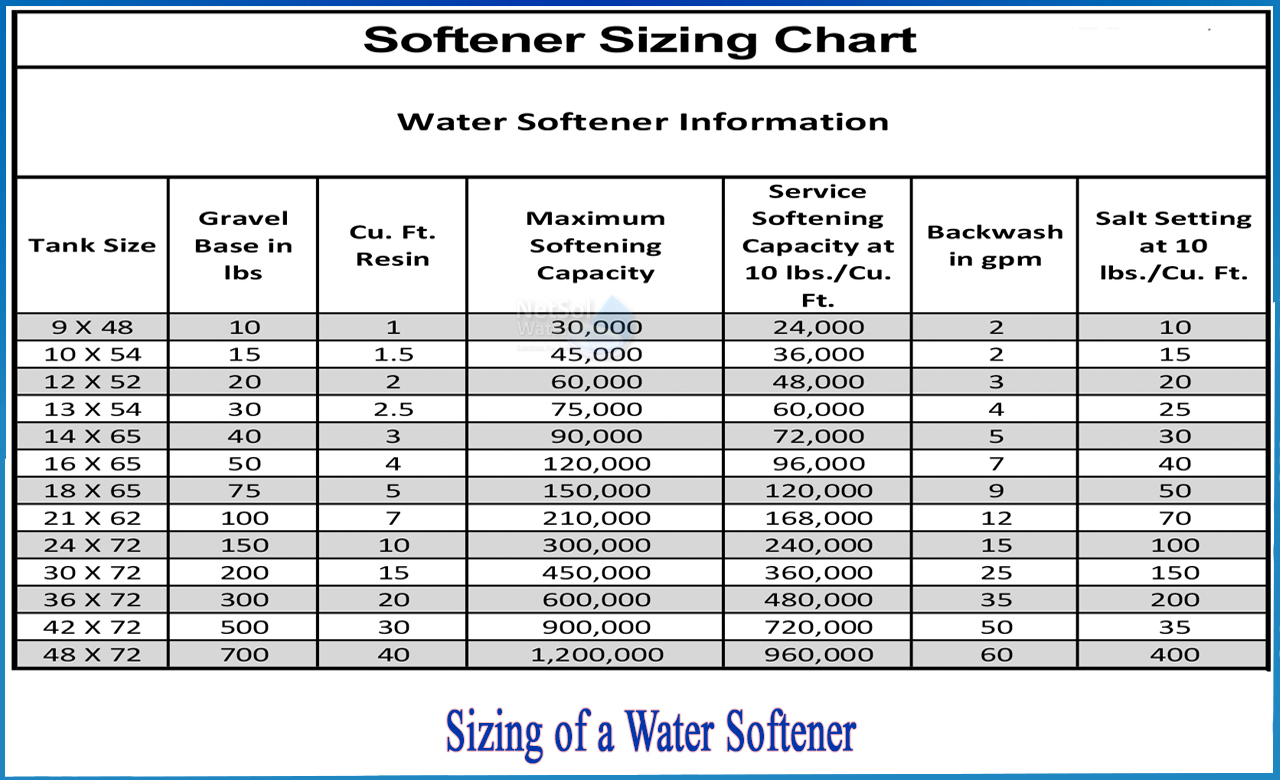 How To Size A Water Softener? : Best Water Softeners for Your Home – GXSSB
Step Three: The Magic Math That Will Make You Feel Like a Genius
Here comes the part where you whip out your phone’s calculator and pretend you’re a water wizard. Multiply your daily water usage (gallons per day) by your water hardness (GPG). This gives you your daily grain removal requirement. For example: if you use 400 gallons a day at 10 GPG, you need to remove 4,000 grains every single day.
But hold your horses—your softener doesn’t regenerate every day. Usually, you want it to regenerate once a week because doing it daily is like taking a shower every time you sneeze. So multiply your daily grain requirement by 7. That’s your weekly load. In our example, that’s 28,000 grains per week.
Step Four: Pick a Size That Won’t Make You Cry
Water softeners are sized by their grain capacity—how many grains of hardness they can remove before they throw in the towel. Common sizes are 24,000, 32,000, 48,000, and 64,000 grains. If your weekly load is 28,000 grains, a 32,000-grain system is perfect. Get a 24,000-grain one and you’ll be regenerating every four days, which is like having to refill your coffee cup every five minutes.
Here’s a surprising fact: bigger isn’t always better. A massive 64,000-grain system on a small household means it’ll take so long to regenerate that the resin bed will get moldy and gross. It’s like buying a jumbo tub of ice cream when you only want a scoop—it just goes bad.
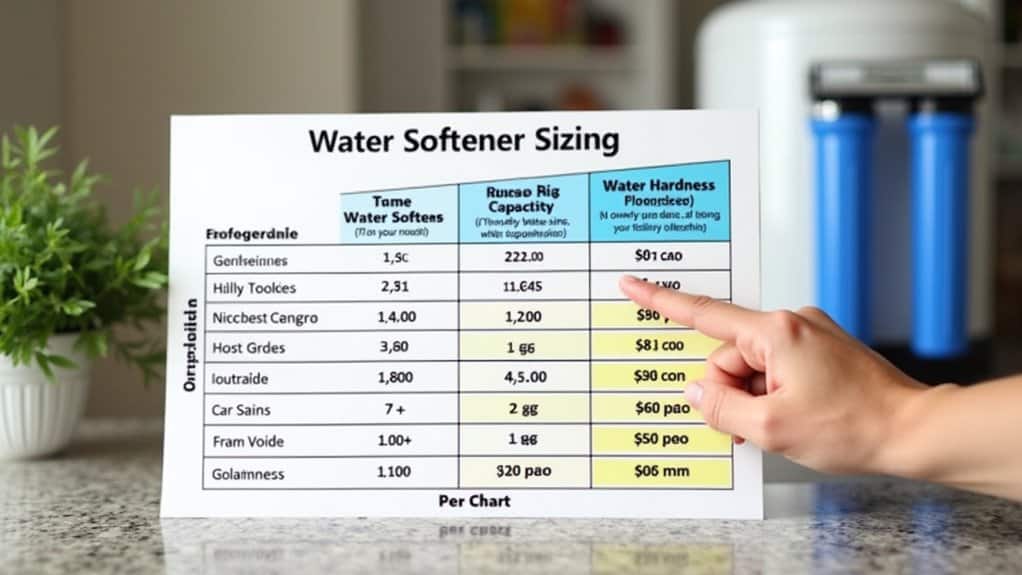 The Ultimate Water Softener Sizing Chart That Will Save You Thousands
Step Five: Don’t Forget the “Flow Rate” Ninja Move
Flow rate is how fast the water passes through the softener, and it matters because you don’t want your shower to become a sad drizzle. For a typical home, you need at least 10 gallons per minute (GPM). If you have a big family, aim for 12 to 15 GPM. A system that can’t keep up is like ordering a fire hose and getting a drinking straw.
Also, check your pipe diameter. If your main water line is 1 inch, don’t choke it with a 3/4-inch softener—it’s like putting a small funnel in a big jug. Your water pressure will thank you.
Bonus Round: The “Salt Is Not a Myth” Reality Check
You’ll need to refill the salt in your softener every few months. Don’t be the person who buys a giant bag of salt, forgets about it, and then wonders why the softener stopped working. That’s like owning a pet and forgetting to feed it until it faints.
Finally, remember: a properly sized water softener will save you money on soap, prevent your pipes from becoming calcified fossils, and make your hair so soft you’ll feel like a shampoo commercial model. Just don’t tell your friends you did math for it—they’ll think you’re a secret engineer. And honestly? That’s pretty cool.
