How Does Uvc Kill Bacteria

Ever wonder how a little light can take down something as tiny and tough as a bacterium? It sounds like science fiction, but it’s actually happening all around you. UV light,...

Ever wonder how a little light can take down something as tiny and tough as a bacterium? It sounds like science fiction, but it’s actually happening all around you. UV light, specifically the kind known as UVC, is like a silent superhero for cleanliness.
Think of it as the invisible bouncer at the microscopic club. It doesn't use chemicals or heat, just pure, focused energy. So, how does this quiet beam of light actually kill bacteria?
The Sneaky Attack on DNA
Bacteria are basically little bags of genetic instructions, their DNA. That DNA is the blueprints for everything they do, from eating to multiplying.
Must Read
When UVC light hits a bacterium, it doesn't just warm it up. Instead, it gets absorbed by the DNA itself, like a sponge soaking up water.
Here’s the cool part: the energy from UVC light causes a weird reaction. It makes two neighboring building blocks of the DNA (called thymines) stick together when they shouldn't. This creates a kink, a twisted knot in the genetic code.
Why the Kink is a Death Sentence
Imagine trying to read a book, but every other sentence is glued together into a messy blob. That’s exactly what happens to the bacterium’s DNA.
The bacterium tries to fix this knot, but if the UVC dose is strong enough, it fails. It cannot read its own blueprints anymore.
With its instructions scrambled, the bacterium can’t reproduce. Without the ability to multiply, it’s essentially dead in the water. It just sits there, completely harmless and inactive.
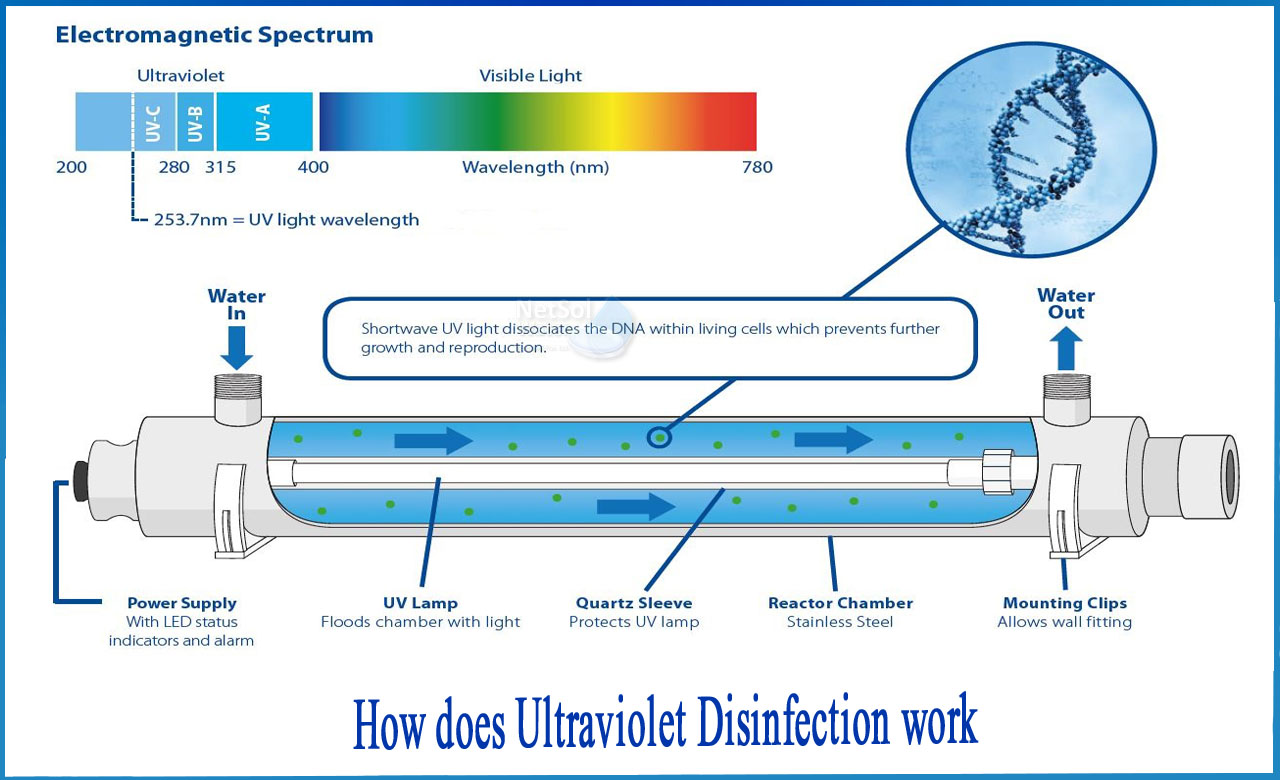 How does Ultraviolet disinfection work - Netsol Water
It’s Not Just Heat or Bleach
You might be thinking, “Why not just use soap and water?” Soap works by breaking down the outer shell of the virus or bacterium. UVC goes straight for the core, the brain of the operation.
It’s like comparing a physical punch (soap) to a brain scrambler (UVC). Both work, but the scrambler leaves nothing behind—no chemical residue, no smell.
That’s why UVC is so fascinating for things like sterilizing water or hospital equipment. It’s a dry, cold, and clean way to zap germs.
But Is It Safe? (The Big Question)
Here’s where we need to pump the brakes. UVC isn’t like the cool light from a smartphone. It’s germicidal, which means it’s powerful enough to damage living cells—including yours.
Your skin and eyes can get sunburned or injured by direct exposure to UVC. That’s why you typically see it in closed devices, like water purifiers or special air filters.
So, while the concept is awesome, it’s not a magic wand you wave around your living room. Safety first, always.
 Mechanism of ozone and UVC inactivation of a bacterial cell. | Download
Fun Comparisons to Picture It
Imagine the bacterium is a burglar with a predetermined plan (its DNA). UVC light is like a ray that instantly scrambles the instructions on the burglar’s paper map. He’s still there, but he’s totally lost.
Or think of it as a super-powered tanning bed for germs. Except instead of a nice glow, they get a fatal case of tangled DNA.
It’s wild to realize that something as simple as a wavelength of light can be such a precise, deadly weapon for germs. Mother Nature is pretty clever, isn’t she?
The Cool Takeaway
UVC light works by using energy to physically break the genetic chain of a bacterium. No chemicals, no fumes, just a burst of invisible energy that leaves the germ unable to function.
It’s one of those rare cases where light literally breaks things—in a good way. Next time you see a UV purifier, you’ll know the secret dance happening inside: a little light giving bacteria a permanent brain freeze.
Pretty rad, right? Just remember to let the machines do the work. Your own DNA is best left un-kinked.
