What Is Water Softener For

Imagine you’ve just stepped out of a glorious, steamy shower. Your skin feels… weird. Almost sticky, like you’ve been basted in a light coat of glue. Your hair is a flat, life...

Imagine you’ve just stepped out of a glorious, steamy shower. Your skin feels… weird. Almost sticky, like you’ve been basted in a light coat of glue. Your hair is a flat, lifeless disaster. You’re not dirty—you’re a victim of hard water.
That, my friend, is the villain of this story. Hard water is just regular H2O that picked up a bunch of calcium and magnesium on its underground journey. It’s basically water that has a mineral-based attitude problem.
What is a water softener, really?
A water softener is the superhero of your plumbing system. Its job is to beat the minerals out of the water before they ever touch your skin, your dishes, or your expensive coffee maker.
Must Read
Think of it as a bouncer at a club. The minerals try to get into your house, but the softener grabs them by the collar and tosses them into a special salt-filled back alley. Impact: you get gloriously slippery water.
Fun fact: the “slippery” feeling of soft water isn’t oil—it’s your skin’s natural moisture finally getting a chance to exist. Hard water literally washes away your protective oils. So a softener isn’t just about comfort; it’s waging a war against dry, angry skin.
The soap scum horror show
Hard water and soap have a toxic relationship. They react to form a creepy, white, crusty substance called soap scum. It’s the stuff that makes your shower look like a haunted seashell graveyard.
This scum isn’t just ugly—it’s sneaky. It clogs your pores, dulls your hair color, and slowly turns your glass shower door into frosted glass. With a water softener, soap actually lathers like it’s supposed to, and the scum vanishes.
You’ll use way less soap, shampoo, and detergent. Suddenly, your shampoo bottle lasts six months. That’s a win for your wallet and the ocean.
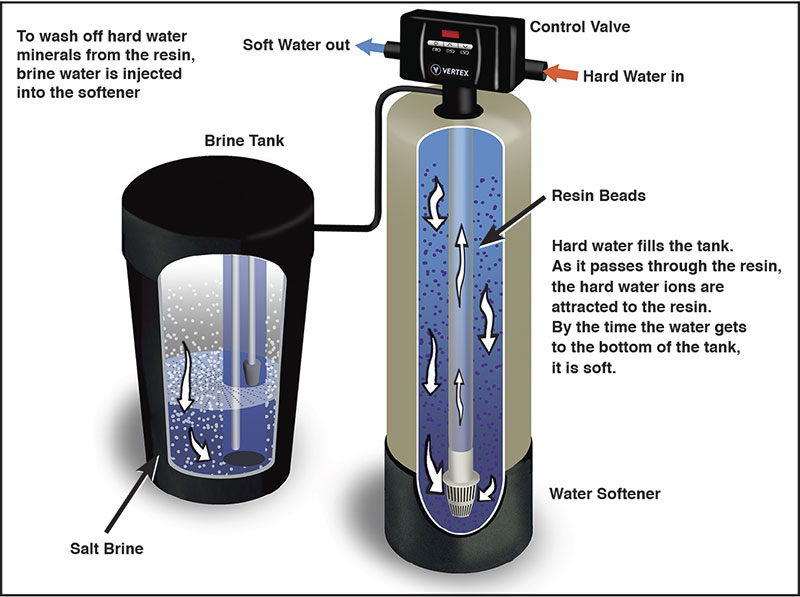 About - How a Water Softener Works - Vertex Water ProductsVertex Water
The secret life of pipes
While you’re worrying about your hair, hard water is waging a silent war in your walls. Minerals build up inside your pipes like plaque in arteries. Over time, this scale can choke your water flow.
Here’s the crazy part: a buildup of just one-sixteenth of an inch of scale can reduce your water heater’s efficiency by 20%. That’s like strapping a brick to your energy bill. A water softener prevents that, saving you money and an eventual plumber’s visit that will cost you a small car.
Appliances love soft water. Your dishwasher won’t develop white film. Your coffee maker won’t spew bitter, mineral-flavored sludge. And yes—your ice cubes will be clear and sexy, not cloudy like tiny ghosts.
But wait, isn’t salt bad for you?
Ah, the classic question! The salt in a water softener never goes into your drinking water. It’s used to regenerate the resin beads that actually capture the minerals.
The process flushes the salt water down the drain. The water coming out of your tap has a slightly increased sodium content—but it’s tiny. A glass of softened water has about as much sodium as a slice of white bread. Unless your doctor is the Soup Nazi about sodium, you’re fine.
If you’re still paranoid, you can install a separate reverse-osmosis tap for drinking water. That way you get soft bathwater and pure, guiltless hydration.
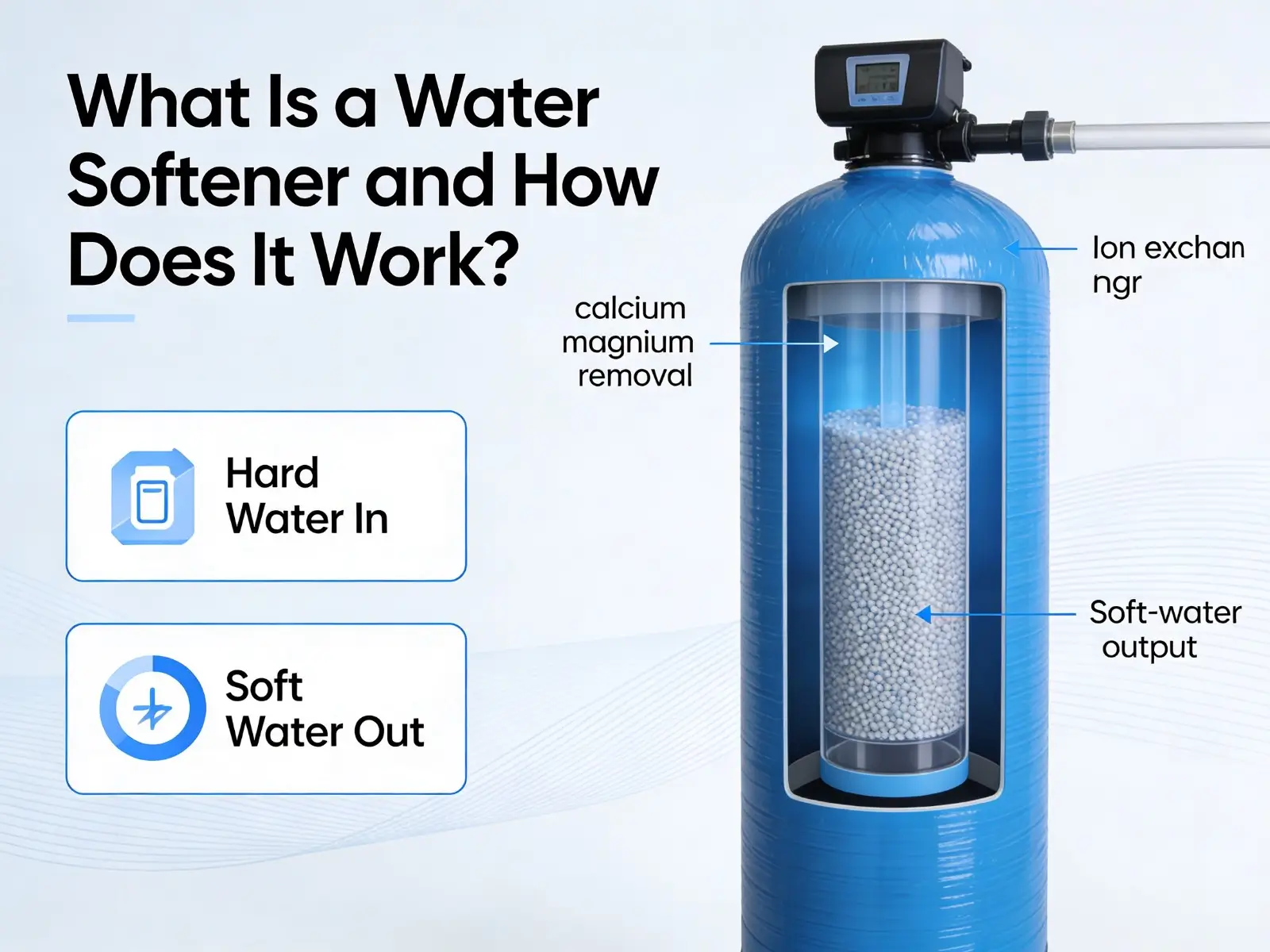 What is Water Softener & How It Works | Complete Guide 2026
Does everyone need one?
Not everyone. If you live somewhere where the water slides off your hands like a gentle lover, you’re lucky—you have soft water naturally. Most of the world isn’t so blessed.
Check for clues: white crust on faucets, soap that refuses to suds up, or dishes that look like they have a case of dandruff. That’s hard water doing its thing. You need a softener.
A surprising fact: over 85% of American homes have hard water. So statistically, your sink is probably plotting against you right now.
The final, ridiculous truth
A water softener is basically a metal canister that uses salt and magic (okay, ion exchange) to turn your water from sassy to sweet. It’s a lazy luxury that pays for itself.
You’ll suddenly want to wash your hands just for the pleasure of it. You’ll take longer showers because the water feels like liquid silk. You might even start petting your own arm out of the shower, marveling at its newfound softness.
Don’t be a hard water hero. Install a softener, and let your pipes, your laundry, and your poor, dried-out skin live the good life. You future self—silky smooth and free of scum—will thank you.
