What Is A Tds Water Tester

Ever licked a rock? No? Just me? Well, you’ve basically tasted Total Dissolved Solids (TDS). That’s what a TDS water tester measures. It’s a tiny gadget that tells you how muc...
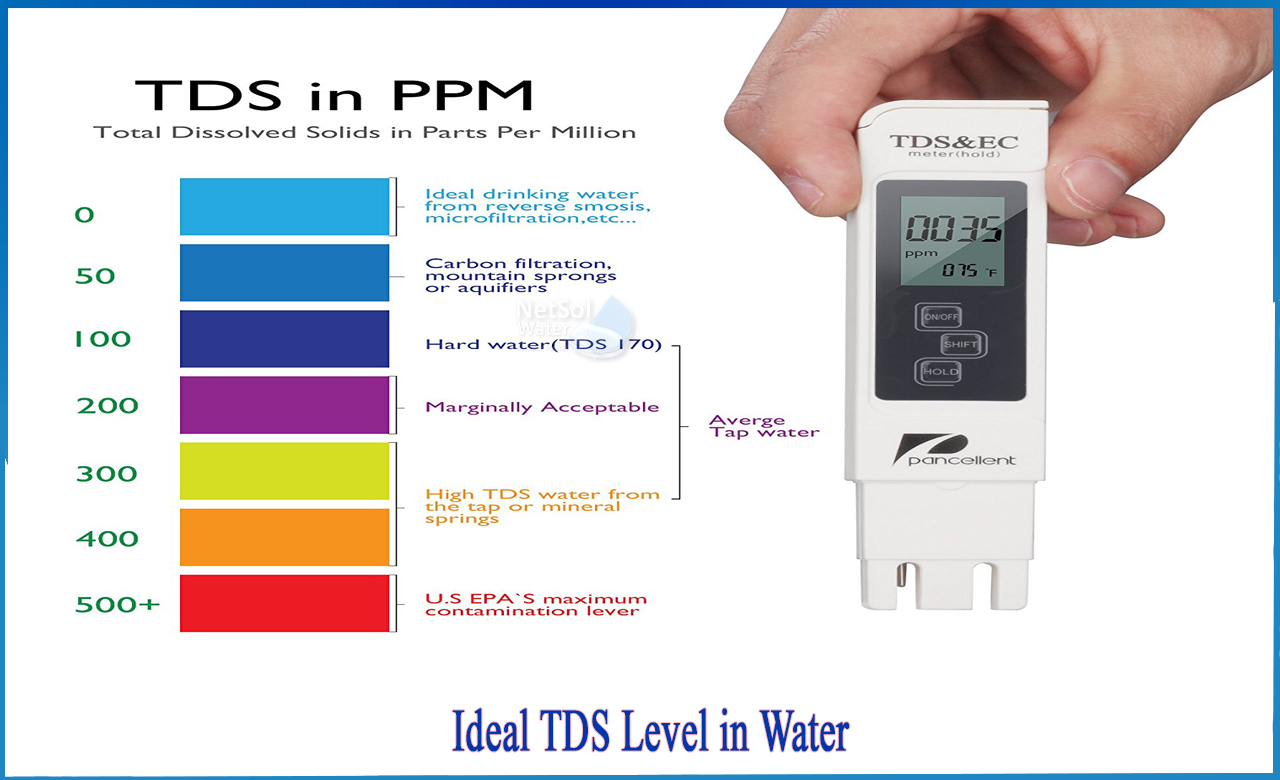
Ever licked a rock? No? Just me? Well, you’ve basically tasted Total Dissolved Solids (TDS). That’s what a TDS water tester measures. It’s a tiny gadget that tells you how much stuff is floating in your water. Minerals, salts, metals—oh my!
The Magic of the Little Black Stick
It looks like a fancy thermometer. But it’s a purity detective. You dip it in, and it zaps the water with electricity.
Pure water is a terrible conductor. Impure water lights up. The tester reads the electrical flow and spits out a number. That number is your TDS level.
Must Read
What’s Swimming in Your Glass?
Think of your water as a busy city. TDS counts every resident: calcium, magnesium, sodium, and even tiny bits of lead. Tap water is usually busy. Distilled water is a ghost town.
A reading of 0 to 50 ppm is practically empty. It tastes flat and boring. A reading of 300 ppm is like a party in your mouth. But a reading of 500 ppm? Your water might taste like a rusty penny.
The Quirky Fun of Testing Everything
Here’s where it gets hilarious. You will test everything in your kitchen. I tested my tap water: 150 ppm. Then my filtered water: 12 ppm. Victory!
Then I tested my girlfriend’s fancy bottled water. The expensive glass bottle from Italy? 280 ppm. She paid five bucks for mineral-heavy mud. I laughed. She cried. We ordered pizza.
You can test your pond, your fish tank, and even your morning coffee. Coffee is a TDS monster—over 1000 ppm! That’s why it stains your teeth.
The Dirty Secret of “Pure” Water
Low TDS doesn't mean safe. A TDS tester can’t spot bacteria, viruses, or nasty pesticides. It’s like counting people in a stadium but ignoring the pickpockets.
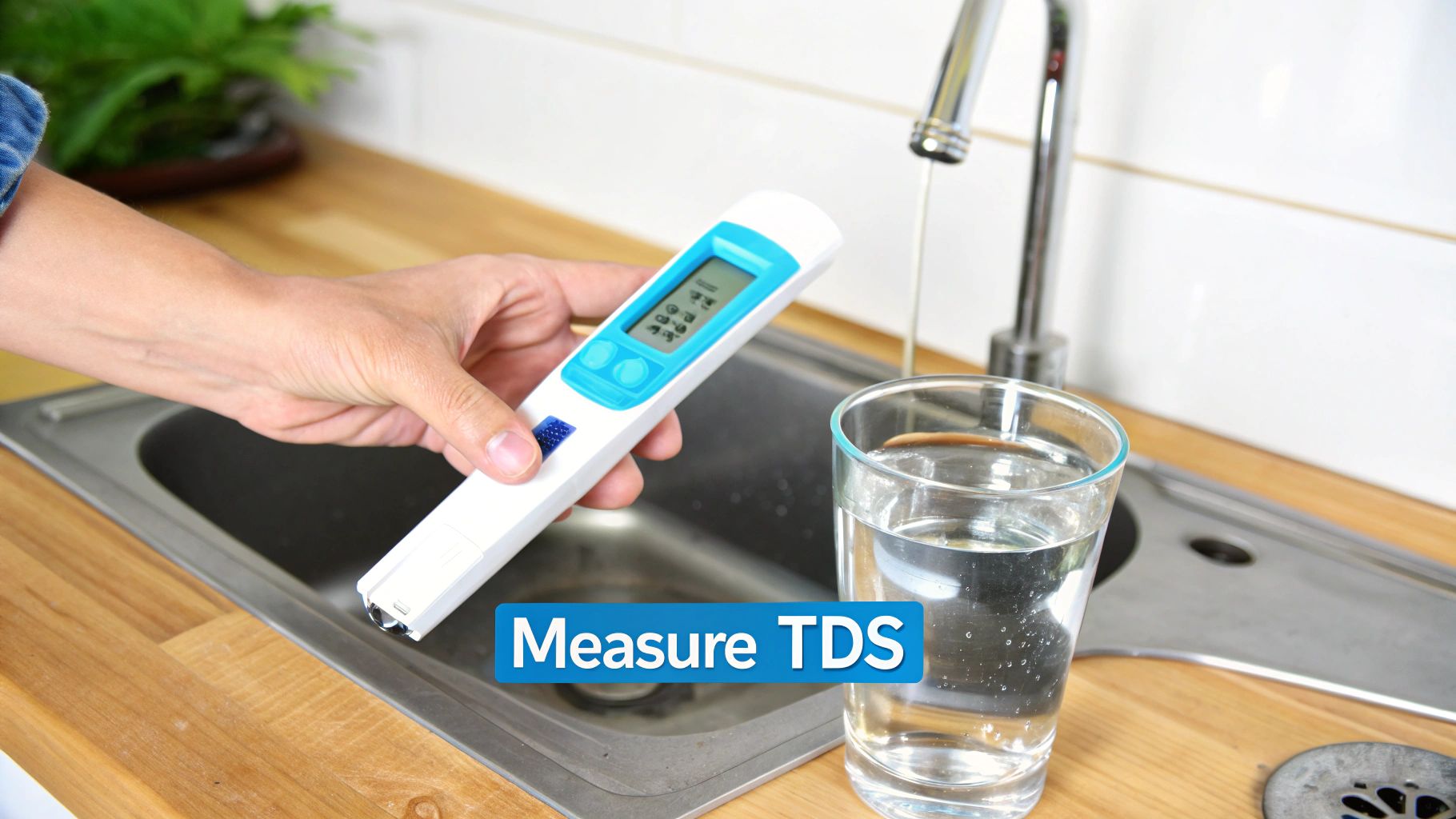 How to Reduce TDS in Water for a Cleaner, Tastier Drink
High TDS doesn't mean toxic either. Some spring water has soft, tasty minerals. Others have hard, crunchy limescale. Your tester just gives you the total headcount. It doesn't say who’s a friend and who’s a foe.
This makes it a curiosity tool, not a safety badge. Use it to wonder, not to worry.
The Battle of the Waters
Want to blow your mind? Test melted snow. It’s often under 10 ppm. Test your tap water after a storm. It might spike to 400 ppm from runoff.
Test a brand new water filter. It reads low. Test it after six months. High numbers mean it’s full of junk. You just found out your filter is a liar.
I once tested rainwater. It was 8 ppm. Then I tested a puddle next to a road. It was 1,200 ppm. Birds are basically drinking road-sludge.
Why You Should Buy One Right Now
They cost twelve bucks on the internet. It’s cheaper than a movie ticket. And it gives you hours of joy.
Test your aquarium. If it’s over 400 ppm, your fish are stressed. Test your plant water. Too much TDS? Your basil will get sad and droopy. You can be a plant hero!
 Total Dissolved Solids: Understanding Water Quality Indicators – Water
Test your beverage. A can of soda is over 700 ppm. That’s basically liquid sugar with a side of salt. You’ll never drink it the same way again.
The Fun Is in the Discovery
A TDS tester is not life-changing. It’s water-changing. You see the invisible. You become a water detective.
You’ll discover that “pure” water is a myth. That your neighbor’s fancy filter is a joke. That your rusty garden hose water is a mineral bomb.
It’s a tiny gadget that makes you feel like a scientist. Dip, zap, read, laugh. That’s the whole game.
So go forth. Test the tap. Test the toilet. Test your dog’s bowl. Warning: dog bowl water is usually gross and high TDS. You were warned.
The Final Sip
Ignorance is bliss, but knowledge is wet. A TDS tester gives you a peek into your water’s secret life. It’s a fun, cheap, silly gadget that makes you curious about something you drink every day.
And honestly? That’s pretty cool. Now go zap some water. Your inner nerd will thank you.
