How To Size Water Softener

So, you’re diving into the world of water softeners. Honestly? You’re about to become a hero in your own home. Think about it: no more crusty showerheads, silky hair after eve...
So, you’re diving into the world of water softeners. Honestly? You’re about to become a hero in your own home.
Think about it: no more crusty showerheads, silky hair after every wash, and dishes that actually sparkle. But first, you need to size it right. Get this wrong, and you’ll either waste money or end up with hard water nightmares. Let’s make this fun—and easy.
Why Size Even Matters (Hint: It’s All About Math, But the Fun Kind)
A water softener isn’t a “one size fits all” magic box. Size it too small, and it’ll regenerate constantly—like a hamster on a wheel, but less cute. Size it too big, and you’re flushing money down the drain for salt you don’t need.
Must Read
Your goal is the Goldilocks zone: just right. And trust me, your skin and your plumbing will throw you a party.
Step 1: Count the People (Yes, Even the Renting Teenager)
Start with your household’s daily water usage. The average person uses about 75 gallons per day—showers, laundry, flushing, and that endless dishwashing battle. Multiply that by the number of people living in your home.
So for a family of four, that’s 300 gallons daily. But wait! Don’t panic—this is just the baseline. We’re about to add the secret sauce.
Step 2: Test Your Water Hardness (Channel Your Inner Scientist)
Grab a simple test kit or call your local water utility. They love sharing this stuff. You’ll get a number in grains per gallon (GPG)—that’s the unit of hardness.
If your water is 10 GPG, that’s moderately hard. If it’s 25 GPG, you’ve basically got liquid rock. Don’t worry—this is where the sizing math gets satisfying.
Step 3: The Magic Formula (It’s So Simple, You’ll High-Five Yourself)
Take your daily water usage (say, 300 gallons). Multiply by your hardness level (say, 10 GPG). That gives you 3,000 grains of hardness per day.
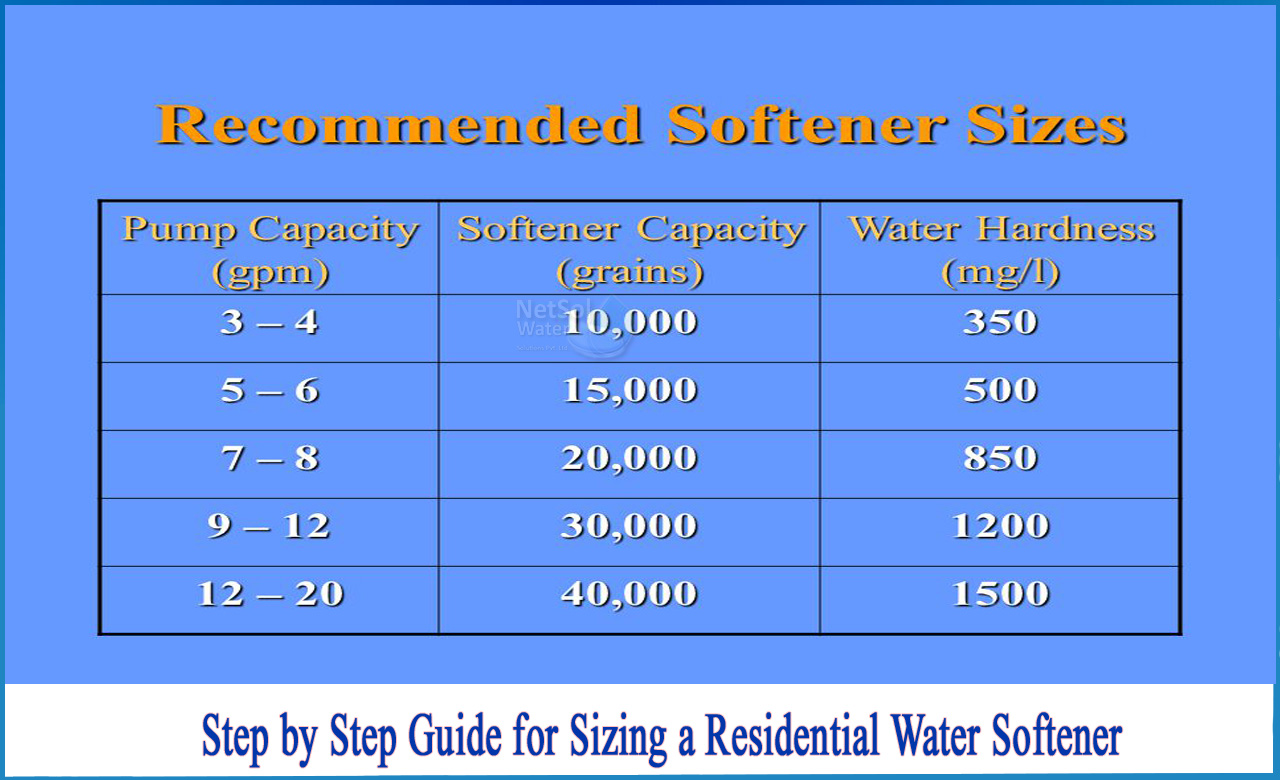 Water Hardness Scale Commercial Water Hardness Water City Of
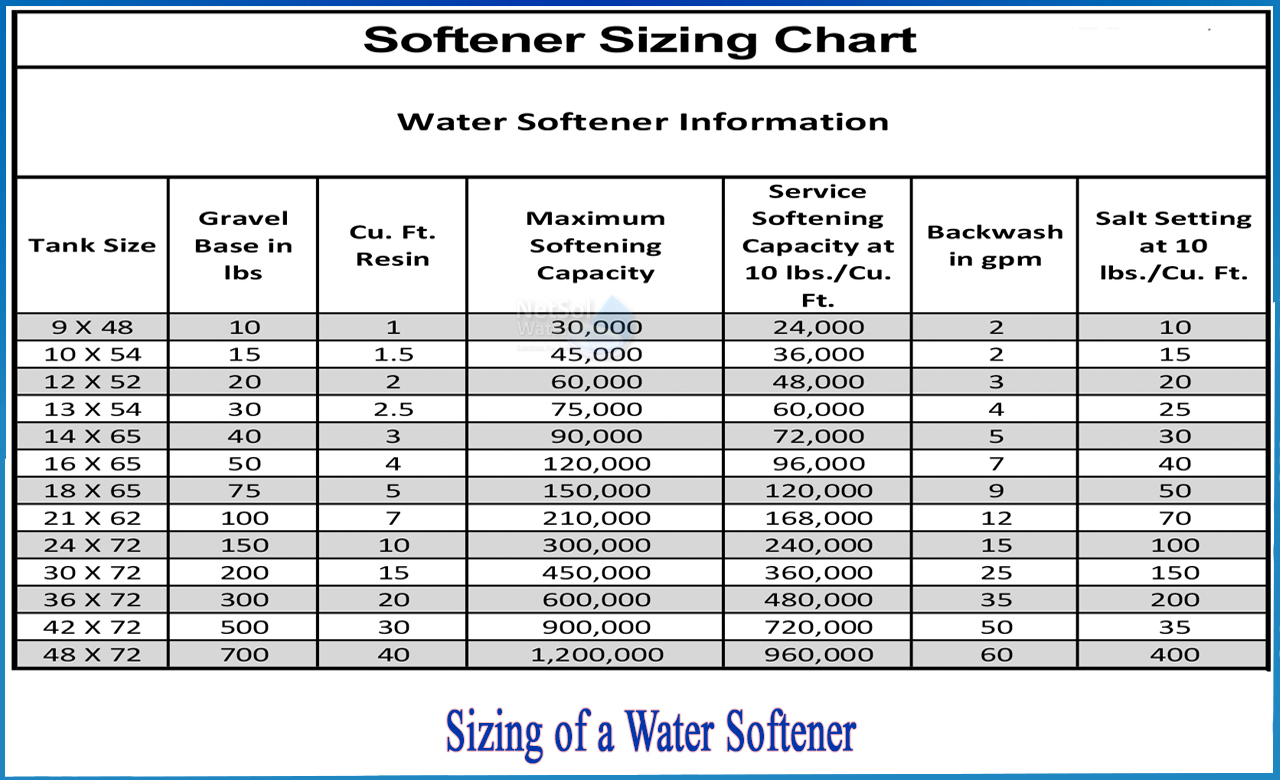
Now, add a buffer: multiply that number by 7 days (most softeners regenerate weekly). So 3,000 × 7 = 21,000 grains per week. That’s the minimum capacity you need.
But here’s the pro tip: never buy the exact number. Always go up 10–20% for efficiency and salt savings. So aim for a 24,000-grain unit or larger.
Don’t Forget the Iron (It’s the Sneaky Villain)
If your water has iron (rusty stains, metallic taste), you must adjust. Every 1 part per million (ppm) of iron acts like 4 additional GPG of hardness.
So test for iron! If you have 2 ppm, add 8 GPG to your hardness number. It’s not scary—just a little extra math that saves you from orange toilets.
What About Your Family’s Splurges? (Yes, You Can Size for Fun)
Got a giant soaking tub? An adult who takes 45-minute showers? Or maybe you’re hosting guests often? Add 10–15% more capacity. You’re not a hotel, but you deserve worry-free soft water.
Remember: oversizing a bit is better than undersizing. You can always use less salt, but you can’t magically shrink a tiny tank.
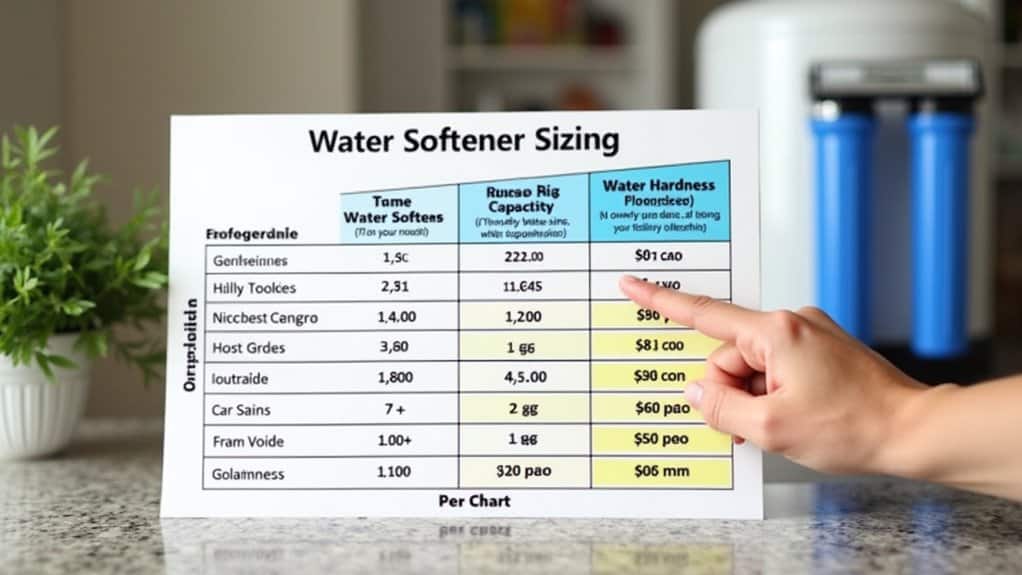 The Ultimate Water Softener Sizing Chart That Will Save You Thousands
Real-World Size Chart (Your Cheat Sheet)
For a family of 2 with 10 GPG water: a 24,000-grain unit is perfect. For a family of 4 with 15 GPG: go for 40,000 grains. For a family of 6 with 20 GPG and iron? You’re looking at 60,000 grains—a beast that purrs like a kitten.
And if you’re in a condo or small apartment, you can get a compact 18,000-grain unit that fits under a sink. Tiny, mighty, and ready to save your coffee maker.
Why This Makes Life More Fun (Not Just Less Frustrating)
Picture this: no more scrubbing soap scum off glass doors. Your laundry feels fluffier. Your skin stops itching in winter. Even your toothbrush lasts longer because mineral buildup vanishes.
And here’s the kicker: a properly sized softener uses less salt and less water. So you save money while feeling like a wizard who controls the elements.
One Last Tip: Don’t Obsess Over Perfection
You’re not building a rocket. If you’re within 10% of the ideal size, you’re golden. Most manufacturers have online calculators—use them! They’re like a GPS for your pipes.
And if you mess up? No worries. You can always adjust the settings or call a plumber for a tweak. The goal is joy, not stress.
So, go ahead. Measure your water, do the math with a smile, and pick that softener like you’re choosing a pet—one that works tirelessly to make your life shinier. You’ve got this. And soon, you’ll be the person who actually looks forward to doing dishes. That’s not just sizing—that’s upgrading your whole vibe.
