What Is Nsf Approved Mean

You’re standing in the grocery aisle, staring at a water filter. It promises crystal-clear, mountain-spring taste, but the box has a little blue logo that says “NSF.” You nod,...

You’re standing in the grocery aisle, staring at a water filter. It promises crystal-clear, mountain-spring taste, but the box has a little blue logo that says “NSF.” You nod, pretending you know what it means, then move on. We’ve all been there—nodding at labels like we’re in a secret club.
Let’s be honest: most of us just want our food and water to not secretly poison us. That is where NSF comes in, and it’s simpler than you think. NSF stands for the National Sanitation Foundation, but don’t let the fancy name scare you. Think of it as the cool, responsible older sibling who checks everything before you use it.
What Does “NSF Approved” Actually Mean?
When a product says NSF approved, it means a team of very serious scientists tested it. They made sure it doesn’t leak weird chemicals, break under pressure, or grow mold in your fridge. It’s like having a food safety inspector living inside your faucet—but less creepy.
Must Read
Imagine buying a water bottle that claims to be “indestructible.” You drop it once, and suddenly your carpet looks like a swimming pool. NSF approval is the guarantee that the bottle actually can survive your clumsy hands. It’s the difference between a flimsy promise and a real, test-backed yes.
Most people don’t realize this, but NSF covers way more than just water filters. They also check things like toasters, cutting boards, and even ice machines at your favorite diner. So next time you order a soda, that ice is probably NSF approved—unless you’re at that one dive bar with the mysterious green sludge.
Why Should You Care About This Logo?
I once bought a “stainless steel” lunchbox that rusted after two weeks. My sandwich looked like it had been in a shipwreck. That lunchbox did not have NSF approval. The logo is like a golden ticket for your kitchen gear—it means the thing was built to last, not just look pretty on Instagram.
Another time, I grabbed a pitcher that claimed to be “BPA-free.” Guess what? It wasn’t. The lid started tasting like plastic after a week. If it had the NSF mark, I would have saved myself from drinking what tasted like melted action figures. Trust me, your taste buds will thank you.
And it’s not just about taste—it’s about health. NSF approval means the product doesn’t harbor bacteria in hidden crevices. You know that weird smell in your reusable water bottle after a few days? That’s bacteria throwing a party. NSF-approved designs make those parties illegal.
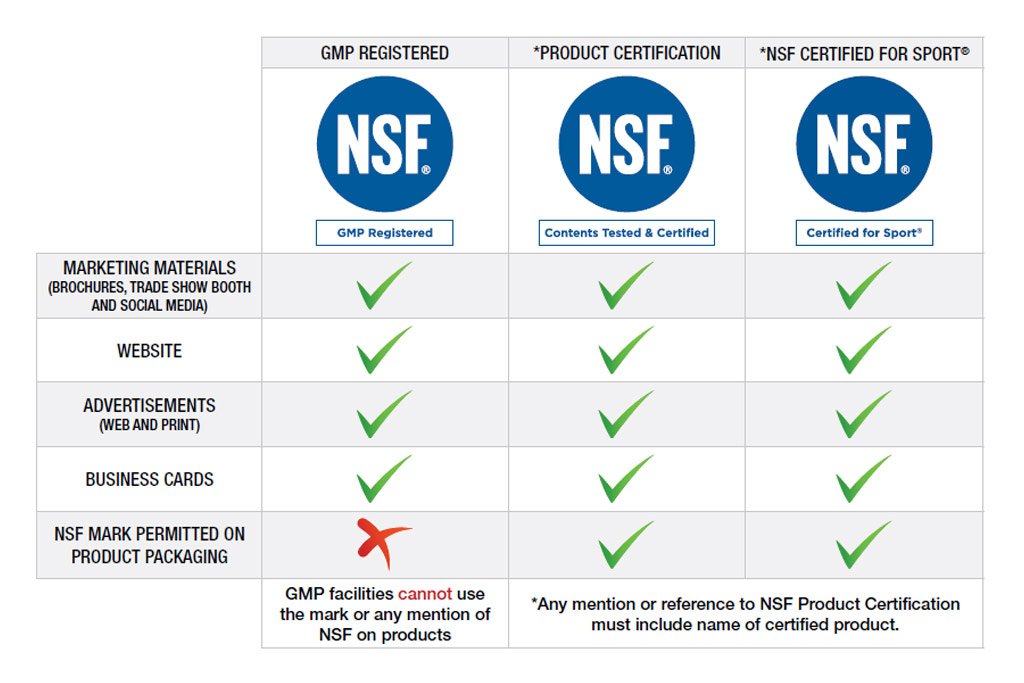 What Does Nsf Food Safety Stand For at Eva Harpur blog
How Does Something Get NSF Approved?
It’s not like slapping a sticker on a box in your garage. The company sends their product to NSF labs, where scientists do things like fill it with hot water for 10 days or drop it from a table over and over. It’s basically the “toddler-proof” test for appliances.
Then they check the materials. Is that plastic actually food-grade? Or is it secretly made from recycled beach toys? NSF checks every molecule so you don’t have to. It’s like having a very picky friend who reads every ingredient list for you.
And if the product passes? It gets the blue logo and a spot in a public database you can search. Yes, you can literally go online and see if your toaster survived the gauntlet. That’s the level of transparency we need in a world where people lie about “organic” ketchup.
Real-Life Examples That Will Make You Smile
Remember that time you bought a “dishwasher-safe” mug and the design peeled off after one cycle? If it had NSF approval, the logo would still be there, laughing at your coffee stains. That’s the difference between a cheap gift shop mug and a mug that belongs in your kitchen.
Or think about your ice maker at home. Ever notice how some ice tastes like freezer burn? That’s because the machine doesn’t have proper NSF-rated components. Good ice—the kind from a fast-food restaurant—is usually NSF certified. It tastes like nothing, which is exactly what ice should taste like.
Even your water pitcher filter matters. You might think “all filters are the same,” but that’s like saying all pizza is the same. NSF-approved filters actually remove lead and chlorine, while the cheap ones just make your water lonely and sad.
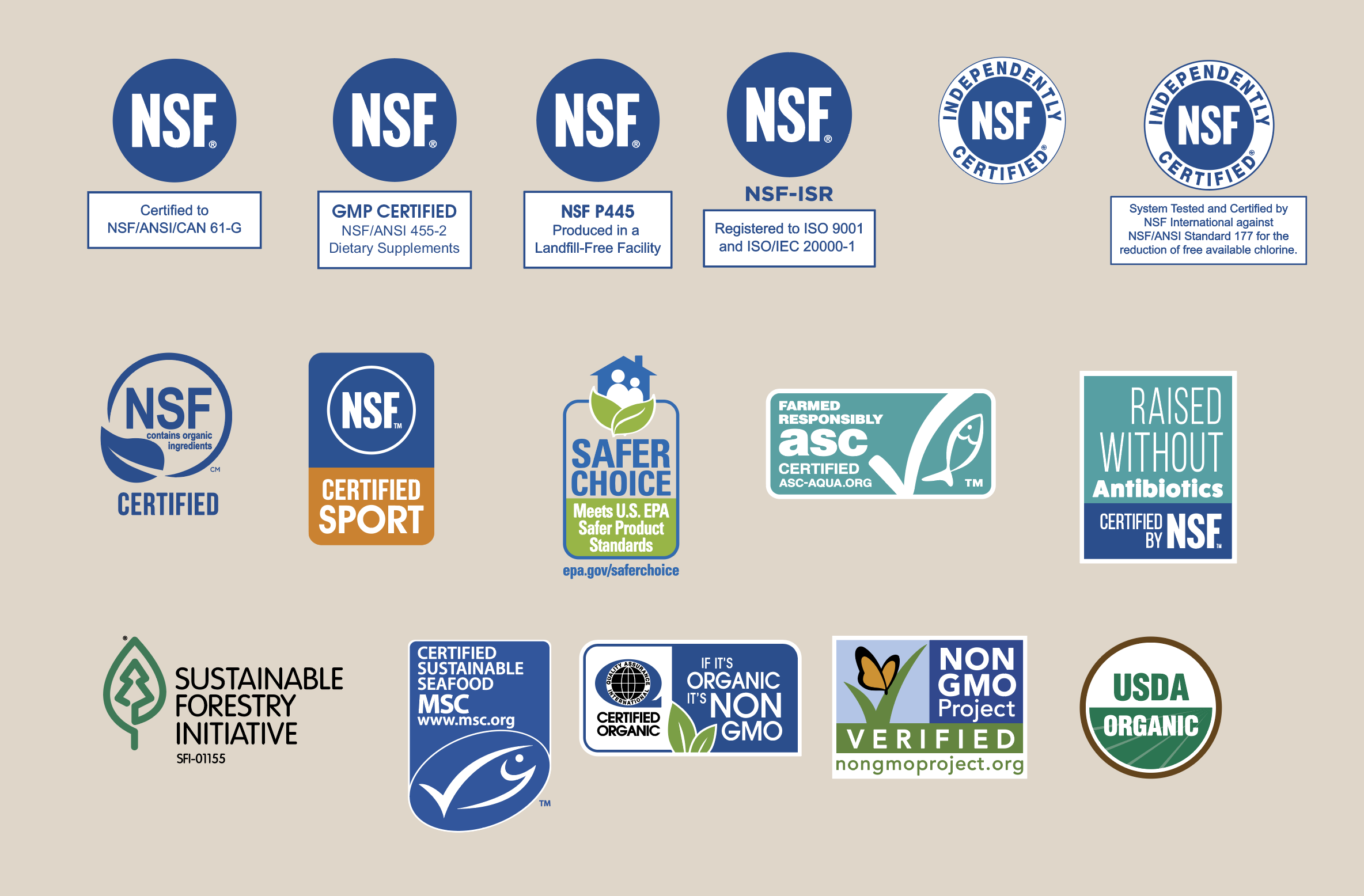 NSF Celebrating 80 Years
When Should You Look for the NSF Mark?
Anytime you buy something that touches food or water, check the box. That includes blenders, coffee makers, cutting mats, and even soda machine parts. If it’s going in your mouth or on your plate, NSF is your buddy.
Think of it like buying a car. You wouldn’t drive a car without airbags, right? NSF approval is the airbag for your kitchen. It’s not flashy, but when things go wrong, you’ll be glad it’s there.
And if you see the mark on something weird—like a portable toilet or a hospital bed—don’t freak out. NSF tests those too, because even toilets deserve a seal of approval. Just don’t drink from the toilet, NSF or not.
The Bottom Line (In Casual Speak)
So next time you’re in that grocery aisle, and you see the NSF blue logo, give it a little nod. You’re now in on the secret. It’s the label that says, “Yes, this thing won’t kill you, and it also won’t fall apart after three uses.”
It’s the difference between buying a toy guitar that sounds like a dying cat and a real guitar that actually plays music. NSF approved means the product passed the “real test,” not just the “looks good on shelf” test.
And honestly, isn’t that all we want? A world where our water bottles don’t leak, our ice doesn’t taste like old socks, and our lunchboxes survive more than one trip to the office. That’s what NSF approved means. It means peace of mind, served with a side of not poisoning yourself.
