What Is Nitrates In Water

You know how sometimes you’re sipping your morning coffee, and you think, “Hey, this water tastes a little… off”? Like someone accidentally dumped a teaspoon of lawn fertilize...
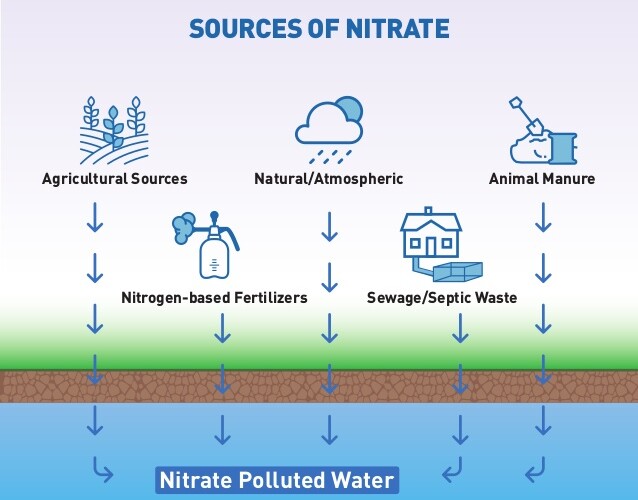
You know how sometimes you’re sipping your morning coffee, and you think, “Hey, this water tastes a little… off”? Like someone accidentally dumped a teaspoon of lawn fertilizer into the tap? Well, that might not be your imagination. It could be nitrates hanging out in your H₂O, having a little party you didn’t invite them to.
Nitrates are basically nitrogen’s fancy, oxygen-buddied-up cousin. They’re not villains by nature—think of them as the over-eager friend who helps plants grow like crazy. But when they sneak into your drinking water, things get a bit awkward for your body.
How Do Nitrates Even Get There?
Imagine your local farm’s cornfield after a rainstorm. The water runs off, picking up leftover fertilizer and manure like a gossip columnist picking up secrets. That slushy mix then seeps into the groundwater, bringing nitrates along for the ride.
Must Read
Your septic tank can also play host to this nitrate party. If it’s old or leaking, it might as well be a built-in sprinkler system for nitrates. Next thing you know, your well water tastes like it’s been marinating in a compost bin.
And yes, even your lawn can be the culprit. You know that green, envy-inducing grass you’ve been babying with chemical fertilizers? That’s basically a nitrate buffet waiting to wash into your tap.
Why Should You Care? (Besides the Taste)
Here’s where it gets personal. When you drink high-nitrate water, your body does something weird: it turns those nitrates into nitrites. And nitrites are like the grumpy bouncer at your blood’s oxygen nightclub—they mess with your red blood cells’ ability to carry oxygen.
For most adults, a little nitrate in the water is like a bad joke—annoying but not dangerous. But for babies under six months old, it’s a big deal. It can cause “blue baby syndrome,” where their skin turns a scary shade of pale because they’re not getting enough oxygen. Think of it as a really, really bad case of holding your breath.
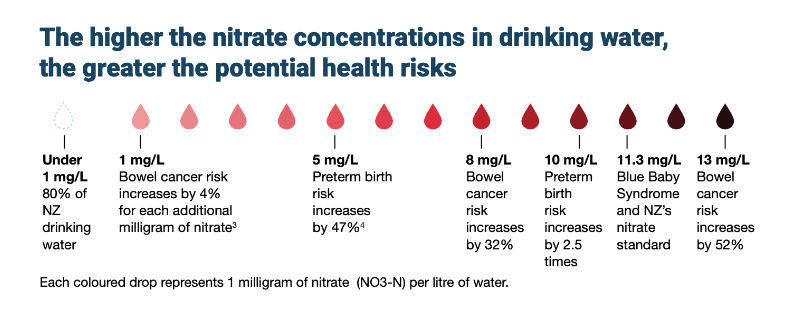 Nitrate In Water Assessment Of Water Quality Indicators In The Orla
And if you’re pregnant or have certain health conditions, those nitrates can also mess with your thyroid. It’s like telling your metabolism to take a long nap.
How to Tell If You’re Drinking Nitrate Soup
You can’t see nitrates, and they don’t smell like rotten eggs (that’s sulfur, a whole different drama). They’re the silent party crasher. Your only real clue is a weird, metallic or salty taste that lingers, even after you run the tap for a minute.
The only way to know for sure is to test your water. It’s like taking a DNA test for your faucet—simple, a little awkward, but totally worth it. You can buy a simple test kit at a hardware store, or call your county health department and sound like a hero.
If you have a private well, you should test at least once a year. Public water systems are required to test regularly, but if you live near farms or have a septic system, consider yourself on permanent nitrate watch.
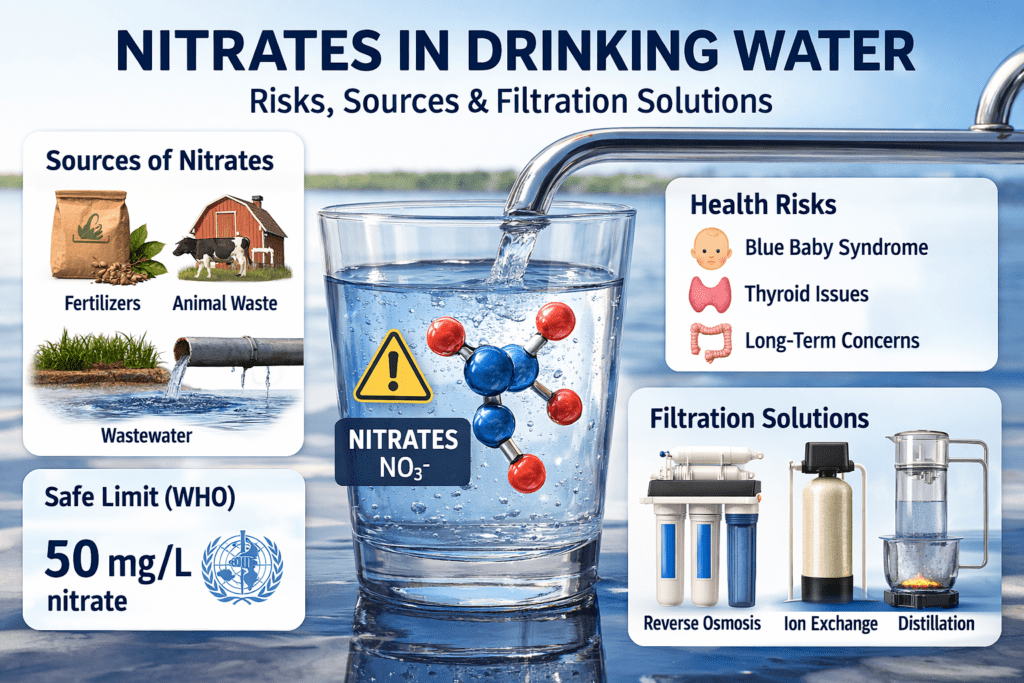 Nitrates in Drinking Water
Fixing the Problem Without Moving to Mars
Good news: you don’t need to pack up and move to a desert island. Home water filters can help, but not all filters are created equal. Those basic charcoal pitcher filters? They’re about as useful against nitrates as a paper umbrella in a hurricane. You need a reverse osmosis system or a special ion exchange filter—basically the heavyweight champ of water treatment.
Another trick: boiling your water actually makes it worse. Boiling concentrates the nitrates because the water evaporates but the nitrates stay. It’s like trying to dry out a sponge by squeezing it—you just make the problem denser.
You can also reduce nitrates by keeping your own lawn and garden habits in check. Use organic fertilizers, don’t overwater, and please don’t dump leftover coffee grounds on the ground near your well. Yes, that’s a real thing people do.
The Nitrate Takeaway
Look, nitrates in water aren’t the end of the world. They’re just one of those little life annoyances, like finding a hair in your soup. But if you let it slide, it can get gross fast. Think of it as life’s gentle reminder to pay attention to what’s coming out of your faucet—because that water is what keeps you un-blue and full of oxygen.
So next time you pour yourself a glass, give it a little sniff. And if it tastes like it’s been hanging out with a cow pasture, maybe grab a test kit. Your blood cells—and your morning coffee—will thank you.
