What Is A Saltless System

You’ve probably heard the phrase “take it with a grain of salt.” It’s a wise mental trick—but what if we applied it to actual water, food, and even your plumbing? Welcome to t...
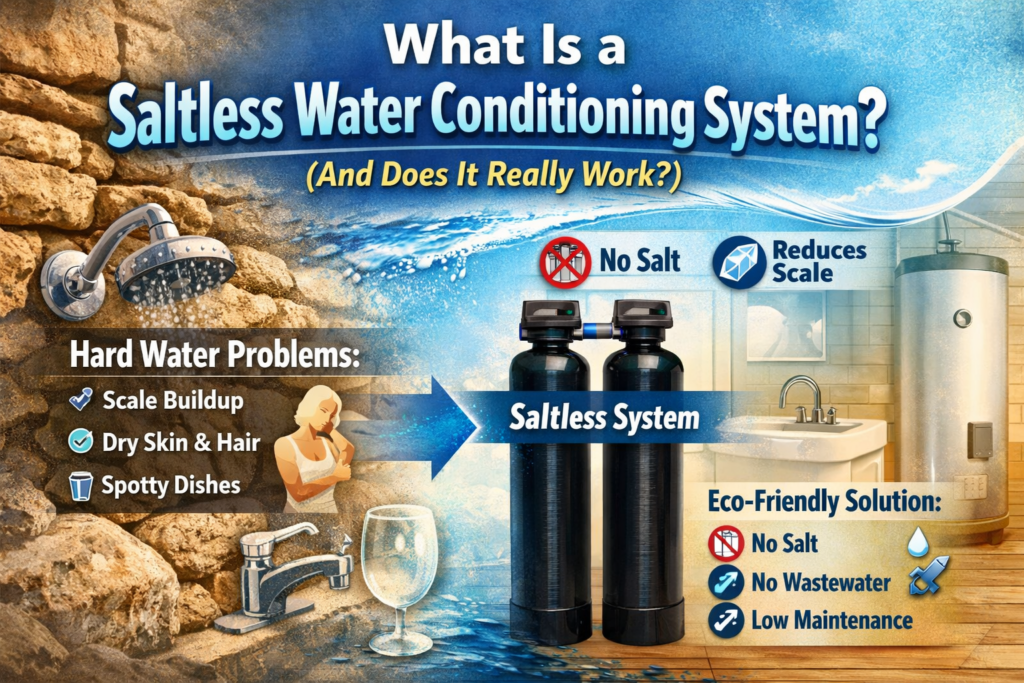
You’ve probably heard the phrase “take it with a grain of salt.” It’s a wise mental trick—but what if we applied it to actual water, food, and even your plumbing? Welcome to the world of a saltless system, a quiet revolution in how we manage water and wellness at home.
Let’s clear up the confusion first. A saltless system isn’t a water softener in disguise. It’s a water conditioner that uses physical or chemical processes—like template-assisted crystallization (TAC) or electromagnetic fields—to alter the structure of hard water minerals without adding sodium. Think of it as a minimalist upgrade, not a chemical overhaul.
Why does this matter? Because traditional salt-based softeners dump brine into the environment, contribute to plastic waste from salt bags, and can leave your drinking water tasting like a seaside sundae. A saltless system sidesteps all that, keeping your water mineral-rich and taste-neutral—exactly what your morning coffee deserves.
Must Read
The Chemistry of “No Salt” – Fun Facts to Impress Your Friends
Here’s the geeky bit you can drop at dinner parties: hard water contains calcium and magnesium ions that cling to pipes like clingy exes. Saltless systems don’t remove these ions; they crystallize them into tiny, harmless particles that float right through your plumbing.
Imagine transforming gummy, scale-forming minerals into microscopic, non-stick pebbles. That’s what a TAC system does, and it’s so effective that some models last 10–15 years with zero maintenance. No salt refills, no slimy resin beads, no midnight runs to the hardware store.
Fun fact: A saltless system can reduce scale buildup by up to 99.6% in pipes. Meanwhile, a salt-based softener adds about 120 milligrams of sodium per glass of water—enough to register on a low-sodium diet. Your blood pressure will thank you for the swap.
Where Does This Fit in Your Life? Practical Tips
If you’re a renter with a tiny apartment, traditional softeners are a non-starter—they’re heavy, require drainage, and need constant salt. A saltless system often installs under your kitchen sink or at the main water line, taking up less space than a shoebox. No landlord approval required.
For homeowners in mild climates (think California, the Pacific Northwest, or the South), saltless systems shine because they don’t waste water. Salt-based softeners regenerate by flushing gallons down the drain, sometimes 50–100 gallons per cycle. A saltless system? Zero waste. It’s basically the hybrid car of water treatment.
 Best Saltless Water Softener Systems - Big Power Water Co.
Practical tip: Pair your saltless system with a carbon filter if you’re worried about chlorine taste. The combo gives you conditioned water that protects appliances, skin, and hair—without the salty aftertaste that ruins your iced tea. Try it for a month; your shower will feel like a spa, not a science experiment.
Cultural References: From Ancient Rome to Modern Minimalism
Humans have battled hard water since the Romans used aqueducts lined with lead—bad idea, but they got the scale problem. Fast-forward to the 1980s, and salt systems were the rage, promising silky hair and spotless dishes. Today, the pendulum swings toward gentle technology and environmental consciousness.
Think of a saltless system as the Kondo method for your pipes: it doesn’t add more stuff; it organizes what’s already there. In a world drowning in single-use plastics and chemical additives, there’s something refreshing about a device that just… works quietly. No beeps, no brine tanks, no guilt.
Pop culture alert: Remember the scene in Breaking Bad where Walt uses a giant salt pile? Reverse that energy. A saltless system is like the zen monk of water treatment—calm, efficient, and drama-free. Your plumber will have fewer emergencies, and your kettle will stop looking like a miniature white stalactite cave.
The Elephant in the Room: What Saltless Doesn’t Do
Let’s be honest: saltless systems don’t remove existing scale or prevent corrosion. If your 1980s pipes are already crusted with lime, a salt-based softener might be necessary first to clean them out. Also, if you have extreme hard water (over 20 grains per gallon), some saltless systems struggle to keep up.
 Water Softener and Purifier RO Water Softener Best Saltless Water
But for the 90% of US homes with moderate water hardness (5–15 grains), a saltless system is a brilliant trade-off. You lose the “slippery” feel of softened water, but you gain mineral content that’s good for your health. Plus, your plants will thrive—fluoride and sodium can harm houseplants, while calcium is actually beneficial.
Fun maintenance hack: Every six months, flush your system with a little white vinegar to keep the crystallizer media clean. That’s it. No service calls, no salt subscriptions. Just a half-hour chore that’s easier than folding laundry.
A Final Reflection: The Art of Letting Go
A saltless system teaches us something profound: sometimes, the best solution isn’t to remove what’s “hard” about life, but to transform it into something harmless. We can’t eliminate every mineral, every challenge, every stubborn bit of scale—but we can learn to coexist.
Every morning when you fill your glass from a saltless system, remember this: clarity doesn’t come from stripping everything away. It comes from finding a way to let the good parts flow, and letting the rest settle into tiny, peaceful crystals. That’s not just water conditioning—it’s a philosophy for modern living.
So skip the salt. Your hair, your kettle, and your conscience will all appreciate the break. And next time someone tells you to take life with a grain of salt, smile and offer them a glass of perfectly balanced, sodium-free water instead.
