How To Shock A Water Well

You know that feeling when your morning coffee just doesn’t hit right? Or when you turn on the garden hose, and the water smells a little like a basement after a flood? That’s...
You know that feeling when your morning coffee just doesn’t hit right? Or when you turn on the garden hose, and the water smells a little like a basement after a flood? That’s your water well telling you it needs a spa day. We’re talking about shocking your well—a simple, cheap way to kick out bacteria and funky smells so your water feels fresh again.
Think of it like spring cleaning for your underground water source. You wouldn’t go six months without washing your favorite coffee mug. Your well is no different. A little shock treatment keeps things clean and safe for your family.
So, what exactly is “shocking a well”?
Shocking a well just means pouring household bleach down the top of your well casing. It sounds scary, but it’s the same bleach you use to whiten your laundry. The bleach kills bacteria, algae, and that sulfur smell you sometimes get after heavy rain.
Must Read
It’s like giving your well a strong shot of disinfectant. After a few hours, you flush it all out. The result is clean, safe, and fresh-tasting water.
Why should you care? (Besides the coffee thing)
Your well is like a straw into the ground. If bacteria get in there, they can wreck your pipes, make your water smell like rotten eggs, and even upset your stomach. Nobody wants a surprise case of the “runs” after a long hike.
And here’s the kicker: it’s cheap. A jug of bleach costs less than a fancy latte. Why risk a potential plumbing nightmare when you can avoid it with a Sunday afternoon chore?
The simple steps to do it (no science degree required)
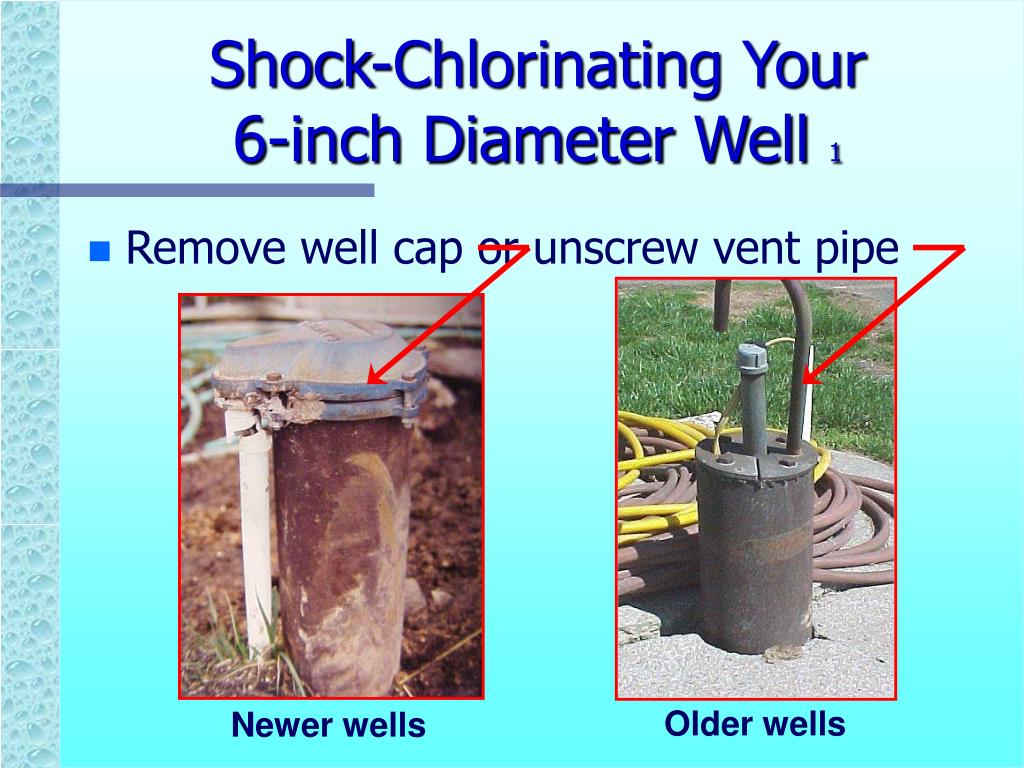
First, turn off your water pump and any water treatment systems you have. You don’t want bleach going through a fancy filter. Then, find your well cap—it’s usually a metal or plastic lid near your house.
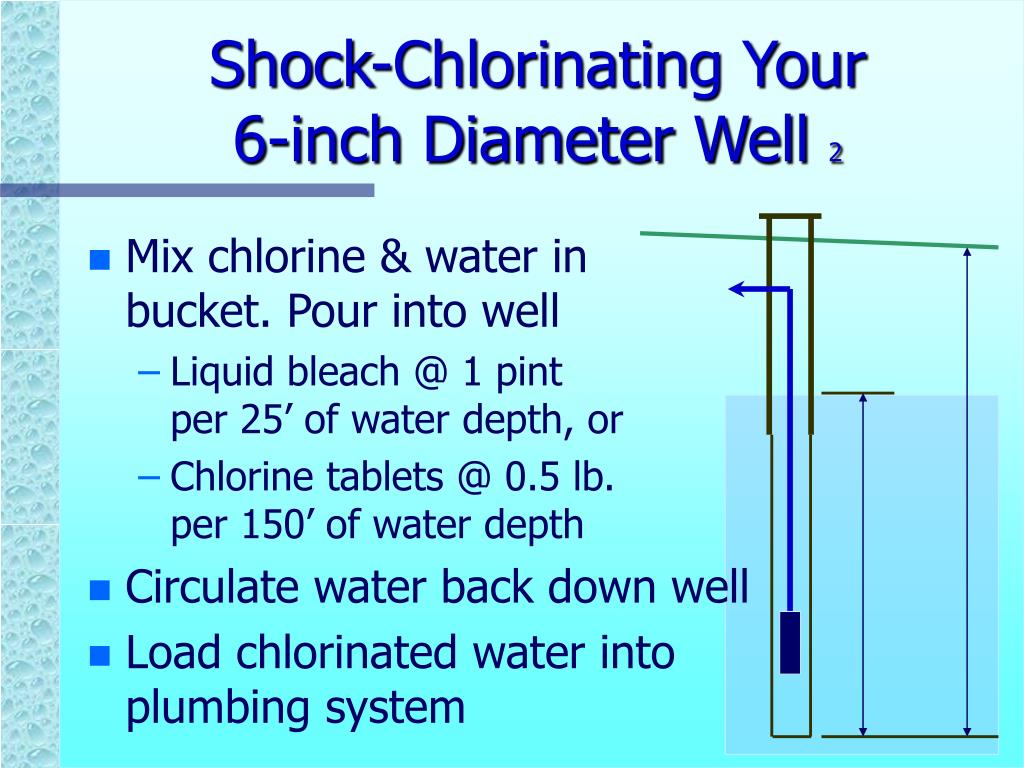
Measure out about one gallon of bleach for every 100 feet of well depth. Use a clean bucket. Pour it straight down the top of the well casing. It might splash a little, so wear old shoes. This is not a fancy occasion.
 PPT - Is Your Well Water Safe? PowerPoint Presentation, free download
Now, run your garden hose from an outdoor faucet away from your house. Let it flow until you smell bleach at the hose end. That smell means the bleach made it through your whole system. Then, shut off the hose.
The waiting game (the hardest part)
Let the bleach sit in your well and pipes for at least 12 hours—overnight is perfect. It’s like marinating a steak, but for water. Do not use any water during this time. No showers, no dishwasher, no toothbrushing. Tell your family you’re doing a “water nap.”
After 12 hours, turn your pump back on and run every outdoor hose you have. Let them run until you can’t smell bleach anymore. Then, flush every indoor tap for a minute each. You’ll see some foaming—that’s the gunk leaving your pipes. Celebrate it.
When should you do this?
Do it once a year, like changing your smoke alarm batteries. Or do it right after a flood, heavy rain, or if your water test shows bacteria. Also, do it after a power outage that shut down your pump for a while.
If your water smells like a swamp, or your kids start skipping their baths, it’s time. Trust your nose. It’s smarter than you think.
A quick word of caution (don’t skip this part)
Never use scented bleach, or laundry pods, or anything fancy. Plain, unscented liquid bleach is the only thing that works. Scented stuff leaves a perfume layer in your well. Nobody wants lavender-scented shower water.
 How To Safely Shock A Drilled Well For Clean Water | ShunTool
Also, if you have a septic tank, be careful not to pour the bleach directly into it. The bleach in your pipes will be diluted enough, but don’t flush the bucket down the toilet. That’s just mean to the septic tank bacteria.
But what if you have a tight well cap?
Some wells have a sealed cap with two little plugs. You unscrew one plug and pour the bleach in with a funnel. It’s like putting oil in your car—only easier because it doesn’t smell like a garage.
If you can’t find the cap or it’s buried under dirt, skip it and call a pro. But if you can get to it, you can do this. You are capable. You got this.
Still not sure? Think of it this way:
Your well is like a big water bottle that sits underground. Every time you use water, you drink from that bottle. If you wouldn’t drink from a bottle that never got cleaned, you shouldn’t ignore your well. Shocking it is the cheapest insurance you can buy.
And hey—if you mess it up? The worst that happens is you waste a little bleach and you have to run your hoses an extra hour. No big deal. You’re just giving your water a pep talk.
So pick a Saturday, grab a jug of bleach, and give your well the love it deserves. Your coffee will thank you. Your garden will thank you. And your nose? It will finally stop complaining.
