How To Find A Water Meter

So there I was, on a crisp Saturday morning, armed with a flashlight and a growing sense of dread. My water bill had tripled, and the tiny, metal lid in my front yard—the one...

So there I was, on a crisp Saturday morning, armed with a flashlight and a growing sense of dread. My water bill had tripled, and the tiny, metal lid in my front yard—the one I’d always ignored—was suddenly the most important object in my life. ‘Find the water meter,’ the plumber had said, ‘or I can’t help you.’ I stood there, staring at the overgrown grass, feeling like an archaeologist who forgot his map.
Finding that little box is the first step to fixing leaks, checking for bursts, or even just proving you’re not watering the neighbor’s lawn. Don’t worry, you’re not alone. Most of us treat our water meter like a secret family heirloom we’ve never met—until the price of water starts hitting your wallet like a punchline.
Why you even need to find it (besides the panic)
Let’s be real: you’re probably reading this because something wet and expensive is happening. High bill? Weird puddle? The meter is your detective’s magnifying glass. It tells you if the problem is inside your house (a running toilet) or outside (a sneaky pipe leak).
Must Read
If you ignore it, you’re basically writing a blank check to the water company. And trust me, they love blank checks—but your bank account doesn’t. So, think of this hunt as a treasure hunt where the treasure is lower bills. Ready for the clues?
Step 1: The Obvious Places (yes, really check here)
First, look at the curb of your property, right near the street. Most water meters are inside a rectangular or round concrete box with a metal lid, often about the size of a shoe box. It might be labeled “Water” or have a local utility symbol, but usually, it just looks like a manhole cover’s shy cousin.
Pro tip: The lid is heavy! Use a flathead screwdriver or a crowbar—carefully—to pry it open. And wear gloves, because you might uncover a spider’s mansion. You’ve been warned. If it’s bolted, you’ll need a wrench, but that’s rare.
Step 2: When the curb is a dead end
Not every home has a meter at the curb. Some hide them in a utility closet in your basement or garage, near the main water shut-off valve. Look for a pipe coming through the wall with a circular dial attached. It’s usually the size of a dinner plate, with numbers spinning like a slot machine.
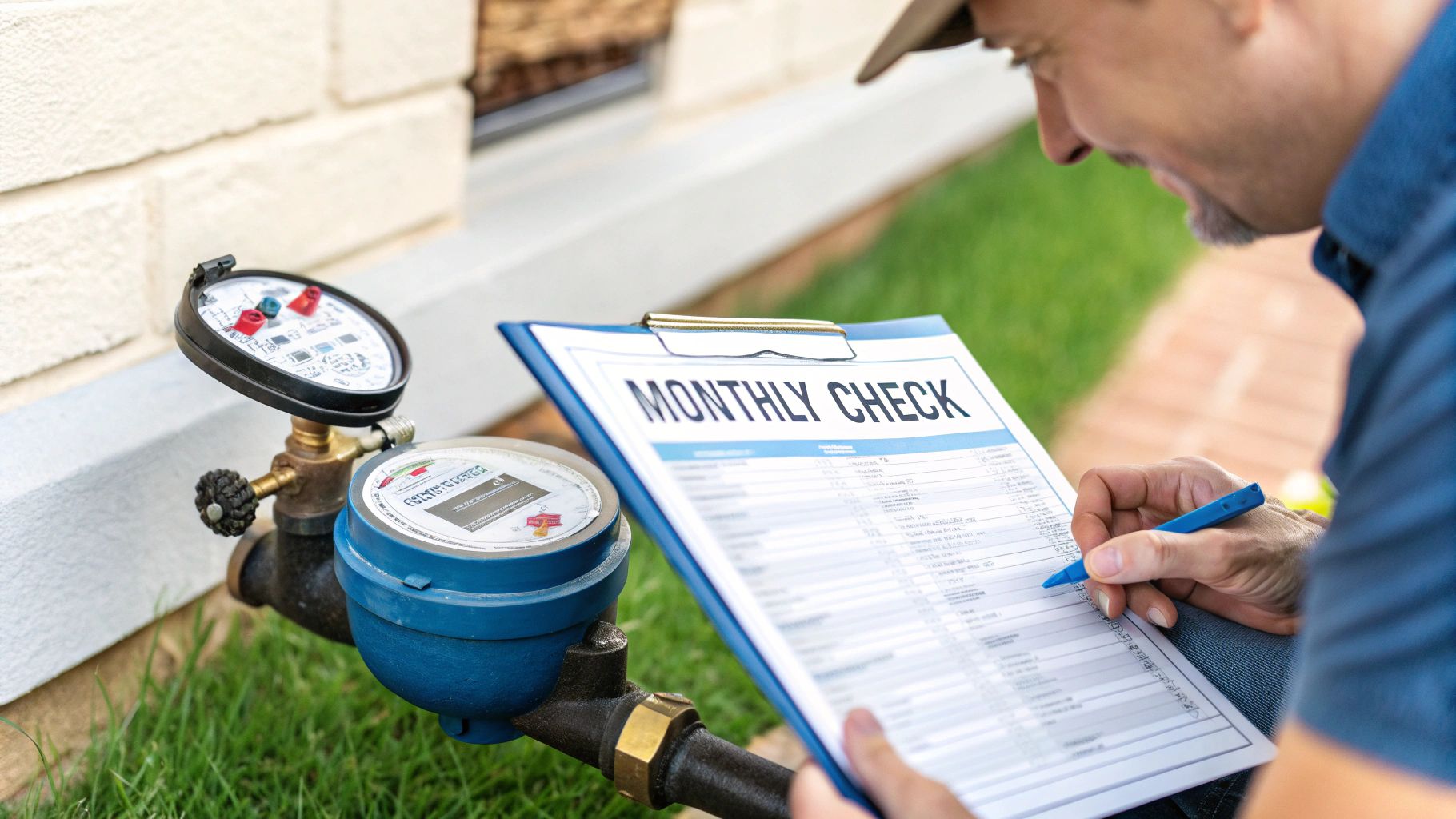 How to Read Water Meter: The Ultimate Homeowner's Guide - Mokher Plumbing
If you live in a warmer climate, check the exterior wall of your house. Sometimes the meter is mounted right next to the outdoor faucet. Fun fact: I once found mine behind a bush that my landlord later admitted he planted to “hide the ugly thing.” Thanks, Gary.
Step 3: The sneaky underground box
Still nothing? Okay, let’s go full detective mode. Walk the entire perimeter of your property, looking for a small, flush-to-ground plastic or metal cover. It could be near a fence, under a shrub, or even in the middle of a flower bed. Look for a faint outline in the grass—brownish or greener, because the box affects water drainage.
If the lid is stuck or buried, use a trowel to gently dig around the edges. Don’t just yank it! You might snap the pipe under it. And no, that puddle is not a swimming pool for your soul—it’s a leak.
What to do once you find the little rascal
Pop the lid open (again, gloves on!). You’ll see a dial with numbers—those are your gallons or cubic feet. Underneath, there’s usually a small, spinning triangle or a digital display. That triangle is your leak detector. If it’s spinning when all water is off, you’ve got a leak. Congratulations, you’re now a plumber.
 How to Read a Water Meter | Billing, Leaks & Overconsumption
Make sure the meter is accessible in the future. Trim the grass, mark the spot with a garden stone, and take a photo. Your future self will kiss you. If the box is filled with mud or water, call your utility—they’re responsible for cleaning it.
A quick warning (because the universe loves irony)
Don’t try to remove or tamper with the meter itself. That’s the water company’s property, and playing with it is a fast path to a fine. Also, if you think the meter is faulty, call them instead of trying to “fix” it with a hammer. Spoiler: That never ends well.
Finally, if you live in an apartment or condo, the meter might be in a shared utility room. Look for a locked box—ask your building manager for the key. They’re used to this. Just don’t mention you’re planning to check for leaks at 2 a.m. because you’ve watched too many DIY videos.
The satisfying payoff
Once you’ve got your meter in hand (well, in sight), you can finally shut off the valve during a flood or verify that yes, your toilet is possessed. You’ve just saved yourself a plumber’s visit fee. Plus, you’ll never have to beg a neighbor for a flashlight and emotional support again.
So go on—grab that screwdriver, put on your best “I’m an adult” face, and find that meter. Your water bill will thank you, even if your spider-hating heart won’t.
