How To Detect Water Leaks

Have you ever heard a faint, mysterious drip in the dead of night? It’s like your house is trying to tell you a secret, but you just can’t quite catch the words. Most of us ig...
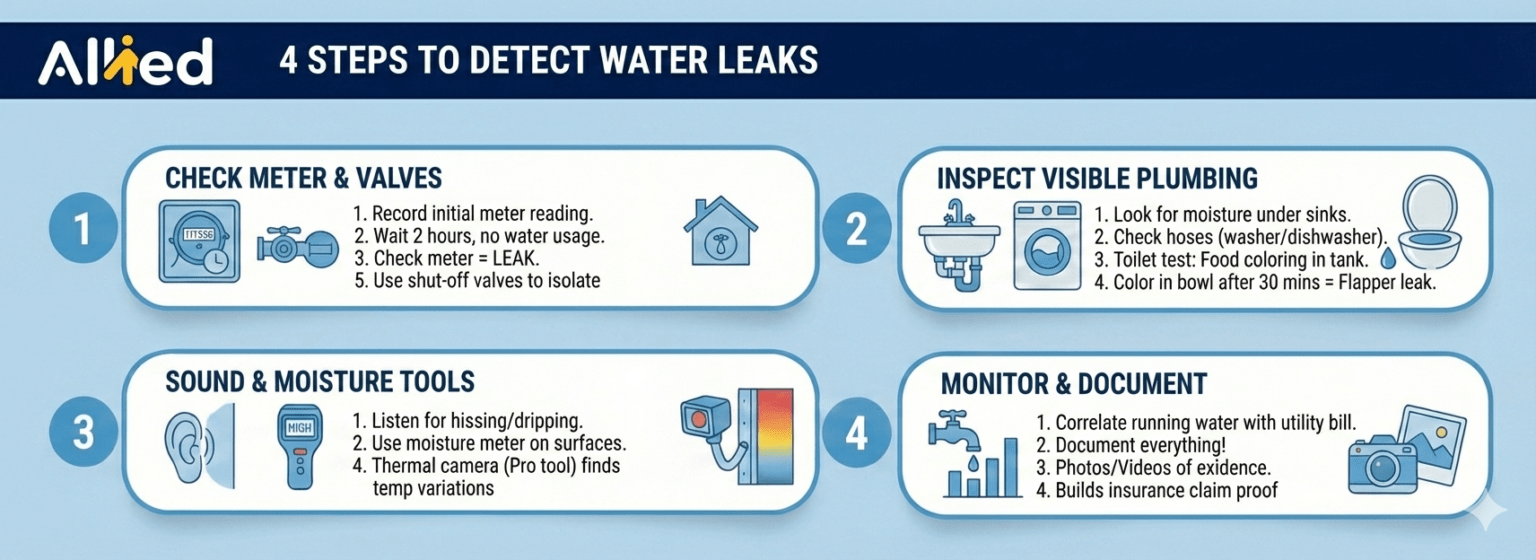
Have you ever heard a faint, mysterious drip in the dead of night? It’s like your house is trying to tell you a secret, but you just can’t quite catch the words. Most of us ignore that little sound, but here’s the thing: a small leak can waste over 10,000 gallons of water a year. That’s like filling a whole swimming pool—just to watch it disappear down the drain.
Detecting water leaks isn’t just about saving money on your bill; it’s about becoming a home detective. You get to put on your imaginary deerstalker hat and follow tiny clues. Plus, catching a leak early can save you from a moldy mess or a surprise floor renovation. Trust me, your future self will high-five you.
The Silent Suspects: Where Leaks Love to Hide
Leaks are sneaky little gremlins. They love hanging out under sinks, behind toilets, and around your water heater. Ever notice a weird, damp spot on your ceiling? That’s your upstairs neighbor (or your own shower) waving a red flag.
Must Read
Your water meter is your best friend in this mystery. Turn off all the water in your house—no taps, no dishwasher, no toilet flushing. Go look at the meter. If the little dial is still spinning like a breakdancer, you’ve got a leak somewhere. Isn’t that wild? A tiny twitch in a metal box tells you everything.
The Toilet: A Master of Disguise
Your toilet is probably the biggest culprit in the average home. It can leak without making a sound, just quietly flushing your money away. Want to catch it red-handed? Drop a few drops of food coloring into the tank—no, not blueberry juice.
Wait 15 minutes without flushing. If you see color seeping into the bowl, you have a silent leak. It’s like a magic trick, but instead of pulling a rabbit, you’re pulling a problem you can fix with a five-dollar flapper. Pretty cool, right?
 How to Detect Water Leaks in Walls: 13 Steps (with Pictures)
Listening to Your Walls: The CSI of Water
Put your ear against a wall near any pipes. Do you hear a gentle hiss or a tap-tap-tap? That could be a leak inside the walls, playing hide-and-seek. It’s a bit spooky, like hearing a ghost in your plumbing, but it’s just physics in action.
Also, check your water pressure. If it suddenly feels super weak, you might have a leak stealing your flow. Imagine trying to drink a milkshake with a tiny straw—that’s your faucet crying for help.
The Floor: A Very Honest Tattle-Tale
Walk barefoot around your house. Feel for warm spots on a cold floor, especially near the fridge or dishwasher. That warmth is water doing a slow, destructive dance. It’s the opposite of a ninja—it leaves a sticky, bubbly footprint.
If your floorboards start to curl up like a frightened cat, or you see stained grout in the shower, you’ve got a leak. Don’t panic! You’re just a few steps away from being a leak-busting hero.
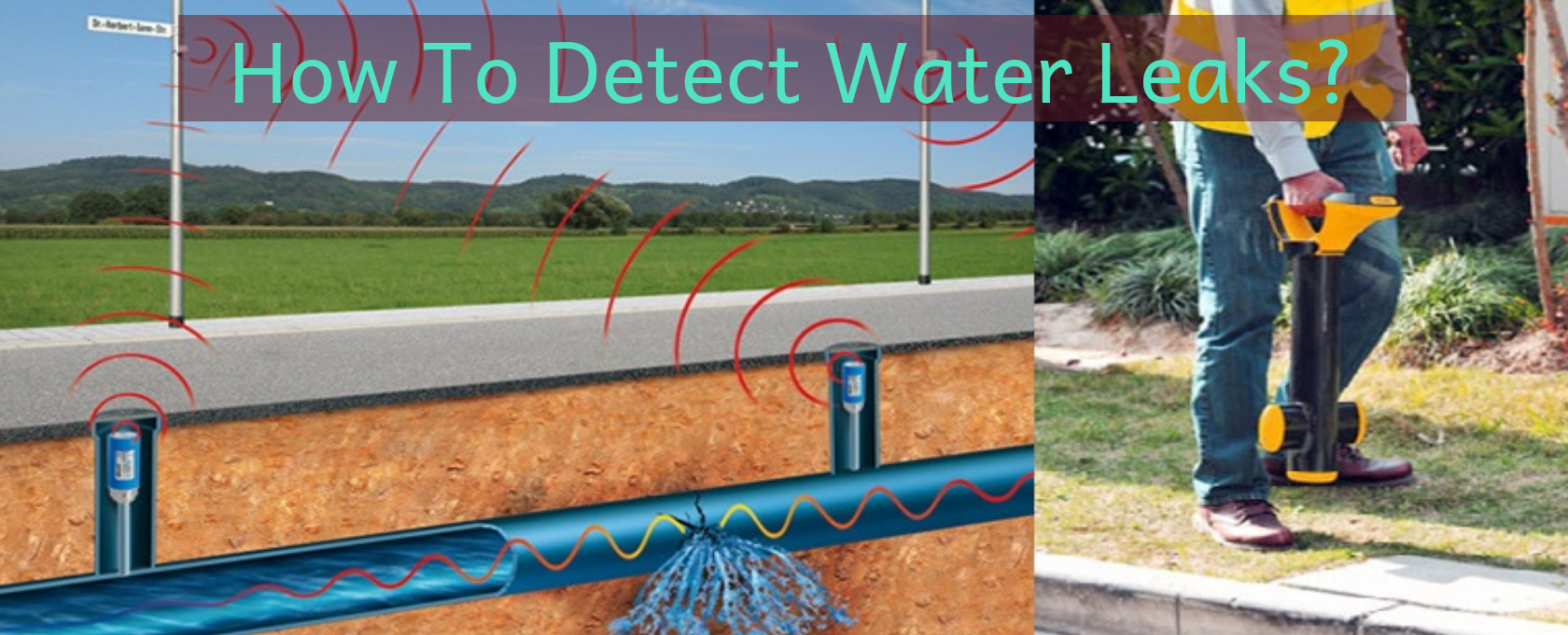 How To Detect Water Leaks Inside and Outside Your Home?
Smart Gadgets and Old-School Tricks
You can buy a water leak detector for less than a pizza dinner. These little wizards beep when they sense moisture, saving you from a flood. Stick one under your washing machine or near the water heater. It’s like having a tiny lifeguard on duty.
But don’t forget the grandma method: a fresh paper towel. Wipe under pipes and check back in an hour. If the towel is wet, you’ve got a leak. It’s old-fashioned, but it works every time. Why? Because paper towels are honest.
Why Bother? Because It’s Awesome
Finding a leak feels like winning a mini science fair. You used your eyes, ears, and a little logic to outsmart a hidden problem. Plus, fixing a leak can save you up to 10% on your water bill. That’s money for tacos or a new houseplant.
And here’s the cool part: you’re helping the planet. Every drop you save stays in rivers and reservoirs. So next time you hear a drip, don’t just grab a bucket. Get curious. Become the leak detective your home deserves. Who knew being a plumber could feel this rad?
