How To Save Water At Home

We all know the drill: turn off the tap while brushing, take a shorter shower, maybe fix that one drippy faucet that’s been singing its sad little song for months. But saving...

We all know the drill: turn off the tap while brushing, take a shorter shower, maybe fix that one drippy faucet that’s been singing its sad little song for months. But saving water at home doesn’t have to feel like a chore—it can actually be a smart, stylish, and surprisingly satisfying lifestyle upgrade. Think of it less as a sacrifice and more as a quiet rebellion against waste, a way to keep your utility bill lean and your planetary karma strong.
Your Kitchen: The Command Center
The kitchen is where the magic—and the most accidental splashing—happens. Instead of running the tap until it gets cold, keep a pitcher in the fridge for drinking water. Not only does it save a few gallons a week, but it also turns you into the ultimate host who always has chilled water ready for a guest.
When washing produce, skip the open faucet. Fill a bowl with a little water and a splash of vinegar instead, then give your broccoli a spa-like soak. That single bowl of water can then be used to water your indoor plants—and yes, your peace lily will definitely thank you for the extra minerals.
Must Read
Fun fact: An average kitchen faucet flows at about 1.5 gallons per minute. That means every ten-second rinse is roughly the same volume as your favorite ceramic mug. Use that mental image next time you’re standing at the sink daydreaming about your grocery list.
The Dishwasher Debunked
Here’s a little cultural bend: in many European households, running a full dishwasher is considered more eco-friendly than hand-washing. And they’re right. A modern Energy Star dishwasher uses less than 4 gallons per cycle, while hand-washing the same load can easily gulp down 20 gallons. So load it up, run it full, and let the machine do its thing.
Scrape your plates instead of rinsing them before loading. Your dishwasher is designed to handle a little residue—it’s not a delicate flower. This one habit can save you up to 10 gallons per wash cycle.
Bathroom Rituals: Speedy & Chic
We know the 5-minute shower challenge is the gold standard, but let’s get real—sometimes you just need a hot steam session after a rough day. That’s fine. The trick is to turn off the water while lathering. Soap up, shave, sing your aria, then rinse. You’re still saving about half the water you’d normally use.
Installing a low-flow showerhead is the single most effective bathroom upgrade you can make. It can cut water usage by 40% without sacrificing pressure—your hair will still feel like you had a salon rinse, we promise. And if you really want to flex, consider a “navy shower”: get wet, turn off water, soap up, turn on water to rinse. Sailors have been doing it for centuries, and they look pretty cool in their peacoats.
 How Can Water Be Conserved In A House at Richard Overman blog
Fun fact: A toilet that keeps running after you flush can waste up to 200 gallons a day. That’s like dumping a kiddie pool every single morning. If you hear that ghostly trickle, fix the flapper—it’s a $5 fix that saves you cash and sanity.
The Toilet Isn’t a Trash Can
This is a classic life lesson: the toilet is not a trash can. Every time you flush a tissue, a cotton swab, or a dead fly (we see you), you’re wasting several gallons of water. Use a small bathroom bin instead. It’s cleaner, smarter, and your plumbing will thank you.
Want to be a little extra? Place a filled plastic bottle in your toilet tank. Displace about a quart of water, and you’ll save that much with every flush—without affecting performance. It’s the water-saving equivalent of wearing a nice scarf with a t-shirt.
Laundry & Outdoor Hacks
Washing machines are thirsty beasts—older models can use up to 40 gallons per load. Modern high-efficiency machines use about 15. If you’re not ready to upgrade, simply wait until you have a full load. Half-loads are for people who enjoy watching money swirl down the drain.
Use cold water settings whenever possible. Hot water isn’t necessary for most laundry, and modern detergents are designed to work in cold temps. Plus, cold water is better for your clothes—they’ll keep their color and shape longer. That’s a win for your wardrobe and the planet.
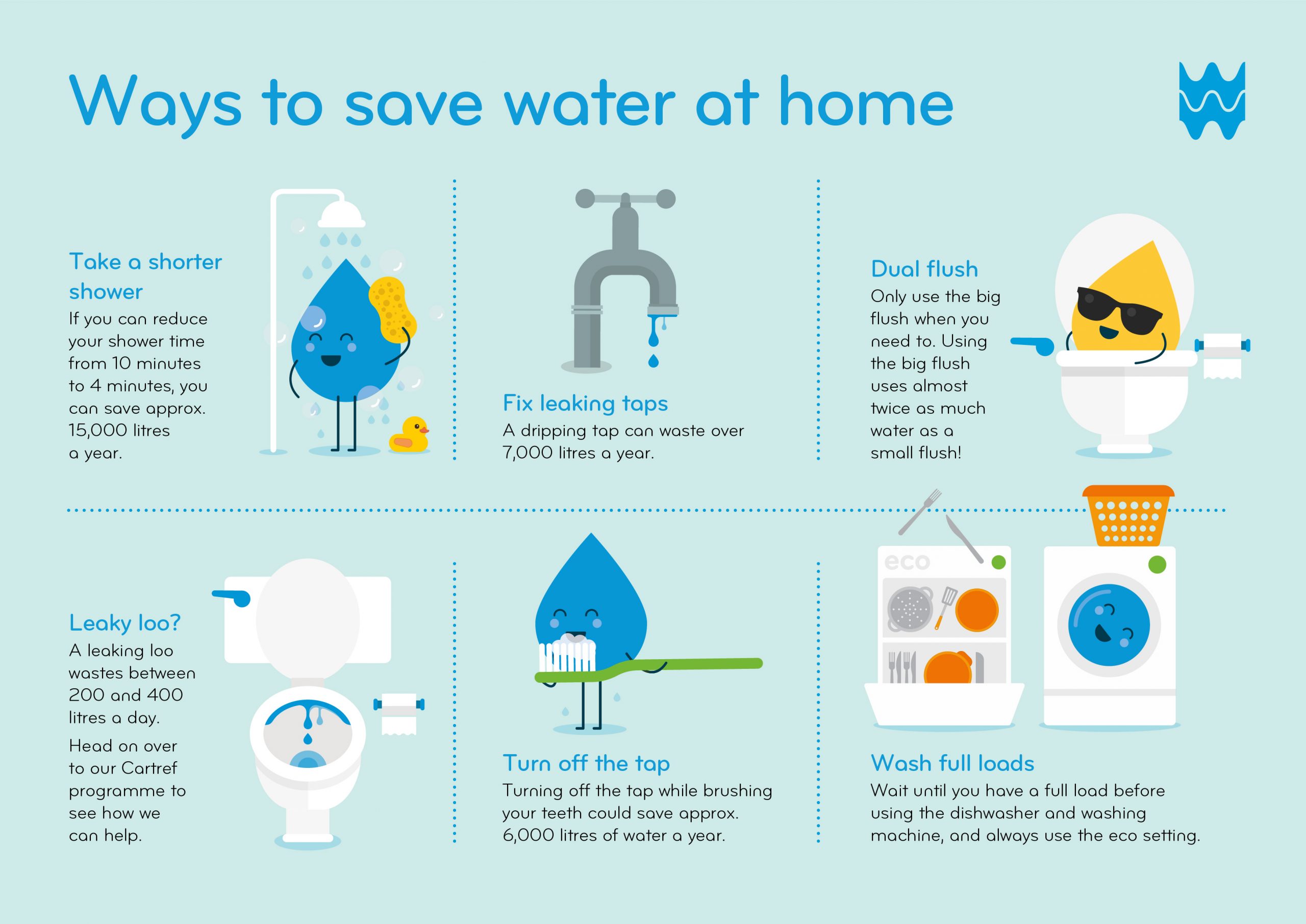 Infographic 10 Ways To Conserve Water At Home Ways To How To Reduce
If you have outdoor plants or a small garden, collect rainwater in a simple barrel. It’s free, it’s pure, and it gives you a very satisfying “I am a resourceful homesteader” feeling, even if you live in a studio apartment with a balcony herb garden. Use that water for your tomatoes or to rinse off muddy boots.
Mind the Leaks
A single dripping faucet can waste over 3,000 gallons a year. That’s enough water to take 180 showers. Walk through your home once a month and listen—really listen. That drip-drip-drip is your money and the planet’s patience slowly escaping.
Most leaks are fixable with a simple washer replacement, a YouTube tutorial, and ten minutes of your time. You’ll feel like a handy superhero. Capes are optional, but a sense of accomplishment is guaranteed.
A Final Reflection
Here’s the thing: saving water isn’t about perfection. You don’t need to install a greywater system or start pooping in a bucket to make a difference. It’s about making small, conscious choices that add up over time, like a quiet rhythm in your daily routine.
Think of every liter you keep from going down the drain as a little gift—to your wallet, to your local reservoir, to the farmers who need water to grow the vegetables you love. It’s a gentle reminder that we are all connected by this simple, precious resource. The next time you turn off the tap while brushing your teeth, smile. You just saved about 8 gallons. That’s not a chore. That’s a flex.
