How Much To Install Well

Let’s be honest: installing a well sounds about as exciting as watching paint dry. But if you’ve ever received a water bill that made you choke on your morning coffee, you kno...
Let’s be honest: installing a well sounds about as exciting as watching paint dry. But if you’ve ever received a water bill that made you choke on your morning coffee, you know this topic matters. Think of a well as your own personal, underground water bottle that never runs out—if you’re willing to pay for the straw.
The Big Question Nobody Wants to Ask
So, how much does it actually cost to install a well? The short answer is: between $3,000 and $15,000. That’s a wide range, I know. It’s like asking how much a pizza costs—depends if you want cheese or truffle oil and gold flakes.
Depth is Everything
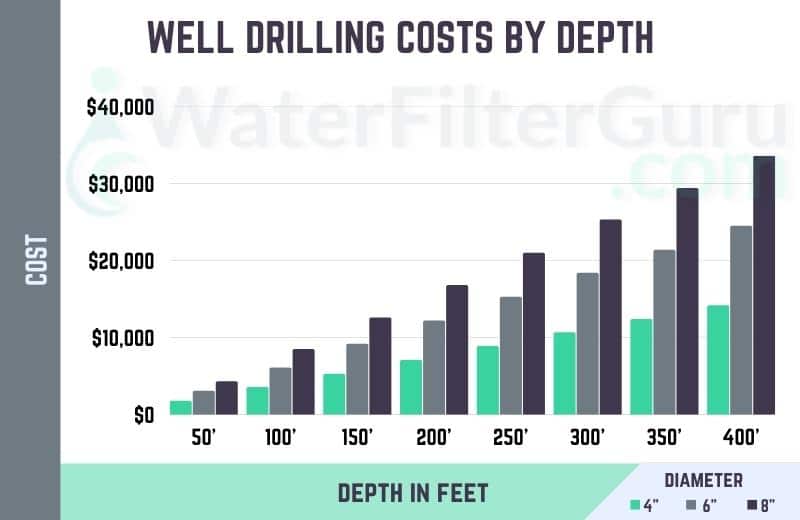
Your wallet’s biggest enemy is the depth of the water table where you live. If you’re lucky enough to hit water at 30 feet, you’ll pay closer to the $3,000 mark. But if you live in a dry zone and need to drill 300 feet deep, get ready for a five-figure party.
Must Read
A neighbor of mine, Bill, thought he’d save money by digging a shallow well. He ended up with mud. Now he has a cute flower pot where the hole was and a monthly water bill he still complains about.
The Drill Rig Rental Surprise
You cannot install a well with a shovel and a dream. You need a drill rig, and those machines cost money to bring in and operate. The mobilization fee alone—getting the truck to your property—can run $500 to $1,500. That’s like paying a cover charge before you even get to the concert.
And don’t forget the casing: that steel or PVC pipe that lines the hole. A 6-inch diameter casing can cost around $40 per foot. If your well is 200 feet deep, that’s $8,000 right there. After that, you still need a pump, wiring, and a pressure tank.
The Hidden Costs That Sneak Up on You
Here’s the part that makes people shake their heads: water testing and permits. You cannot just drill a hole and start drinking. Most counties require a test for bacteria, nitrates, and minerals. That’s an extra $100 to $400, but it’s non-negotiable unless you want to taste your own plumbing.
Also, you might need a permit. In some places, a well permit costs a humble $50. In others, it’s $800 and requires a small essay on why you need water. I’m only half kidding.
 Well Cost: $6K–$16K (Pump Alone: $400–$2,500)
Pump It Up
The pump is the heart of your well system. A basic submersible pump runs about $200 to $1,200, depending on horsepower and depth. If you want solar panels to run the pump, add another $2,000 to $5,000. That’s great for the planet, but rough on your credit card.
Pressure tanks are another piece of the puzzle. These keep water pressure steady so you don’t get a trickle when you’re rinsing shampoo out of your hair. A good tank costs $300 to $600. Cheap ones will leave you singing angry songs in the shower.
Why Bother? The Good Stuff
Yes, it’s expensive upfront. But here’s the trade-off: no more monthly water bills. If your municipal water bill is $100 a month, a $12,000 well pays for itself in about 10 years. Plus, you own the water—no one can raise your rates, shut you off, or make you drink chlorinated pool water.
And there’s something deeply satisfying about knowing exactly where your water comes from. My cousin Sarah drilled a well last spring. She now fills up glass bottles from her own backyard. She feels like a queen, but without the castle taxes.
DIY vs. Pro: A Reality Check
You might think, “I’ll just rent a drill and do it myself!” Please don’t. Unless you own a geology degree and a backhoe, this is a job for licensed well drillers. A DIY well that collapses or contaminates your groundwater will cost you more in legal fees than the initial install.
 Well Pump Cost And Installation Guide – SXEYQX
Pros charge by the foot, usually $15 to $30 per foot. That includes the drilling, casing, and labor. It’s worth every penny when you see clean, cold water gush out of your tap for the first time.
Your Action Plan
Start by calling three local well drilling companies. Get quotes in writing, and ask for a breakdown of costs per foot. Don’t be shy—ask them about the soil in your area. Sandy soil is easy to drill; rocky soil is a wallet-buster.
Also, check if your state offers tax credits or rebates for private wells. Some places will give you a small check for choosing a sustainable water source. It’s not much, but it buys you a nice dinner to celebrate.
The Bottom Line
Installing a well costs between $3,000 and $15,000, with an average around $8,000. It’s a big chunk of change, but it’s a one-time splurge for a lifetime of free water. And think of it this way: every glass of water you drink from now on tastes like victory—and zero cents.
In the end, it’s about control and peace of mind. You’ll never again scramble to find bottled water during a boil-water advisory. You’ll never argue with your spouse about leaving the hose on. You are the master of your own water destiny. And that, my friend, is priceless.
