What Is In Mineral Water

Ever caught yourself staring at a bottle of mineral water in a store, wondering what makes it different from the stuff that comes out of your kitchen tap? It’s a valid questio...

Ever caught yourself staring at a bottle of mineral water in a store, wondering what makes it different from the stuff that comes out of your kitchen tap? It’s a valid question, especially when you’re paying a few bucks for a fancy-looking bottle. Let’s crack it open—figuratively speaking—and see what’s really inside.
First off, mineral water isn’t just water. It’s rainwater that, decades or even centuries ago, trickled down through layers of rock and soil, picking up a whole bunch of tiny, naturally occurring elements along the way. Think of it as water that took a very long, scenic road trip underground, collecting souvenirs like calcium, magnesium, and potassium.
The Magic of the Underground Journey
That journey is what gives mineral water its character. Unlike regular tap water, which is treated and filtered to be clean, mineral water is bottled right at the source, often with zero processing. So all those minerals you find? They’re just a natural snapshot of the specific rock the water passed through.
Must Read
Is it cooler than tap water? Well, it depends on what you’re after. Tap water is a reliable, regulated workhorse—it gets the job done. Mineral water, on the other hand, is like a fine wine: each brand has a unique flavor profile based on its underground journey. Some taste crisp and sharp, others soft and creamy.
So, What’s Actually in the Bottle?
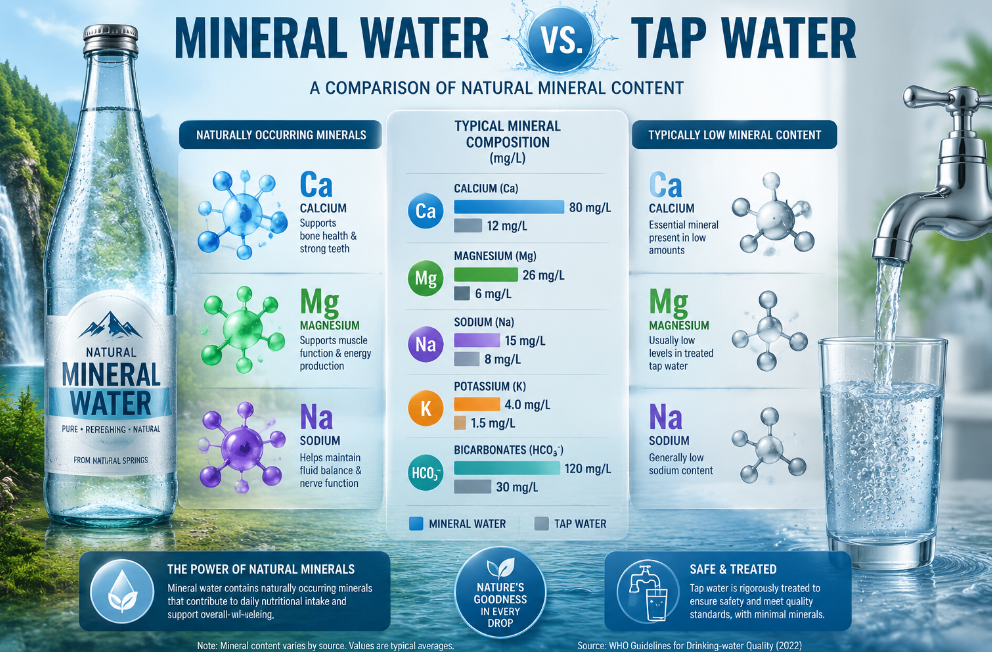
Let’s break down the usual suspects you’ll find listed on a label. Calcium is a big one—it’s what makes your bones strong and gives some waters a slight, milky mouthfeel. Then there’s magnesium, which is like a chill pill for your nerves and muscles, often adding a subtle, slightly bitter edge.
Sodium gets a bad rap, but in mineral water, it’s usually in tiny amounts. Just enough to give it a hint of saltiness that can make it taste cleaner. And don’t forget potassium, which helps your heart beat steady—a nice little bonus in every sip. Some waters even contain traces of silica, which might help your hair and skin glow. Who knew?
 Health Benefits Of Mineral Water – EXXUHB
Bubbles vs. Still: The Great Debate
You’ve got still and sparkling mineral water. Still is just the water as it comes from the source. Sparkling is either naturally carbonated from volcanic activity or has carbon dioxide added back in. Natural sparkle is rarer, so if you see a bottle that says “naturally sparkling,” it’s basically a fizzy time capsule from a volcanic region.
Ever wonder why some mineral waters taste like a metallic penny? That’s the iron content talking. Or why some leave a dry feeling on your tongue? That’s high calcium. These aren’t flaws—they’re signatures. Like a thumbprint for the water’s birthplace.
Is It Actually Better for You?
Here’s the honest truth: for most people, mineral water isn’t a miracle health drink. It does provide a bit of extra minerals you might not get enough of, especially if you don’t eat many vegetables. But you’re not going to become a superhero by switching to Perrier. The real benefit? It’s hydrating, often more enjoyable to drink, and it makes you feel a little fancy.
 Mineral Water:18 Benefits, Side Effects and How to Make it
Think of it this way: tap water is your reliable friend who shows up on time. Mineral water is that interesting traveler who brings you quirky souvenirs and tells a story with each sip. Both are great. One just has a passport.
How to Choose Your Adventure
If you want to give mineral water a try, start with a simple still one from a nearby spring—like Evian or Fiji. Notice how it feels smoother than tap? That’s the low mineral content. Then, pick a harsher one like San Pellegrino (sparkling) and feel the sharp kick of calcium and carbonic acid.
Why not make a game of it? Pour blind tastings with friends. See if you can guess which water came from a limestone mountain versus a volcanic island. It’s like a wine tasting, but without the hangover. The minerals change everything—pH, texture, and even how quickly you get thirsty again.
In the end, mineral water is just water that didn’t take the easy way out. It waited, filtered itself through the earth, and emerged with a story. So next time you pop open a bottle, take a moment to read the fine print. That tiny list of minerals is a map of the planet’s geology, right in your hand. Pretty cool, right?
