What Is The Ph Indicator

Okay, let’s talk about pH indicators. No, it’s not a new dating app for chemistry nerds. It’s actually the quiet superhero of your kitchen, your pool, and even your own body....

Okay, let’s talk about pH indicators. No, it’s not a new dating app for chemistry nerds. It’s actually the quiet superhero of your kitchen, your pool, and even your own body. Think of it as a tiny, color-changing spy that tells you if something is an acid, a base, or just plain boring neutral.
What in the World is pH?
First, let’s get the basics straight. pH stands for “potential of Hydrogen,” which sounds like a term from a sci-fi movie. In reality, it’s just a scale from 0 to 14 that measures how acidic or alkaline a liquid is. A 7 is totally neutral—like pure water, which is the Switzerland of the chemical world.
Anything below 7 is an acid. Think lemon juice or the stomach acid that helps you digest that questionable gas station burrito. Anything above 7 is a base, like baking soda or your grandma’s ammonia-based cleaning spray that could probably strip paint off a car.
Must Read
The Magic of the Indicator
Now, a pH indicator is a substance that changes color depending on the pH of whatever it touches. It’s like a chameleon on caffeine, but way more useful. You’ve seen it before: that purple cabbage juice that turns pink in vinegar or bright green in baking soda? That’s an indicator having a dramatic fashion show in your kitchen.
Here’s the hilarious part: many indicators come from plants. Red cabbage, blueberries, and even the petals of certain flowers are natural spies. So next time you’re eating a salad, remember—you could be munching on a potential science experiment.
The Stars of the Show
Litmus Paper: The Old Reliable
You probably remember this from middle school. It’s a strip of paper that turns red in acid and blue in base. It’s the simplest indicator, and frankly, it has no chill. It’s like a mood ring that screams “YOU’RE ACID!” or “YOU’RE BASE!” without any nuance. No gray area. Just dramatic binary color changes.
Fun fact: Litmus is actually made from lichens. Yes, the same stuff that grows on rocks. So you’re basically licking a rock-fungus marriage when you taste-test your pool water. Gross? Yes. Effective? Absolutely.
 pH Indicator Chart - Colors and Ranges
Universal Indicator: The Rainbow Factory
If litmus paper is a boring traffic light, the universal indicator is a full-blown rave. It’s a mixture of several dyes that creates a spectrum of colors. It goes from red to orange to yellow to green to blue to purple as you move from acid to base. It’s like a chemical rainbow that shows you the exact number on the pH scale.
Poop reference incoming: Your urine has a normal pH around 6, which is slightly acidic. That’s right, your own pee is a potential pH indicator test. Don’t worry, I’m not asking you to taste it—just know that if it suddenly turns green, you might have a medical issue or you ate too much asparagus.
Phenolphthalein: The Drama Queen
This one is colorless in acid and turns a shocking pink in a base. It’s the Meryl Streep of indicators—completely invisible until the exact moment it’s called upon to act. Chemists love it for titrations because it suddenly “appears” like a ghost at a party.
But here’s the weirdest part: Phenolphthalein was once used in laxatives. Yes, people were swallowing a substance that changes color in response to stomach acid. I’m not making this up. It’s a real thing, and it’s why some old-school laxatives turned your poop a funny color. You’re welcome for that image.
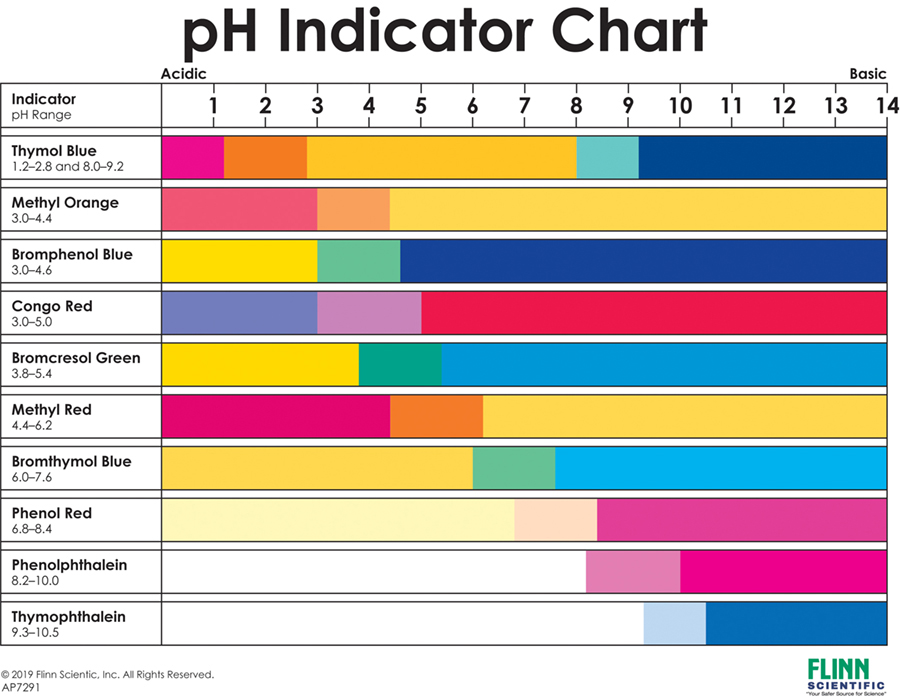 pH Indicator Chart | Flinn Scientific
Surprising Facts That Will Blow Your Mind
You might think pH indicators are just for lab coats. Nope. Your skin has a pH of about 5.5, which is slightly acidic. That’s why some soaps burn your eyes—they’re too basic! Your skin is basically saying, “Hey, don’t mess with my acid mantle, you alkaline monster.”
Also, the human body works hard to keep your blood pH at a strict 7.4. If it swings even slightly, you’re in big trouble. So thank your kidneys and lungs—they’re the unpaid pH indicator employees of your body. They don’t change color, but they do a lot of overtime.
How to Be a pH Spy at Home
You can make your own pH indicator right now. Boil a few leaves of red cabbage in water, strain it, and you’ll get a purple liquid. Add it to vinegar: pink. Add it to baking soda water: blue-green. It’s like a magic trick, but you’re the wizard, and your audience is mildly impressed.
You can even test your soil for gardening. If your hydrangeas are pink instead of blue, your soil is too alkaline. Yes, flowers are basically pH gossipers. They’ll tell everyone what kind of dirt you’re working with.
So next time you see a test strip for your fish tank or a piece of litmus paper in a pool kit, remember: it’s not just science. It’s a tiny, colorful, nosy little friend that’s obsessed with your liquid’s personality. And honestly? We could all use a little more color in our chemistry.
