How To Check Water Meter

So, there I was, standing in my basement last Tuesday, ankle-deep in what I hoped was just spilled laundry detergent. The hose under the sink had burst, and a tiny, angry geys...
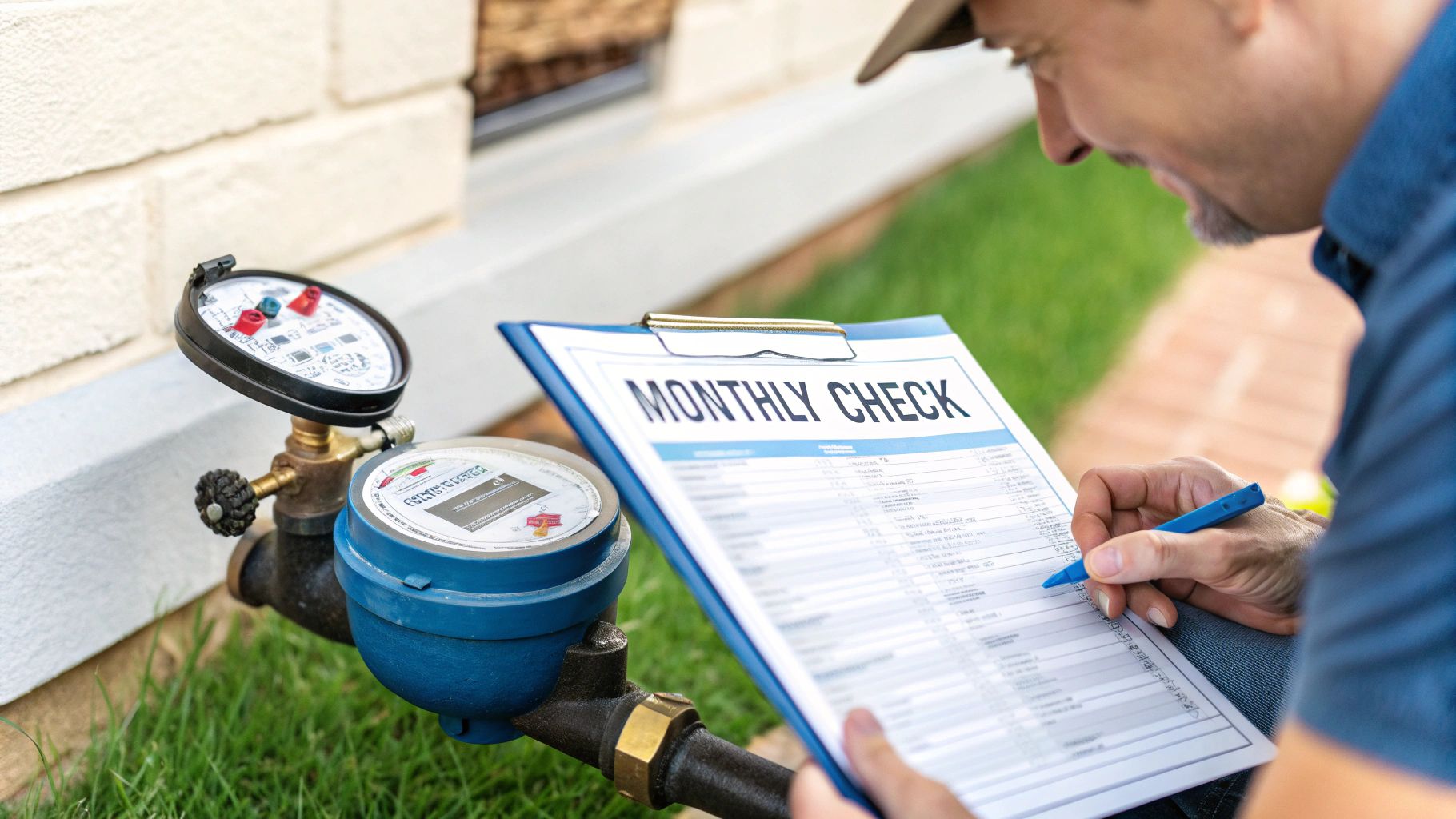
So, there I was, standing in my basement last Tuesday, ankle-deep in what I hoped was just spilled laundry detergent. The hose under the sink had burst, and a tiny, angry geyser was baptizing my tool box. As I fumbled for the main shut-off valve, my brain did that panicky math: how much water had just escaped? The answer, my friends, was already running up the meter. That’s when I realized: knowing how to check your water meter isn’t just for plumbers and weirdly organized homeowners. It’s for anyone who wants to avoid a surprise bill the size of a small car.
First Things First: Find the Little Beast
Your water meter is usually hiding in one of two places: a metal box in the ground near the street (the curb stop) or somewhere creepy in your basement or crawlspace. Look for a round lid that says “Water” or has a city logo—it’s like a treasure chest, but less gold and more H2O. Pro tip: if it’s in the ground, use a flat-head screwdriver to pry the lid off. Wear gloves, because that lid is essentially a garbage-collecting magnet for spiders. (You’re welcome for the mental image.)
Once you’ve wrestled the lid off, you’ll see a metal or plastic dial with numbers. This is the brain of your water flow. Don’t be intimidated—it’s just a fancy odometer that counts gallons, not miles. Some meters have a digital screen; others have a rotating dial that looks like a tiny spaceship. Either way, it’s your new best friend in the battle against mysterious leaks.
Must Read
How to Actually Read the Numbers (It’s Easier Than Assembling IKEA Furniture)
Look at the set of numbers—usually six or seven digits. The ones on the far right move the fastest when water is running. Write down that full number, including the last digit. For example: 043562. That’s the total gallons (or cubic feet, depending on your area) used since the meter was installed. Now, go turn on every faucet in your house for exactly one minute. Run the washing machine. Flush the toilet twice—go wild.
Come back and look at the meter again. The number should have jumped. If it hasn’t moved at all, you might have a frozen meter. (Or you forgot to actually turn anything on—happens to the best of us. I’ve been there, staring blankly at the dial while the kitchen sink runs two floors away.) The point is: this is the baseline check. It confirms your meter is working and that you understand how it flows.
The Real Magic: Detecting a Silent Leak
Okay, here’s where it gets juicy—and where you save actual money. You want to find a leak? Do this: turn off everything that uses water. Every tap, the dishwasher, the ice maker (yes, even that), and the toilet flappers. Then, go check that little dial on the meter. See a small triangle or a spinning wheel? That’s called the leak indicator—it’s a mini star or emblem that spins when even a trickle passes through. If it’s spinning when everything is off, you have a leak.
 How Does A Water Meter Reading Work at April Hyde blog
Don’t panic. A spinning dial doesn’t mean your house is about to sink into the earth. It might mean a toilet flapper is hanging loose—super common and cheap to fix. But ignore it, and that little spin can add up to hundreds of gallons a month. I once had a client who paid $300 extra for three months because of a rubber flapper that cost $4. Yes, I’m still salty about it. Check that dial once a month. Your wallet will thank you.
When the Meter Goes Silent (And What That Means)
Sometimes, you’ll walk out and the numbers haven’t moved in two days. That could be great—you’re on vacation and no leaks. Or it could mean the meter is broken. If the numbers don’t change even when you run the tub at full blast, call your water company immediately. They’ll likely replace it for free. Just don’t tell them you were testing it with a garden hose—they might get judgy. (I’ve made that mistake. The customer service lady’s silence spoke volumes.)
Another fun fact: digital meters sometimes have a “leak alarm” that blinks a red light. If you see that, don’t ignore it like I did for two weeks. That blinking means a continuous flow has been detected. It’s basically your meter screaming, “Help me, I’m drowning your savings!” Listen to it. Turn off your main valve and investigate.
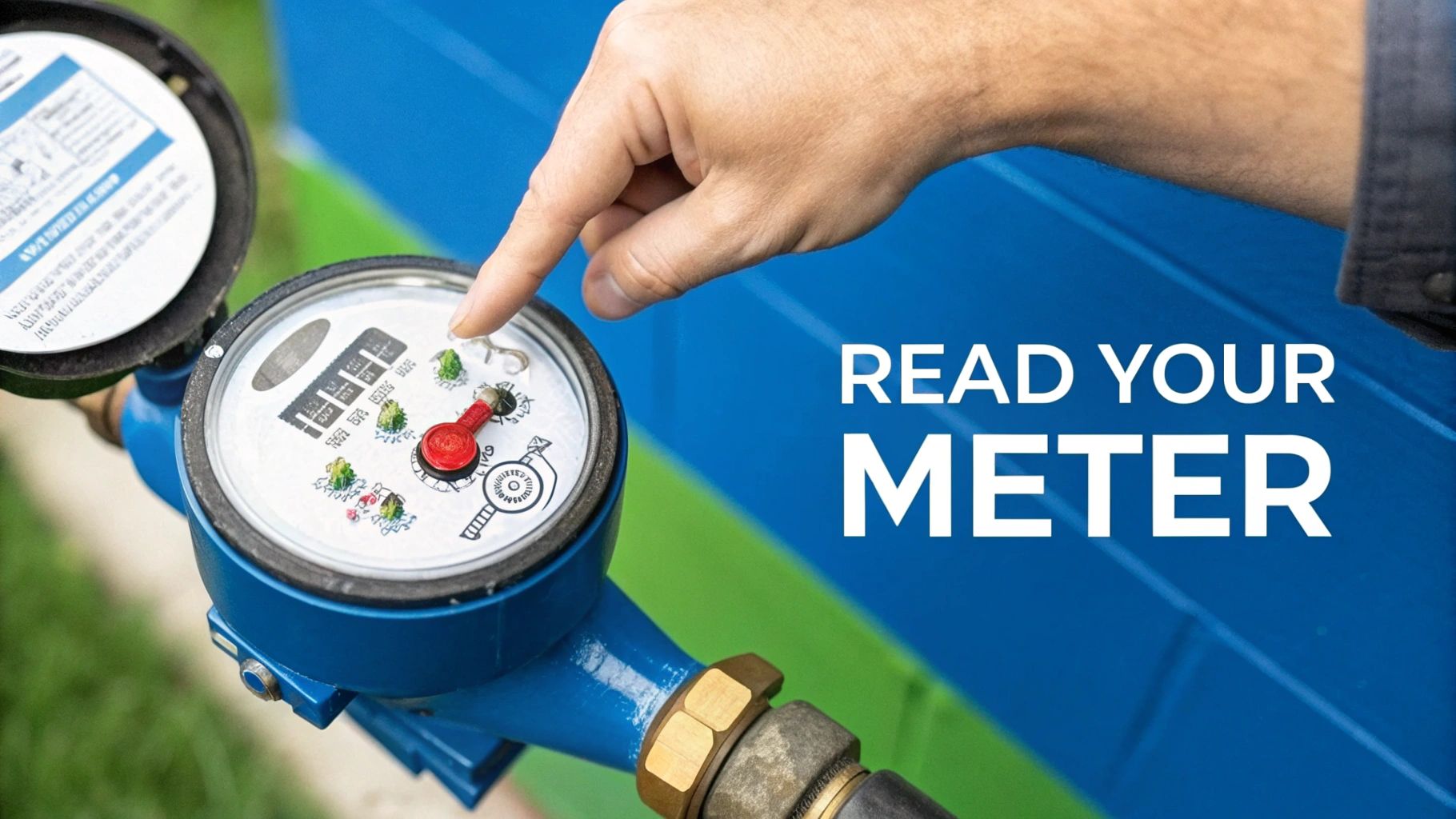 How to Read Water Meter: The Ultimate Homeowner's Guide - Mokher Plumbing
How Often Should You Do This? (Spoiler: More Than I Do)
Ideally, check your meter once a month—same time every month. Write the number on a calendar. Note the date. Over time, you’ll spot if your usage suddenly spikes by 50% without explanation. That’s your signal to hunt down a leak or ask your family who’s been taking 45-minute showers. (Looking at you, teenagers.)
And if you’re really paranoid—like I am after that basement flood—buy a cheap water shut-off timer. They attach to your main hose bib and auto-stop after a set amount of water. It’s overkill, but so is replacing a drywall ceiling. Hey, better safe than soggy.
One Last, Ironic Twist
I checked my meter the morning after writing this article. The spinning dial was going crazy—even though everything was off. I found the culprit: a dripping faucet in the guest bathroom that I’d ignored for three weeks. Hidden behind a towel. It had used about 200 gallons. I fixed it with a $6 washer and a few grumpy turns of a wrench. So, yes, I’m writing this to you as a reformed hypocrite. Check your meter. You’ll feel like a detective, a plumber, and a financial advisor all at once. Plus, it’s oddly satisfying to watch those numbers not move when they shouldn’t be. Trust me.
