Why Does My Water Stink

So there I was, last Tuesday, minding my own business. I filled up my favorite water bottle, took a big, refreshing gulp—and immediately regretted everything. It tasted like I...

So there I was, last Tuesday, minding my own business. I filled up my favorite water bottle, took a big, refreshing gulp—and immediately regretted everything. It tasted like I’d just licked a wet sock that had been marinating in a swamp. My first thought? “Did I just brush my teeth with sulfured egg water?” I spit it out, glared at my faucet, and realized: my water stinks.
If you’re reading this, you’ve probably had a similar moment. You turn on the tap, expecting crystal-clear hydration, and instead get a whiff of rotten eggs, dirt, or even a faint chemical tang. Don’t panic—you’re not alone, and your plumbing isn’t haunted. Let’s figure out why your H₂O suddenly smells like a crime scene. (Spoiler: it’s usually bacteria, not ghosts.)
The Rotten Egg Surprise
The most common stink culprit is that classic rotten egg smell. If your water smells like someone hard-boiled a dozen eggs and forgot them in the sun, you’ve got hydrogen sulfide gas in the mix. This usually comes from sulfur bacteria living in your drain or water heater. (Yes, bacteria are having a party in your pipes. Gross, but fixable.)
Must Read
Here’s the kicker: if the smell only shows up when you run hot water, the source is likely your water heater. The anode rod inside can react with sulfur to create that stench. If it’s cold water too? Well, your groundwater might just be rich in sulfur—a natural, non-toxic problem. Still, nobody wants a shower that smells like a fart.
Bleach or Pool Water? That’s Chlorine
Ever pour a glass of water and get a sharp, swimming-pool vibe? That’s chlorine, my friend. Municipal water systems add it to kill germs, but sometimes they overdo it. (Thanks for keeping us safe, but can we dial it back a notch?) Let the water sit in a pitcher for 20 minutes—the chlorine will evaporate, and your nose will thank you.
If the bleach smell is overpowering, though, check your local water quality report. A sudden spike could mean a system flush or a pipe burst. In rare cases, it signals a leaching issue from old plastic pipes. Either way, a carbon filter is your best buddy here. Don’t suffer through the smell—you’re not a dolphin at SeaWorld.
When Your Water Tastes Like Dirt
That earthy, musty smell? It’s like your glass of water just crawled out of a basement. That’s typically from geosmin—a harmless compound made by algae or bacteria in the local reservoir. (Think of it as nature’s way of reminding you that water comes from lakes, not from unicorn tears.)
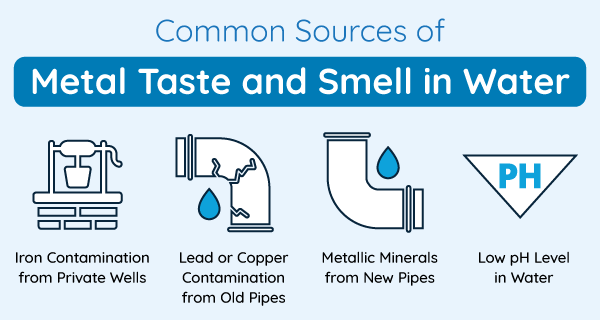 Why Does My Water Smell and Taste Like Metal? - Angel Water
This is super common in spring and fall, when algae blooms happen. Don’t worry—it’s not dangerous, but it is annoying. A charcoal filter or letting the water run for a minute usually kills the taste. If the smell is persistent, your water utility might need to flush the system. Give ’em a call—they’ve probably heard the complaint before.
The Metallic Mystery
Does your water smell like copper pennies or a rusty nail? That metal tang usually means the water is pulling minerals—like iron, copper, zinc—from your pipes. This is especially common in older homes with galvanized steel or copper plumbing. (Your 1950s pipes are yelling for an upgrade, but they don’t have a voice.)
Low pH water (aka acidic water) accelerates this process. So you get a rusty smell and sometimes orange stains in your sink. The fix? A water softener or a neutralizer filter. Pro tip: if the metallic odor comes only from the hot water tap, your water heater might be corroding inside. Time to call a plumber before it becomes a hot mess.
That Fishy Stench (No, Seriously)
Once in a blue moon, you’ll get a fishy smell from your water. This is rare and weird—like your faucet decided to cosplay as a seafood market. Usually, it’s from barium or cadmium contamination, or from certain plastics in new faucets or hoses. (Yes, your new kitchen sink can smell like a cod.)
 Why Does My Water Smell Like Sewer Gas? | ECM
If it’s a fresh plastic or rubber smell, let the water run for a few minutes to flush the system. If it doesn’t go away, stop drinking it and get a water test kit. You don’t want heavy metals in your morning coffee. Unless you’re training for a science experiment.
The Deep-Sea Swamp Issue
Finally, if your water smells like decaying vegetation—think swamp, bog, or pond scum—it’s likely from anaerobic bacteria in your water heater or well. These little guys thrive in low-oxygen environments and produce that vile organic smell. (They’re like the least fun roommates ever.)
Flushing your water heater once a year can fix this. If you’re on a well, check the well cap and consider chlorination. And please, don’t boil the water to “cook out” the smell—it’ll just make your whole house smell like a bog. Trust me, I’ve tried it. My kitchen still hasn’t forgiven me.
What You Can Do Right Now
Before you declare war on your plumbing, try the cup test: fill a glass from the tap, walk away to another room, and sniff it. If it smells fine, the stink might be coming from your drain or the rubber gasket in your faucet. (Classic misdirection—like a magic trick, but stinky.)
If the smell is real, start with the cheapest fix: flush the system. Run all your faucets for a few minutes, then check again. Still stinky? Call your local water utility or test your well water. Most issues are easy and cheap to fix—you just need to know the culprit. And now you do. Go drink that clean, odorless water. You’ve earned it.
