What Does Hardness Mean

Let’s be honest: we throw the word “hardness” around a lot, but what does it actually mean? Hardness isn’t just about being tough or stubborn. In our everyday world, it’s the...
Let’s be honest: we throw the word “hardness” around a lot, but what does it actually mean? Hardness isn’t just about being tough or stubborn. In our everyday world, it’s the secret quality that decides if your chocolate bar snaps perfectly or if your diamond ring stays scratch-free.
Hardness vs. Strength: The Surprising Difference
Here’s a little story that trips people up. Imagine you have a rubber band and a glass window. The rubber band is strong—it stretches and snaps back. The glass? Well, it’s hard, but drop a rock on it, and crunch.
Hardness is about resisting scratches and dents, not about handling a big whack. That’s why a steel knife can scratch a copper penny, even though the knife might bend. Next time you see a scratch on your phone screen, blame a lack of hardness, not strength.
Must Read
Your Morning Coffee and a Diamond Pencil
Think about your morning routine. You grab a ceramic mug—that’s hard, right? It feels smooth and solid. But if you drag a metal fork across it, you get that awful screech and a faint scratch. Hardness is the mug’s ability to say, “Nope, you can’t mark me.”
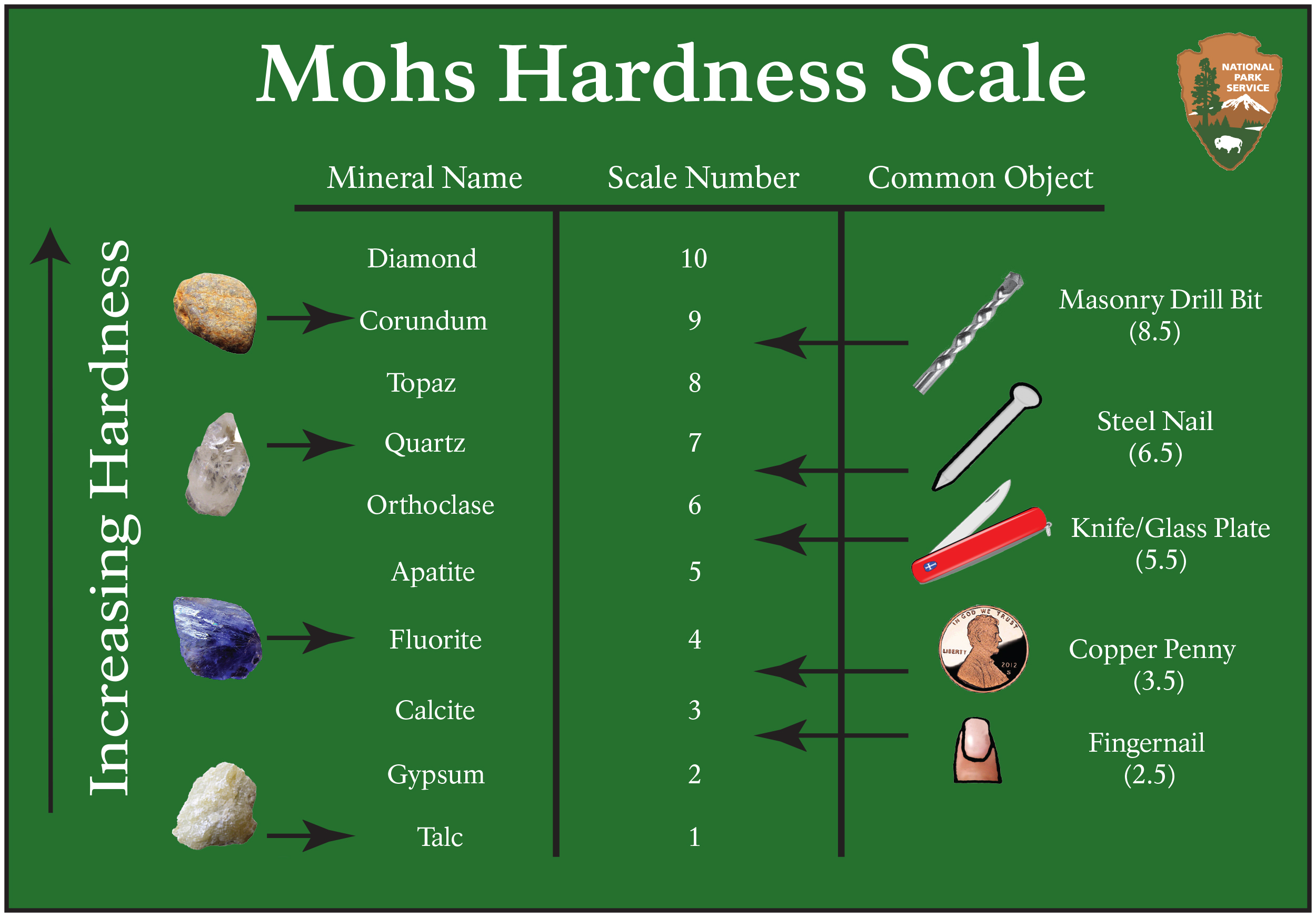
Now, picture a diamond. A diamond is the hardest natural material on Earth. Scientists use a little scale called the Mohs scale, from 1 (talcum powder) to 10 (diamond). A diamond can scratch anything below it. Like, a diamond-tipped pen can scribble on glass like it’s butter.
So when you wear a diamond ring, you’re wearing nature’s champion of scratch-resistance. Just don’t whack it against a concrete wall—hardness isn’t toughness, remember?
Why You Should Care: The Cheese Knife Test
Let’s get real: you care about hardness every time you cook. Have you ever tried slicing a block of hard cheddar with a cheap knife? The cheese crumbles, the knife feels dull, and you get frustrated. That knife is lacking hardness in its edge.
A properly hard knife holds its sharp edge. It glides through tomatoes without smushing them. It’s the difference between a joyful cooking moment and a dangerous slip. Hardness in a blade keeps you safe because you apply less force.
.jpg) The Mohs Hardness Scale – Geology In
The Mohs Hardness Scale – Geology In
Same goes for your kitchen scissors. If they’re too soft, they bend. Too hard, they chip. The “Goldilocks” hardness is why good tools cost more—and why your grandma’s old paring knife still works.
Your Phone Screen and the Sand Trap
Here’s a fun fact that might make you shudder. Most phone screens are made of aluminosilicate glass—pretty hard, around a 6 or 7 on the Mohs scale. Now, what’s in your pocket? Dust and sand contain quartz, which is a 7.
Put your phone in a sandy beach bag? That sand is like a tiny army of pencils scratching your screen. Over time, you get micro-scratches. Hardness explains why your screen gets cloudy even without a big drop. It’s not your fault—it’s just physics being a little sneaky.
Hardness in Your Softest Moments
Hardness isn’t just for science geeks. Think about your wooden cutting board. A soft wood like pine gets knife marks everywhere. A hard wood like maple heals itself a bit and stays smooth. That’s why butchers use hard maple.
Or think about chalk. Chalk is so soft (Mohs 1) that it leaves a mark on a blackboard. But a diamond? It would just scrape the board. Hardness is literally about who gives way first.
 Hardness Science
Even your car’s paint job has a hardness rating. A “hard” clear coat resists swirl marks from washing. A soft paint? You’ll see every little scratch from a stray brush. Your car’s shine depends on hardness.
How to Be a Hardness Hero
So how do you use this in real life? First, when buying a knife, look for high-carbon steel—it’s harder. Second, don’t store your phone with keys and coins. That’s just asking for scratches. Third, if you’re into DIY, know that harder drill bits cut through tile, but softer bits work for wood.
And here’s the warm and fuzzy part: hardness isn’t about being unbreakable. It’s about having a surface that stays beautiful and functional. It’s the quiet hero that lets your sharp edge stay sharp, your screen stay clear, and your coffee mug stay smooth.
Next time you bite into a crispy apple and hear that satisfying snap, thank hardness. The apple’s cell walls are just hard enough to break cleanly, not mush. Life is full of little hardness moments—and now you know exactly what they mean.
So go ahead, scratch a penny with a steel key. You’re not being destructive—you’re running a tiny hardness test. And honestly, that’s a pretty cool party trick.
