How Much Is Water Rates

So, you’ve glanced at your water bill and thought, “Did I accidentally buy a small swimming pool? And why does it cost more than my Netflix subscription?” You’re not alone—fig...
So, you’ve glanced at your water bill and thought, “Did I accidentally buy a small swimming pool? And why does it cost more than my Netflix subscription?” You’re not alone—figuring out water rates is like trying to read a map drawn by a very confused toddler. Let’s break it down with a smile, no math degree required.
The Shocking Truth: Water Isn’t Free (Sorry)
First off, water rates aren’t just about the water itself. You’re paying for the infrastructure—the pipes, pumps, and treatment plants that bring H2O to your tap. Think of it as a subscription to the world’s most essential streaming service, but instead of movies, you get showers and clean dishes.
On average, U.S. households spend about $70 to $100 per month on water and sewer. That’s roughly the cost of two fancy coffees a week—or one very sad hour of therapy. But hey, at least your plants are happy, right?
Must Read
What’s in a Water Bill? (Spoiler: It’s Complicated)
Your bill has two main parts: usage (what you actually use) and fixed charges (the “you exist” fee). Usage is measured in gallons or cubic feet, and the rate increases the more you use. It’s like a loyalty program, but backwards—the more loyal you are to your hose, the more you pay.
Fixed charges cover the boring stuff: meter reading, pipe maintenance, and paying the guy who fixes leaks at 3 a.m. That guy deserves a raise. If you live in a drought-prone area, expect extra fees for conservation programs—nature’s way of saying, “Stop watering your driveway.”
Why Does My Bill Look Like a Riddle?
Water rates vary wildly by location. In Seattle, you might pay $0.004 per gallon; in Santa Fe, it could be triple that. It’s all about supply, demand, and how many rich people are fighting over the same aquifer. Pro tip: If your neighbor has a lush lawn and you have cactus, you’re probably in a high-rate zone.
Then there’s sewer charges, which are often based on your water usage. The logic? They assume everything you pour down the drain ends up in the sewer. Which it does, unless you’re secretly turning your toilet into a fountain. Please don’t.
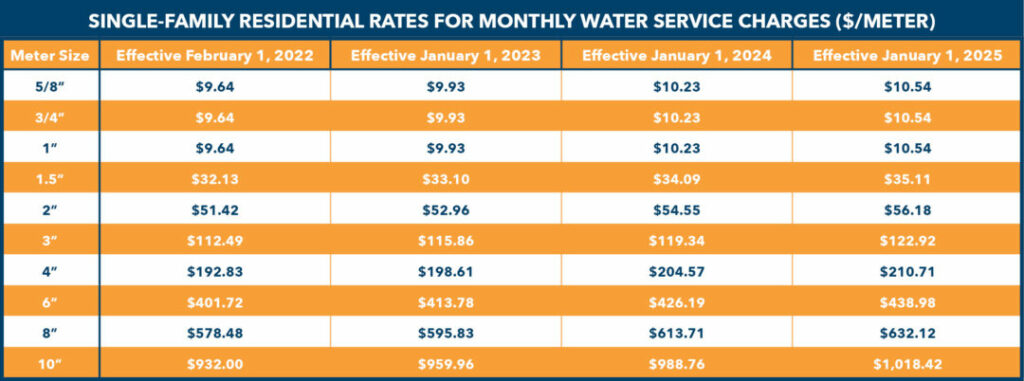
 Proposed Water Rates for 2023 & 2024 | Engage Hillsboro
The “Hidden” Fees That Make You Side-Eye Your Faucet
Ever see a line for “stormwater fee” and wonder if you’re paying for rain? Yes, you are. It funds drainage systems so your basement doesn’t become a swimming pool. Also, watch for tiered pricing: use too much water, and you enter the “ouch” tier—usually reserved for people who fill inflatable pools in July. We see you, inflatable pool owners.
Some cities add a public fire protection fee. That’s right—you’re paying the fire hydrant to stand there and look heroic. It’s like a superhero’s utility bill, but you’re the sidekick footing the cost.
How to Lower Your Water Bill (Without Moving to a Rainforest)
First, fix those leaks. A dripping faucet can waste 3,000 gallons a year—enough to fill a small pond that could host a very sad duck. Next, install low-flow showerheads. They save water and give you the illusion of being pelted by gentle mist. It’s like a spa, but cheaper.
Also, shorten your showers. I know, your shampoo has 47 steps, but try the “navy shower” method: wet, soap, rinse, done. You’ll save money and have more time to scroll memes about saving money. Check your toilet for silent leaks by adding food coloring to the tank—if the bowl changes color, you’ve got a ghost. Or a problem. Either way, fix it.
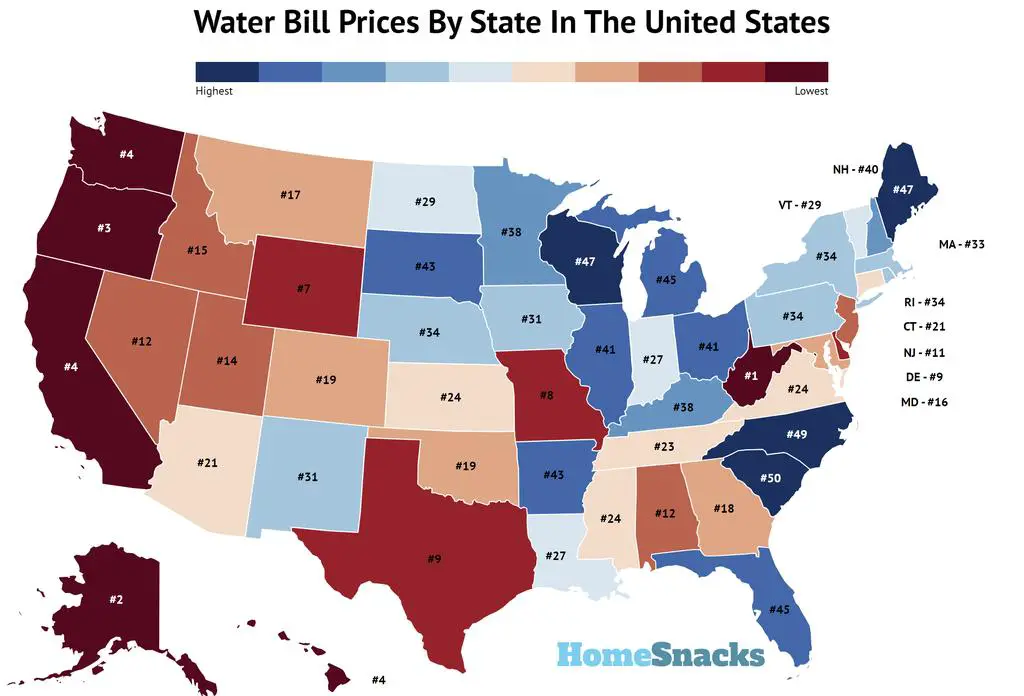 Average Water Bill By State In The US For 2023
The Appliance Conspiracy (Or Not)
Your washing machine and dishwasher are water vampires. Front-loaders use less water than top-loaders, so if yours is from 1995, it’s basically a dinosaur with a spin cycle. Upgrade to an Energy Star model—it’ll save money and make you feel like a climate hero. You can also skip rinsing dishes before loading them; your dishwasher is tough, let it do its job. It’s not a coward.
The Big Question: Is It Worth It?
Let’s be honest—water is the best deal in the universe. A gallon costs about a penny in many places. That’s cheaper than air (if you had to buy it). You can drink it, cook with it, wash your socks in it, and even pretend you’re a mermaid for an afternoon. No other utility offers that level of versatility.
So yes, water rates might feel like a cryptic puzzle designed by a bored accountant. But remember: every time you turn on the tap, you’re getting liquid gold for pocket change. And unlike your streaming subscription, water never buffers.
Final Splash of Sunshine
Next time you see your water bill, take a deep breath—and maybe a sip of that same water. It’s a tiny price for the miracle of modern plumbing. You’re not just paying for water; you’re paying for the privilege of not fetching it from a well with a bucket. That’s progress, baby.
And if the bill still makes you grumble, just think: in a parallel universe, you’re hauling buckets from the river, fighting a bear, and cursing your ancestors. But here? You’re in a warm house, reading this, and paying for the world’s most reliable friend. Raise a glass (of tap water) to that. Cheers.
