How To Help A Dry Scalp

So, your scalp has decided to audition for the role of “Crime Scene in a Blizzard.” It’s flaky, it’s itchy, and it’s leaving a trail of white snowflakes on your favorite black...
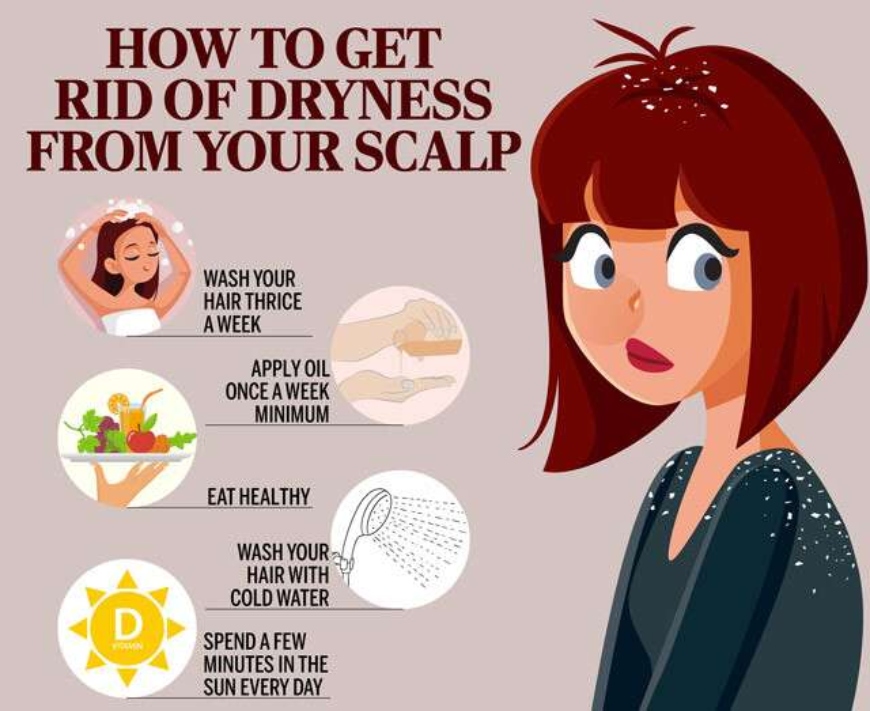
So, your scalp has decided to audition for the role of “Crime Scene in a Blizzard.” It’s flaky, it’s itchy, and it’s leaving a trail of white snowflakes on your favorite black sweater. You’re not dying, but you are slowly becoming a human dandruff factory. Let’s fix this.
First, Let’s Diagnose the Drama
Before you start slathering things on your head, know this: dry scalp is not the same as dandruff. Dandruff is oily and yellow; dry scalp is tight, itchy, and produces tiny, white flakes — like the snow on a bad Christmas movie set.
Your scalp is basically just skin with hair sticking out of it. If you’d treat a dry face with battery acid or lava-hot water, you’d be horrified. Yet we do the same to our scalps. Surprising fact: your daily hot shower is the number one flake-booster.
Must Read
Step One: Turn Down the Heat (No, Really)
You love that scalding shower that makes you feel like a steamed dumpling. Your scalp? It’s screaming “fire!” in a language you can’t hear over your shampoo lathering. Hot water strips natural oils faster than a gossip columnist strips a celebrity’s reputation.
Switch to lukewarm water. Yes, it’s less dramatic—like switching from a fireworks display to a gentle candle. But your scalp will thank you by not sprinkling confetti on your shoulders.
Coffee Shop Rule: If you can’t drink it, don’t rinse your hair with it.
Step Two: Give Your Shampoo the Side-Eye
That $3 bottle of “Ocean Breeze” detergent is not your friend. Most shampoos are full of sulfates—little chemical ninjas that strip every molecule of moisture from your scalp. Sulfates are why your scalp feels like a desert after washing.
Switch to a sulfate-free shampoo. It’s less foamy, but foam is just marketing. You want moisture, not a bubble bath. Also, don’t shampoo every day. Your scalp needs a break to produce its own oils. Aim for twice a week—and if you sweat, just rinse with water and condition.
Step Three: Condition Like You Mean It
Here’s a shocking truth: most people only condition their ends. But your scalp—the source of all flakes—needs some love too. Apply conditioner to your scalp and let it sit for three minutes while you sing an embarrassing song from the 90s. Shea butter, jojoba oil, or aloe vera in your conditioner are your new best friends.
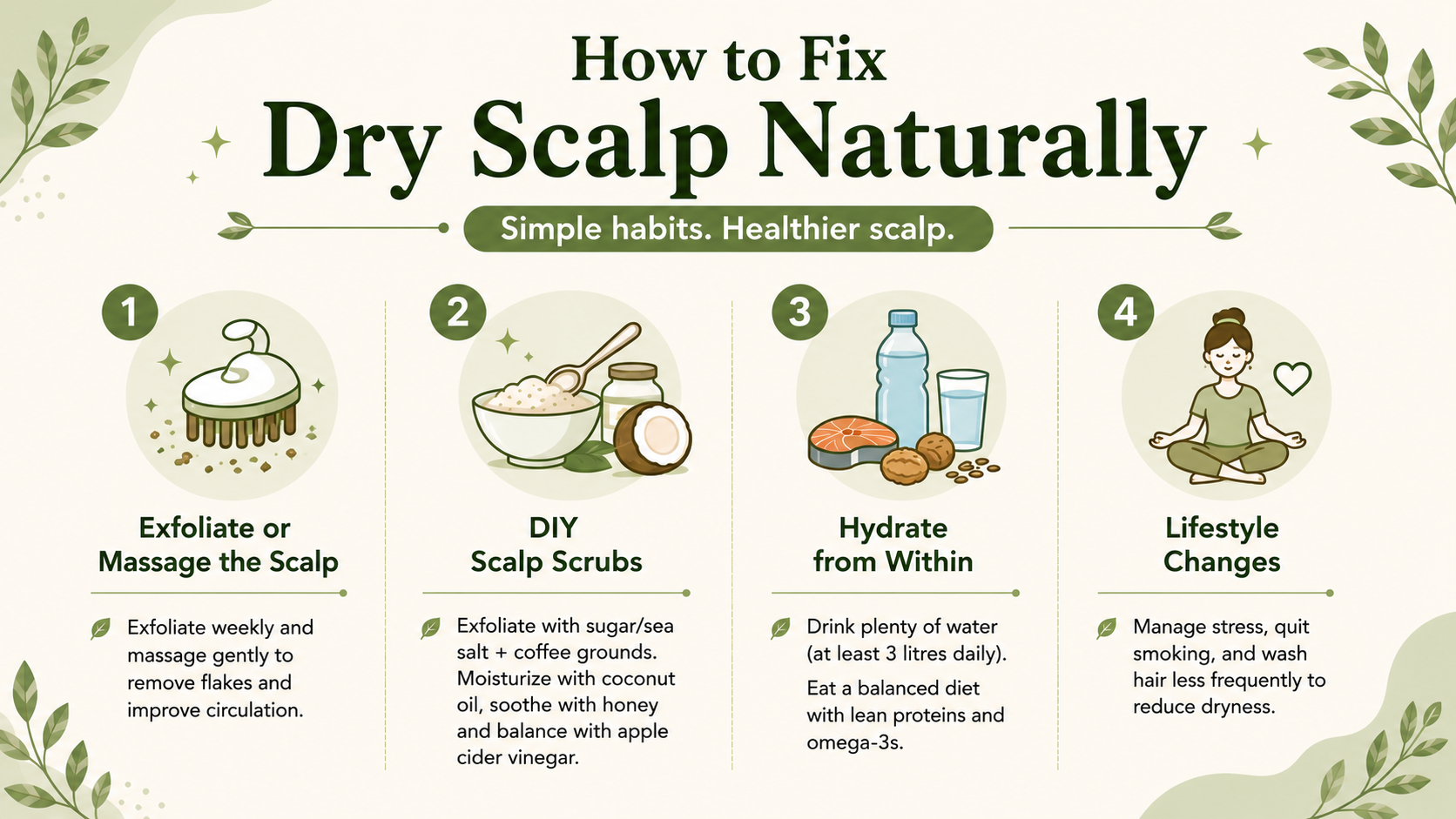 Dry Scalp: Causes, Treatments & Moisturizing Tips
Funny fact: your scalp has more nerve endings than most of your body. It’s basically a VIP section for itchiness. So be gentle. No scrubbing like you’re trying to remove a wine stain.
Step Four: The Exfoliation Intervention
Yes, exfoliating your scalp is a thing. It sounds ridiculous—like exfoliating your elbow, but weirder. But dead skin cells build up there too. Use a gentle scalp scrub once a week, or a silicone brush in the shower. It feels like a tiny head massage from a robot with very good intentions.
Do not use a pumice stone. I said that because I know someone out there is wondering. Please don’t.
Step Five: Oils, But Don’t Go Overboard
If your scalp is drier than a stand-up comedian’s throat after a bad set, try a lightweight oil. Argan oil and jojoba oil are great. Rub a few drops onto your fingertips and massage into your scalp before bed. It’s like giving your head a glass of water.
But don’t use olive oil from the kitchen. Your hair will smell like a salad for three days, and you’ll walk around craving croutons. Keep cooking oils for cooking.
Step Six: Watch What You Eat (I Know, Boring but True)
Your scalp is a reflection of your diet. If you eat nothing but pizza and energy drinks, your skin will rebel. Omega-3 fatty acids—found in salmon, walnuts, and flaxseeds—are basically hydration creams you eat. Surprising fact: a lack of zinc and B vitamins is directly linked to dry, flaky skin.
 How to Treat Dry Scalp - Say Goodbye Itchy Scalp
That bag of chips is not helping. But a handful of almonds? That’s a scalp peace treaty.
Step Seven: The Laundry Surprise
I’m serious. Your pillowcase is a flake farm. Fabric softener residue, dust mites, and leftover shampoo can all end up on your pillow, then back on your scalp. Change your pillowcase twice a week. Use a gentle, fragrance-free detergent.
Also, stop using fabric softener on towels. It coats the fibers and prevents drying. Yes, that’s a rabbit hole, but your scalp lives in that rabbit hole.
One Weird Trick That Actually Works
Try a cool water rinse after your final shampoo. It shocks the hair cuticles closed and locks in moisture. You’ll feel like a polar bear, but your flakes will retreat in confusion. And it’s free.
When to Call in the Cavalry
If you’ve tried all this and your scalp still looks like a snow globe, it could be seborrheic dermatitis or psoriasis. That’s not a joke—it’s a real medical condition. See a dermatologist. They have potions we don’t. But for 90% of flaky heads, these simple fixes work.
Now go forth, lower your shower temperature, and reclaim your black sweaters. Your scalp is not a snow machine—it’s just a little thirsty.
