How Much To Dig A Well

You know that feeling when you’re halfway through watering your tomato plants and the garden hose suddenly goes limp? You tap the spigot, slap the side of the house, and whisp...
You know that feeling when you’re halfway through watering your tomato plants and the garden hose suddenly goes limp? You tap the spigot, slap the side of the house, and whisper a little prayer to the plumbing gods. That’s when you start thinking about a well. But then the big question hits you: how much does it actually cost to dig one?
Let’s be real—this isn’t a question you ask at a dinner party. But it’s the kind of thing that pops into your head when your water bill arrives looking like a small car payment. Digging a well is a big deal, but it’s also one of those home projects that feels both ancient and surprisingly modern.
The Short and Sweet Answer
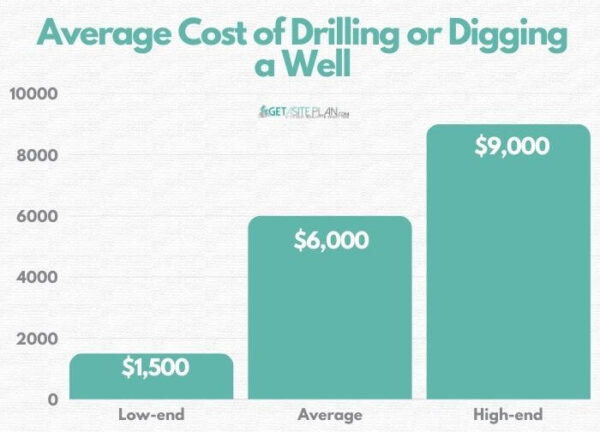
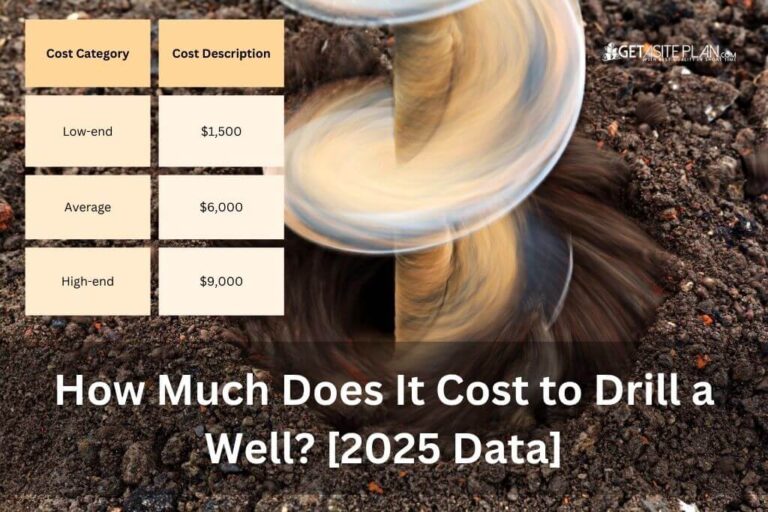
So, how much? For a standard residential well, you’re looking at anywhere from $3,000 to $15,000. Yes, that’s a wide range—like the difference between a used hatchback and a slightly fancier used hatchback. The final number depends on where you live, how deep you need to go, and what kind of soil you’re dealing with.
Must Read
Think of it like this: digging a well is a bit like ordering pizza. You pay for the base, the depth, and the toppings (like a pump and piping). But unlike pizza, you can’t just order extra cheese if your water table is a hundred feet down.
Depth is the Big One
The biggest factor is depth. If you live in a region with a shallow water table, like parts of Florida or the Midwest, you might only need to go 30 feet. That’s a cheap date—maybe $3,000 to $5,000. But if your backyard sits on bedrock, like in New England, you could be drilling 300 feet down. That’s a $15,000-plus hole in your backyard.
I once heard a story about a guy in Vermont who kept telling his driller, “Just a little deeper.” He ended up with a well so deep they had to install a second pump just to say hello to the water. Moral of the story: get a professional to test your site first, or you might accidentally start a mining operation.
Other Costs You Might Not Expect
It’s not just the drilling. You also need a pump, a pressure tank, and sometimes a hefty dose of patience. A basic submersible pump runs about $200 to $1,200, plus installation. The pressure tank—the thing that keeps your shower from turning into a dribble—adds another $300 to $800.
 Well Digging Costs: Comprehensive Guide - craftingwithconcrete.com
And don’t forget the permit. In many areas, you need a permit to dig, and that can cost anywhere from $100 to $500. It’s annoying, yes, but it’s also the government’s way of saying, “Please don’t accidentally hit a gas line while searching for H2O.”
Soil Type: The Wild Card
Soil is like that friend who says they’re “easygoing” but then refuses to eat at three restaurants. Soft soil is cheap to drill. Sandy soil is even cheaper. But if you hit clay, gravel, or solid rock, the price skyrockets. Drillers often charge by the foot, and rock drilling can cost double or triple the rate of soft soil.
Imagine trying to dig a hole through a giant jawbreaker with a drinking straw. That’s what drilling through granite feels like. Your wallet will feel it, too—literally lighter by the second.
Why You Should Care (Even If You Have City Water)
Okay, you might be thinking, “I’m on city water. Why do I care about wells?” Here’s the thing: wells are freedom. No monthly water bill. No worries about a main breaking on your street. And that water? It’s often ice-cold and crystal clear—perfect for that glass of water at 2 a.m.
Plus, if you ever want to sell your house, having a well can be a huge selling point, especially in drought-prone areas. Buyers love the idea of not being at the mercy of the municipal water system. It’s like having a secret underground lake just for you.
 9 Types of Architectural Drawings (Examples + How to) - Get A Site Plan
A Little Reality Check
But let’s be honest: wells aren’t magic. You need to test the water quality regularly, and you might need a filtration system. That’s an extra $1,000 to $3,000. Also, wells can run dry during a drought—yes, even the deep ones. So don’t think of it as a bottomless cup of coffee.
Think of it more like a giant, expensive water bottle that you have to maintain. But that bottle? It never runs out unless you mess it up. And it tastes amazing.
The Bottom Line (Pun Intended)
So, how much to dig a well? The honest answer is: it depends, but plan for $5,000 to $15,000 as a safe bet. Get at least three quotes from local drillers, and always ask about their experience with your specific soil type. Don’t just go with the cheapest guy—you don’t want a “bargain” well that becomes a mud puddle.
And if you’re still on the fence, ask yourself this: would you rather pay a water bill every month, or pay a lump sum once and then have free water for the next 30 years? That’s the kind of math that makes a well feel less like an expense and more like an investment in really, really good lemonade.
So go ahead. Dream about that well. Just remember: you’re not just digging a hole. You’re digging a relationship with the earth itself. And that, my friend, is worth every penny—even if it takes a few extra tries to find the water.
