How To Water A Cactus

Let’s be honest: you bought that cactus because it looked cool on your windowsill, not because you have a green thumb. Its stoic, sculptural form promised low-maintenance comp...

Let’s be honest: you bought that cactus because it looked cool on your windowsill, not because you have a green thumb. Its stoic, sculptural form promised low-maintenance companionship. But here’s the secret no one tells you—killing a cactus is actually a classic beginner mistake, and it almost always comes down to how you water it.
We’ve all been there. You see a slightly shriveled cactus and think, “Poor thing needs a drink.” You grab the watering can, give it a good soak, and wait. Two weeks later, it’s a brown, mushy mess. The culprit? Overwatering, the number one cause of cactus death. In the wild, these guys survive brutal droughts; they didn’t evolve for your afternoon sympathy showers.
The Golden Rule: When in Doubt, Don’t
Think of your cactus as a minimalist friend who cherishes alone time. They don’t want constant attention; they want rare, deep conversations. For most indoor cacti, that means watering only when the soil is completely bone-dry—like, desert-dry.
Must Read
Stick your finger an inch or two into the soil. If it feels damp or cool at all, put the watering can down. Step away. Wait another week. If you want to be extra careful, use a wooden skewer—if it comes out clean, it’s time to hydrate.
In the winter months (November through February), most cacti enter a dormant period. During this time, you might only water them once a month, or even not at all. Yes, really. They’re basically hibernating in plain sight.
How to Actually Water (The Right Way)
When the moment finally arrives, don’t just give them a polite sip. Cacti need a thorough, drenching soak—the kind that simulates a rare desert rainstorm. Water the soil until it runs freely out of the drainage holes at the bottom of the pot.
Here’s the fun part: use a long-spout watering can (or a simple squeeze bottle) to aim the water directly at the soil, not the cactus body. Getting the stem wet can lead to rot or unsightly fungal spots. It’s like giving a cat a bath: nobody wants that drama.
Fun fact: In popular culture, the cactus is often a symbol of resilience—think of the saguaro in “The Three Amigos” or the lone cactus in a spaghetti western. They’re the strong, silent type. Treat them accordingly.
Pot, Soil, and Drainage: The Supporting Cast
You can’t talk about watering without talking about the pot. A cactus needs a container with drainage holes—non-negotiable. If your cute ceramic pot has no holes, it’s a death trap. Use it as a cachepot (a decorative outer pot) instead.
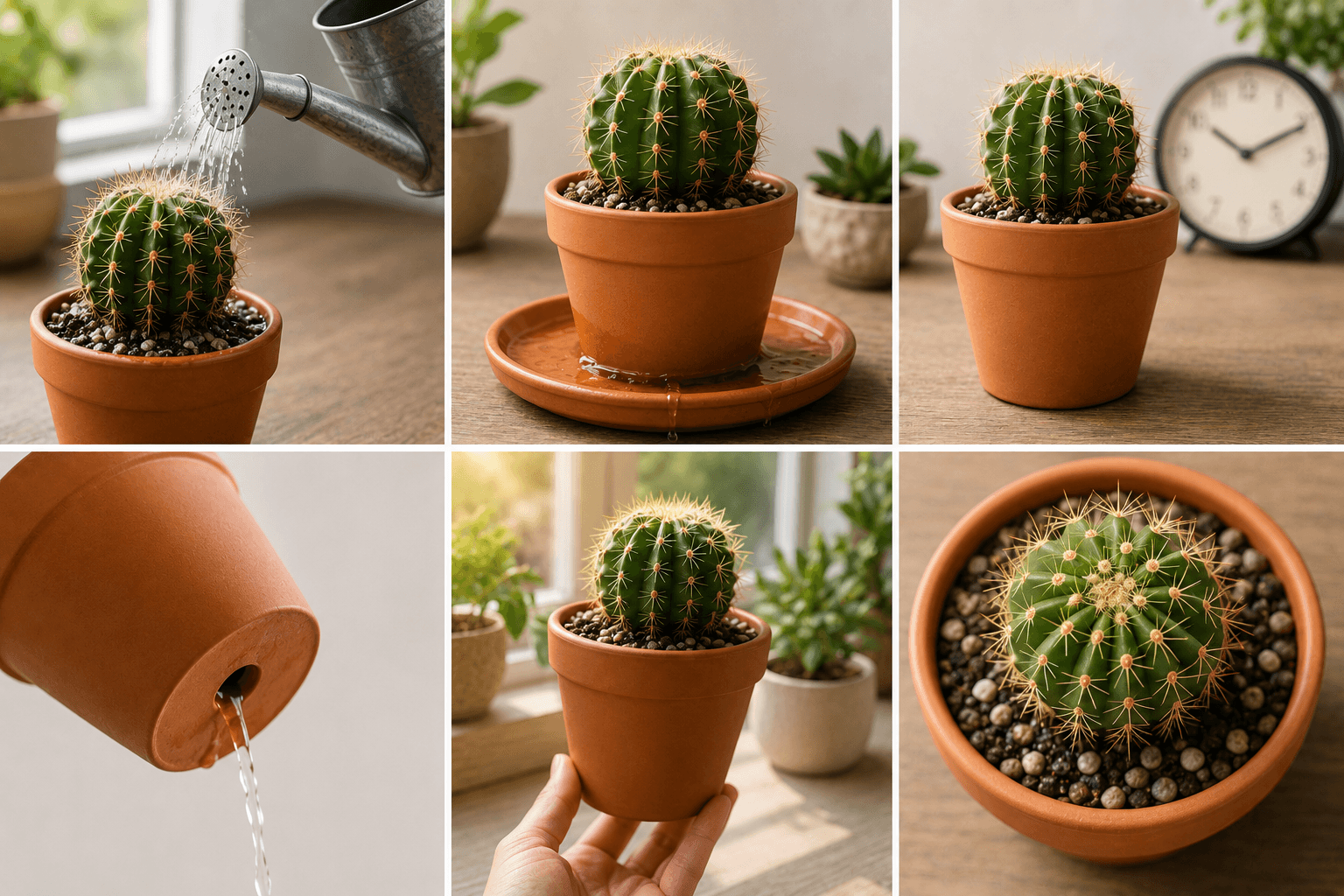 Cactus Watering Schedule: How Often to Water Cactus by Season (Complete
The soil matters just as much. Standard potting soil holds too much moisture, like a sponge at a pool party. You need a specialized cactus or succulent mix, which is gritty and drains fast. For extra points, add perlite or coarse sand to mimic the rocky ground of the Sonoran Desert.
Think of it as setting the stage for a minimalist lifestyle: the right environment makes the rare hydration event feel like a celebration, not a crisis.
Reading Your Cactus: Subtle Signals
Your cactus will tell you what it needs—if you know how to listen. A slightly wrinkled or puckered skin means it’s thirsty. That’s its version of a polite cough. Give it a deep drink, and it should plump back up within a day or two.
Yellowing or mushy spots? That’s the opposite. It’s screaming, “Too much water! Help!” At this point, act fast: stop watering, remove the cactus from its pot, and trim away any rotten roots. Let it dry out for a few days before repotting in fresh soil.
In the world of X-Men, the cactus would be a stoic mutant like Logan—tough on the outside, but with a vulnerable core that needs careful handling. Don’t let your Wolverine drown.
Seasonal Rhythms and Light
Cacti are sun-worshippers. They crave at least four to six hours of bright, indirect light per day. A south- or east-facing window is ideal. If they start leaning toward the light, they’re doing the plant version of a sun salutation.
Watering frequency changes with the seasons. In spring and summer (growing season), water every two to four weeks, depending on your home’s dryness. In fall and winter (rest season), reduce to once a month—or skip entirely if the soil stays dry.
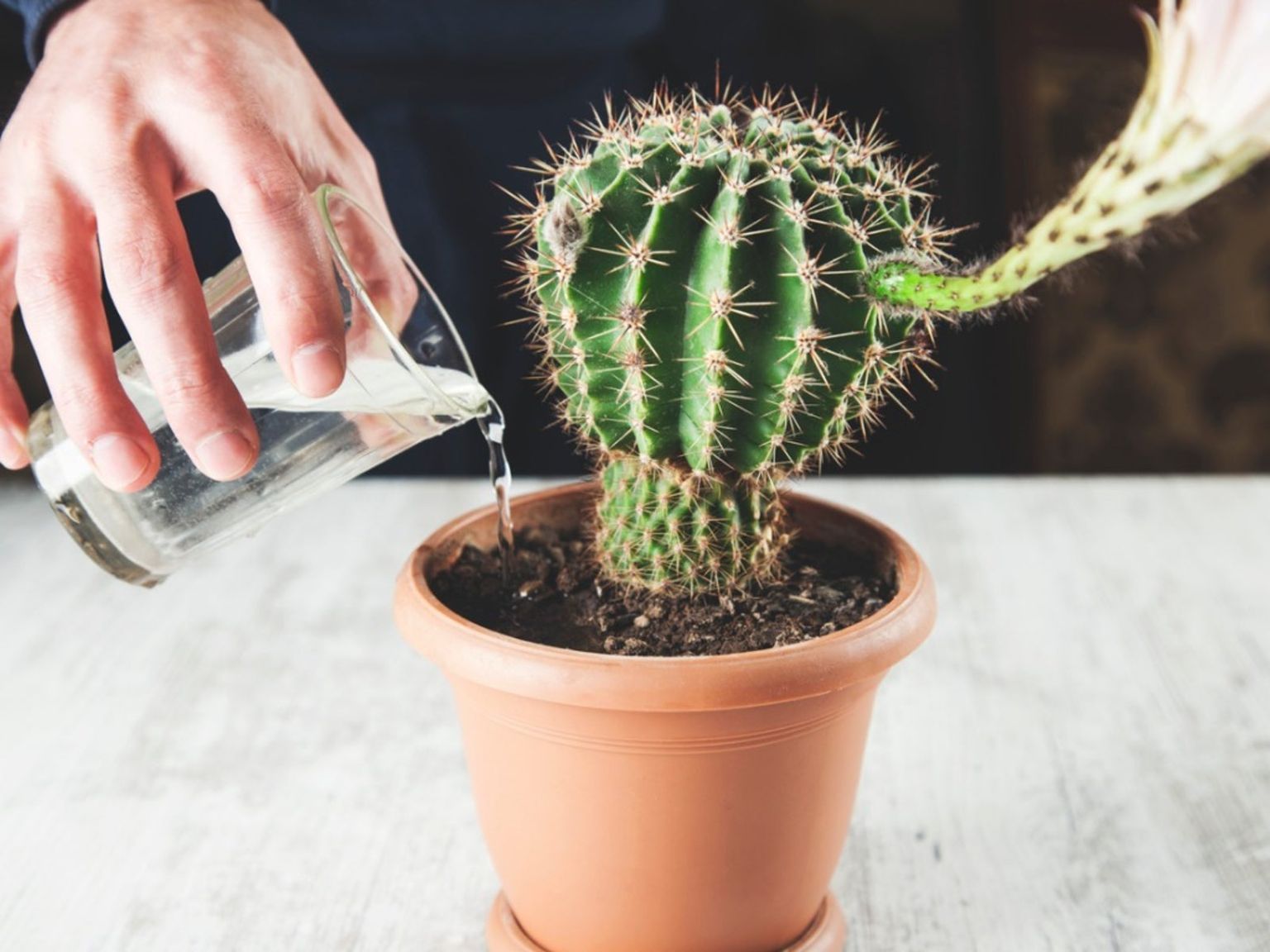 How to Water a Cactus: The Ultimate Guide to Cactus Care
Think of it as the cactus’s personal calendar. It doesn’t need a daily planner; it just needs you to respect its slow, ancient rhythm. Patience, grasshopper.
Common Myths Debunked
Myth #1: “Cacti need to be misted.” Wrong. Misting raises humidity, which cacti hate. They are desert dwellers, not tropical ferns. Keep the spray bottle away.
Myth #2: “Ice cubes are a safe way to water.” Please, no. The cold temperature can shock the roots. Always use room-temperature water. Your cactus doesn’t have a taste for frozen cocktails.
Myth #3: “They thrive on neglect.” Slightly true, but not fully. Neglect is fine for a week or two; total abandonment is not. A little mindful attention goes a long way. Think of it as the difference between a distant friendship and ghosting.
A Final Reflection
In our hyper-connected, always-on world, the cactus offers a quiet lesson in boundaries. It reminds us that love isn’t about frequency—it’s about timing and respect. Too much attention can smother; too little can wither. The sweet spot is knowing when to act and when to pause.
So next time you reach for that watering can, take a breath. Let the soil be your guide. Your cactus isn’t asking for a frantic routine—it’s asking for presence without pressure. And honestly, isn’t that what we all need a little more of?
Water slowly. Live slowly. Your cactus—and your soul—will thank you.
