Why Tap Water Is Bad

So, you’re standing at the kitchen sink, glass in hand, staring at that crystal-clear stream of tap water. It looks innocent enough, right? Wrong. That seemingly pure liquid i...
:max_bytes(150000):strip_icc()/TheSpruce_WhatisHardWater_colorv1-71c4c7ba876646638980256db096a84e.png)
So, you’re standing at the kitchen sink, glass in hand, staring at that crystal-clear stream of tap water. It looks innocent enough, right? Wrong. That seemingly pure liquid is actually a chemical cocktail party, and you’re the uninvited guest who brought the hangover.
Let’s start with the obvious: chlorine. Yeah, the same stuff that bleaches your whites and stings your eyes in a pool is in your water. It’s there to kill bacteria, sure, but it also kills your taste buds’ joy.
You know that “swimming pool” aftertaste you get sometimes? That’s not your imagination—it’s your tap water doing a bad impression of a public pool. Delicious.
Must Read
The Hidden Guest List
If chlorine were the only party crasher, we’d be fine. But no, tap water loves to invite heavy metals like lead, copper, and arsenic. Think of them as the toxic exes of the water world.
Lead is especially charming—it can leach from old pipes and settle in your bones. It’s like a bad tattoo, but inside your body, and you can’t even laser it off. Fun times.
Then there’s fluoride, the chemical we added to “protect our teeth.” But guess what? It’s a neurotoxin if you overdo it. So you’re basically drinking a mild, low-grade poison that the government told you was for your own good. Oof.
Pharmaceuticals and Other “Extras”
Here’s where it gets weird: tap water often contains trace amounts of prescription drugs. People flush old meds or pee them out, and they sneak right past the treatment plants.
So you might be sipping a microscopic dose of antidepressants, birth control, or antibiotics. It’s like a free, mystery medication sampler, but nobody asked for it. Cheers to accidental polypharmacy!
And let’s not forget microplastics. Those tiny, invisible bits of plastic are now in your water, your food, and probably in your soul. A recent study found they’re even in human blood. So you’re not just hydrating—you’re recycling takeout containers.
The Environmental Irony
You might think tap water is better for the planet than bottled water. And sure, plastic bottles are a disaster—but tap water isn’t guilt-free. To make it “safe,” treatment plants use chemicals, energy, and more plastic pipes.
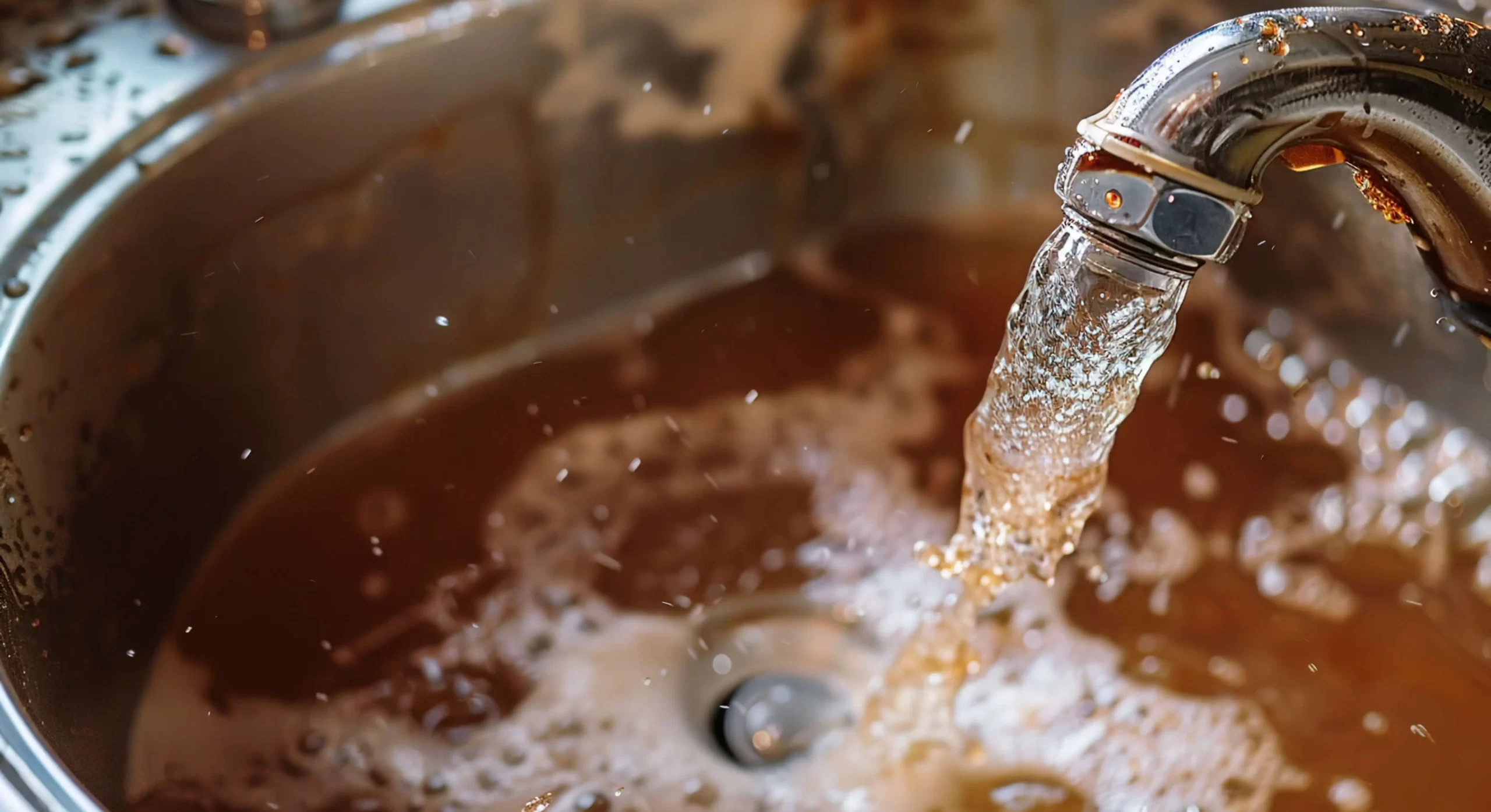 Causes of Brown Water from Tap and How Deal With It | Neighbourhood
Plus, those pipes are aging. In many cities, the infrastructure is from the 1950s. That means your water is traveling through rusted, cracked, sewer-adjacent tunnels. It’s a wonder it doesn’t arrive with a little hat and cane, tap-dancing.
And yes, there’s PFAS—the “forever chemicals” from non-stick pans and firefighting foam. They don’t break down. Ever. So you’re drinking molecules that will outlive your great-grandchildren. Welcome to immortality, via your faucet.
What About the Taste?
Okay, let’s be real: tap water tastes like sadness. It’s flat, metallic, or sometimes smells like a wet sock. That’s because of dissolved minerals, chlorine byproducts, and the geographic location of your pipes.
Ever notice how tap water in one city tastes amazing, and in the next block, it’s like licking a penny? That’s because each water source has its own mineral mix. One might be high in calcium (hello, kidney stones), while another is high in sulfur (hello, rotten eggs).
So you’re playing a game of “water roulette” every time you turn on the faucet. Spin the wheel! Will you get chalky or farty? Exciting.
The Science Says… Not Great
Look, I’m not here to scare you. But studies link long-term tap water consumption to higher rates of bladder cancer, reproductive issues, and cognitive decline. The EPA does set limits, but those limits are often outdated or based on politics, not science.
For example, the EPA’s lead limit is 15 parts per billion. But the American Academy of Pediatrics says there’s no safe level of lead for kids. So the government is basically saying, “A little poison is fine, just don’t chug it.” Cool.
 Why Is Tap Water Bad for You? – Membrane Solutions
And let’s not ignore arsenic. It’s naturally occurring in some groundwater, and it’s a known carcinogen. But we allow it up to 10 parts per billion. That’s like saying, “A small amount of lobster from Chernobyl is probably okay.” Probably.
But Wait—Is Bottled Water Better?
Nope. Bottled water is often just re-packaged tap water, but it costs 2,000 times more. Plus, it comes in plastic that leaches BPA, which messes with your hormones. So you’re paying extra to get a tiny dose of estrogen with your water.
The irony? Bottled water is less regulated than tap water. That’s right—the FDA barely monitors it. So your fancy spring water might have more bacteria than a public fountain. Fancy.
So if both options are bad, what’s a hydrated human to do? Get a good filter. A simple charcoal or reverse-osmosis system can remove most of the junk. It’s like a bouncer for your water—keeping out the lead, the drugs, and the tiny plastic squatters.
The Uplifting Conclusion (I Promise)
Okay, deep breath. I’ve spent the last 700 words painting tap water as a villain in a bad sci-fi movie. But here’s the good news: you are smarter than your faucet.
Humans have survived for millennia by drinking from streams, wells, and—yes—even questionable puddles. We’re resilient. And now we have choices. You can filter your water, buy a reusable bottle, or even move to a country with better water standards (I hear Iceland’s tap water is basically liquid unicorn tears).
The real goal isn’t to fear water—it’s to respect it. Water is life, but only when it’s clean. So take control, laugh at the absurdity of it all, and pour yourself a glass of something actually good for you.
And if all else fails? Just add lemon. It won’t remove the lead, but it will make you feel fancy while you sip. Stay hydrated, my friend—and may your water be as pure as your laughter. Cheers!
:max_bytes(150000):strip_icc()/TheSpruce_WhatisHardWater_colorv1-71c4c7ba876646638980256db096a84e.png&description=Why+Tap+Water+Is+Bad)