Best Water Treatment For Well Water

So, you’ve got a well. That means you’re basically a modern-day pioneer, tapping into the Earth’s own secret stash of water. Pretty cool, right? But let’s be honest, that wate...
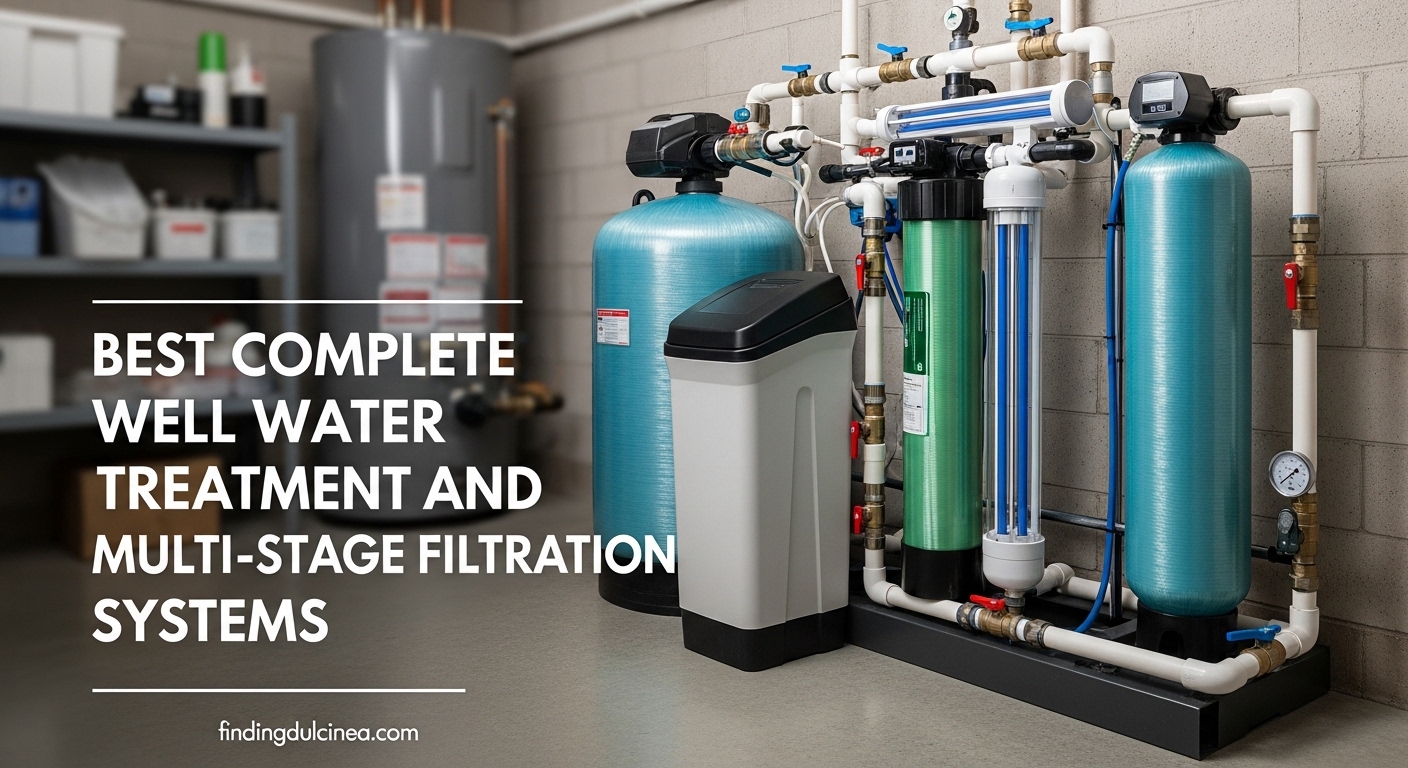
So, you’ve got a well. That means you’re basically a modern-day pioneer, tapping into the Earth’s own secret stash of water. Pretty cool, right? But let’s be honest, that water can sometimes come with a few surprises you didn’t exactly order.
Unlike city water, which is treated by a massive plant before it hits your tap, your well water is raw. It’s a direct line to the underground, which means it can carry anything from harmless minerals to uninvited guests like bacteria or sediment. The question is: how do you turn that raw, wild stuff into something perfectly crisp for your morning coffee?
First, Get to Know Your Water’s Personality
You wouldn't buy jeans without trying them on, right? Well, you shouldn't treat your water without testing it first. A simple test kit (or a pro lab analysis) will reveal what’s actually lurking in that glass.
Must Read
Is it hard with calcium and magnesium? Does it smell like rotten eggs (sulfur)? Or is it just a little cloudy? Each “personality” needs a different treatment plan. Think of it like being a bartender—you need the right ingredient for the right cocktail.
The Rusty Red Flag: Why Your Sink Looks Like a Crime Scene
If your white laundry has a reddish-brown tint, you're dealing with iron. It’s not dangerous to your health, but it’s an absolute nuisance. It stains everything and makes your water taste like a metal spoon.
 Well Water Treatment Systems | Injectable Chlorinator | Carter Water
For mild iron, an oxidation filter is your best friend. It basically tricks the iron into turning into a solid particle, then catches it. For high levels, you might need a chemical injection system—think of it as a high-tech "iron magnet" for your pipes.
The Egg Factor: When Your Water Needs a Bath
Ever turn on the tap and get a whiff of a fancy spa that went wrong? That sulfur smell is actually hydrogen sulfide gas. It’s produced by bacteria living deep in your well, and it’s seriously off-putting.
The most effective solution here is an aeration system. It literally gives the water a chance to "burp" out the gas before it reaches you. Another option is a catalytic carbon filter, which chemically breaks the smell down. Either way, your nose will thank you.
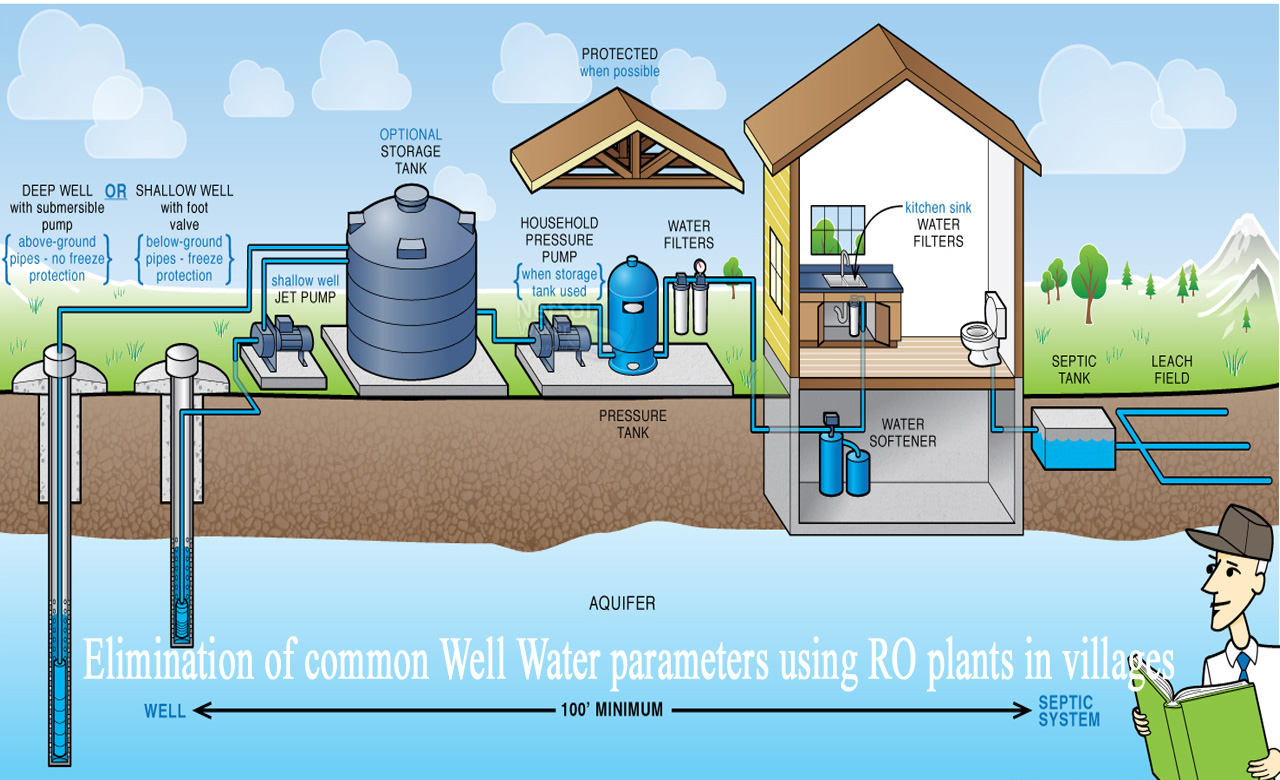 Well Water Treatment Methods at Joseph Arellano blog
The Big Guns: Reverse Osmosis for the Purity Purist
This is the superstar of water treatment. Think of reverse osmosis (RO) as the bouncer at the world’s most exclusive club. It pushes water through a semi-permeable membrane so tiny that only pure H2O gets through.
Everything else—lead, nitrates, pesticides, even salt—gets shown the door. The downside? It’s slow and produces a little waste water. But for drinking and cooking, it’s like having a mountain spring on your countertop. Ever dreamed of water so pure it’s almost boring? That’s RO.
Soft as a Cloud: When Hard Water Attacks
If your hair feels like straw after a shower, and your dishes have more spots than a Dalmatian, you have hard water. It’s caused by calcium and magnesium, and it’s incredibly common.
 6 Best Well Water Treatment Systems (April 2026) Expert Reviews
The classic fix is a water softener, which uses salt to swap those hard minerals for harmless sodium. It’s like giving your water a gentle personality transplant. Your soap will lather better, your pipes will last longer, and your skin will feel like silk. Who knew chemistry could be so luxurious?
The Final, Often Forgotten Step: UV Sterilization
Bacteria and viruses are the silent hitchhikers of well water. You can’t taste or see them, but they can make you very sick. A UV light system is the best insurance policy.
It works like a tanning bed for microbes—the light scrambles their DNA so they can’t reproduce. It doesn’t remove anything physically; it just zaps the living stuff dead. Pair it with a sediment filter, and you’ve got a comprehensive system that tackles the physical and the biological.
 The Clean Well Water Report
Budgets and Dreams: Finding Your Perfect Combo
Don’t panic. You don’t need a million-dollar setup. Start with a simple sediment filter (it’s cheap and catches sand and rust). Then, add layers based on your test results.
A whole-house system (treating all water) is great for protecting appliances. But a point-of-use system (just for drinking water) is budget-friendly. What’s your real goal? Is it silky showers or just a clean glass of water for dinner? Build your kit based on that.
At the end of the day, treating your well water is like curating a playlist. You choose the tracks—the filters, the softeners, the UV light—that create the perfect harmony. And once you get that first sip of clear, delicious, your-way water? It feels like a small victory every single time.
