What Salt Is Best For Water Softener

Picture this: Your shower feels like you're washing up in a gravel pit. Your dishes come out looking like they’ve been in a snowball fight. Yes, your water softener is screami...
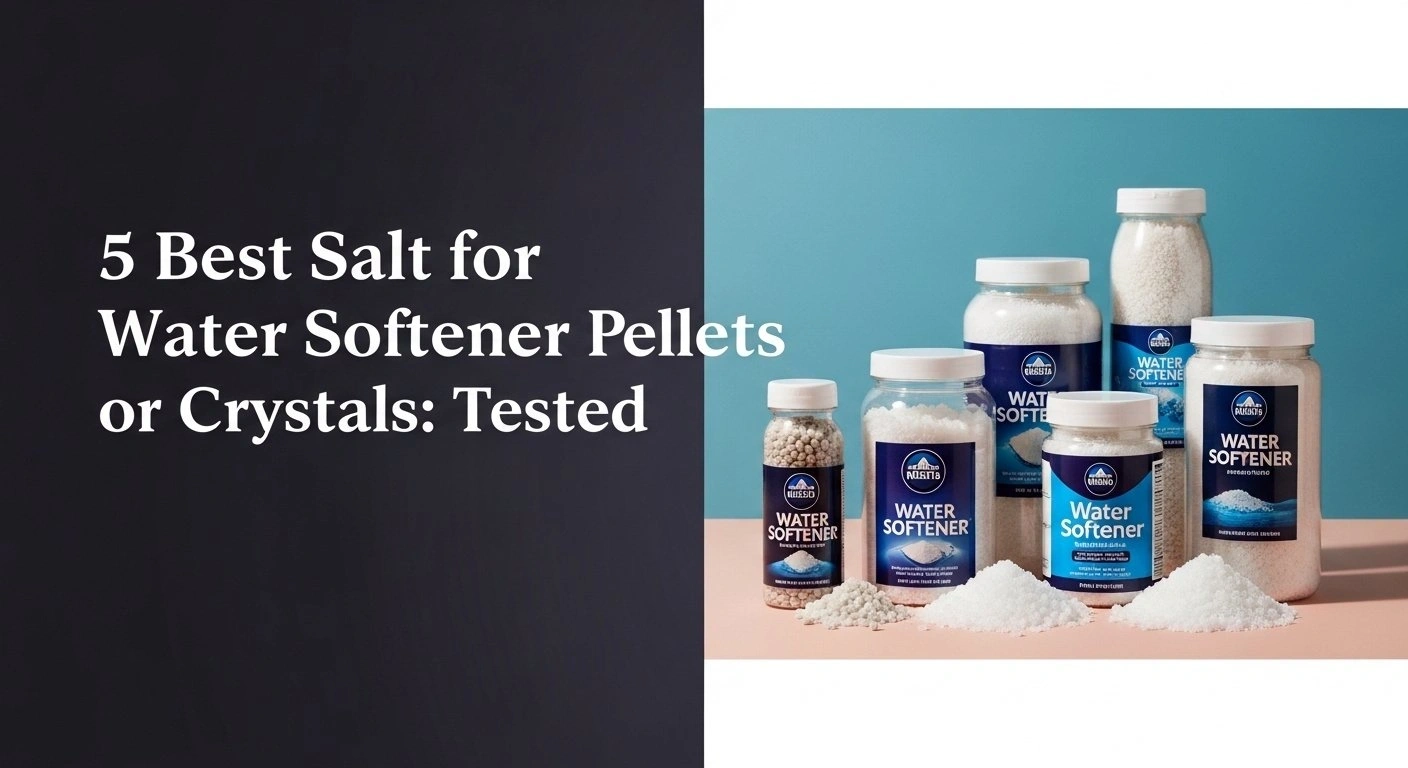
Picture this: Your shower feels like you're washing up in a gravel pit. Your dishes come out looking like they’ve been in a snowball fight. Yes, your water softener is screaming for help, and you’re staring at a wall of salt bags in the hardware aisle, wondering if you’ve accidentally stumbled into a salt-themed karaoke bar. Let’s fix that.
First, a brutal truth: not all salt is created equal. Tossing table salt into your softener is like putting jet fuel in a lawnmower—technically it burns, but you’ll blow up the whole thing. Water softeners crave specific salts designed for their chunky, ionic magic. Your laundry doesn’t care about gourmet pink Himalayan crystals; it just wants minerals kicked out of the water.
The Main Contenders: Rock Salt vs. Solar Salt vs. Evaporated Salt
Rock salt is the bargain-bin fighter of the salt world. It’s cheap, mined from the earth, and looks like something a dinosaur sneezed out. But here’s the kicker: rock salt is about 98% pure, and the other 2% is insoluble gunk—sand, clay, and old riverbed drama. That gunk collects in your brine tank like melted ectoplasm, forcing you to clean it out every six months or risk a salt bridge so thick you could park a golf cart on it.
Must Read
Now, solar salt is the beach-bum cousin. It’s made by evaporating seawater, which sounds poetic, but the result is small, porous crystals that dissolve faster than your New Year’s resolutions. Solar salt is usually 99.6% pure, but those little crystals love to clump together in humid weather. You’ll find yourself chiseling a salt iceberg out of your tank while your spouse films it for TikTok.
Finally, the heavyweight champion: evaporated salt. This stuff is produced using a fancy, industrial “vacuum pan” process that makes pure white salt pellets or cubes. It’s 99.9% pure—essentially the James Bond of salts. No grit, no clumping, no tantrums. It dissolves beautifully and leaves almost zero residue. The only downside? It costs a little more, but so does therapy, and you’ll need that if your cheap salt ruins your softener.
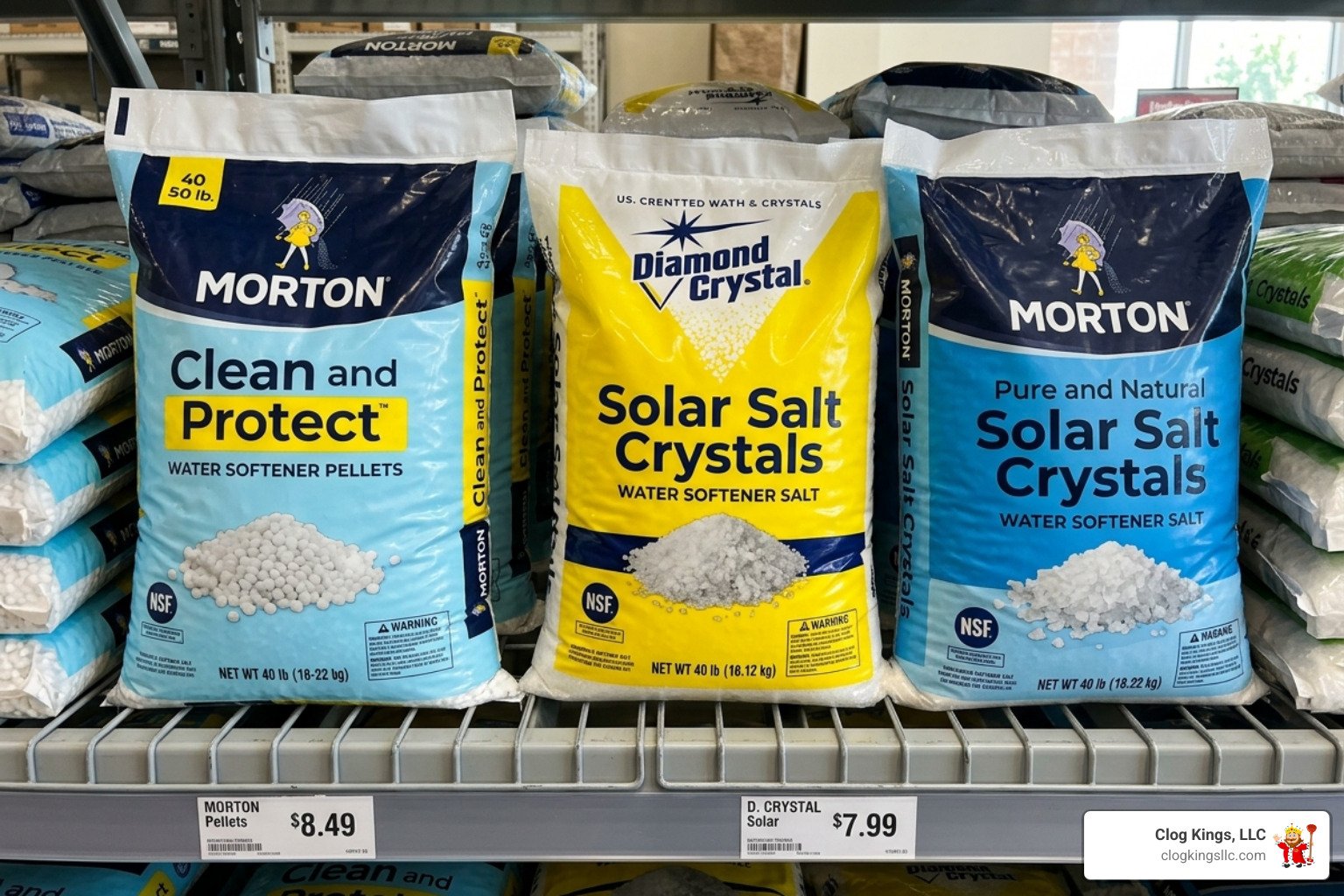 Best Water Softener Salt: Pellets, Crystals, and Blocks Compared – CLOG
Wait, What About Potassium Chloride?
You might’ve seen bags labeled “potassium chloride” and thought, “Ooh, fancy!” Potassium chloride is salt’s hipster roommate—it works the same way but uses potassium instead of sodium. Fun fact: it actually lowers the resin efficiency, so you’ll need 20-30% more of it to soften the same amount of water. That means you’re refilling the tank twice as often, and your wallet will start crying in the shower. It’s great if you’re on a low-sodium diet, but for most people, it’s a painful overkill. Stick with evaporated salt unless your doctor literally hands you a prescription.
How to Choose Without Losing Your Mind
Here’s a cheat code: check your water hardness first. Hardness is measured in grains per gallon (GPG), and if your water is over 20 GPG, you want high-purity pellets—evaporated or high-grade solar—so the resin doesn’t get choked with sludge. If your water is mild (under 10 GPG), rock salt might be tolerable, but only if you enjoy scrubbing your tank with a spatula every few months.
 The Best and Worst Salt for Your Water Softener - Water eStore
Also, avoid any salt labeled “rust remover” or “crystal clear” unless you want your softener to smell like a swimming pool. Those additives are usually iron-fighting chemicals that can mess with the ion exchange resin. Your softener doesn’t need a multivitamin; it needs pure, boring salt. Surprising truth: some brands add “bacteria inhibitors” that can actually breed slime in the tank. Yes, your salt bag might be hiding a secret slime party.
The Final, Slightly Weird Verdict
If you want to set it and forget it like a Crock-Pot, buy evaporated salt pellets. Look for “evaporated” or “high purity” on the bag—brown or white, doesn’t matter. Expect to pay about $8–12 per 40-pound bag, which is the cost of one fancy coffee drink and a bag of chips. Your softener will purr like a happy cat, your water will sparkle, and your dishes will stop looking like they were frostbitten in a blizzard.
 7 Best Salt for Your Water Softener System 2022 Comparison & Pros Cons
One last zinger: never, ever use block salt unless you own a specific antique softener that looks like a steampunk furnace. Block salt is the unicycle of the water-softening world—fun to own, but completely impractical for 99% of us. And don’t get me started on “pool salt.” That stuff is pure cyanide for a water softener.
So there you have it. Next time you’re in that salty aisle, stand tall, grab the evaporated pellets, and walk out like a water-softening legend. Your shower will thank you. Your dishes will stop looking like they went to war. And you won’t have to clean a slime monster out of your tank again. Unless you really want to, in which case… rock salt is on sale.

