Best Amount Of Water To Drink Per Day

We’ve all heard it: “Drink eight glasses of water a day.” It’s the kind of advice that floats around like a beach ball at a summer festival—ubiquitous, cheerful, but maybe a l...
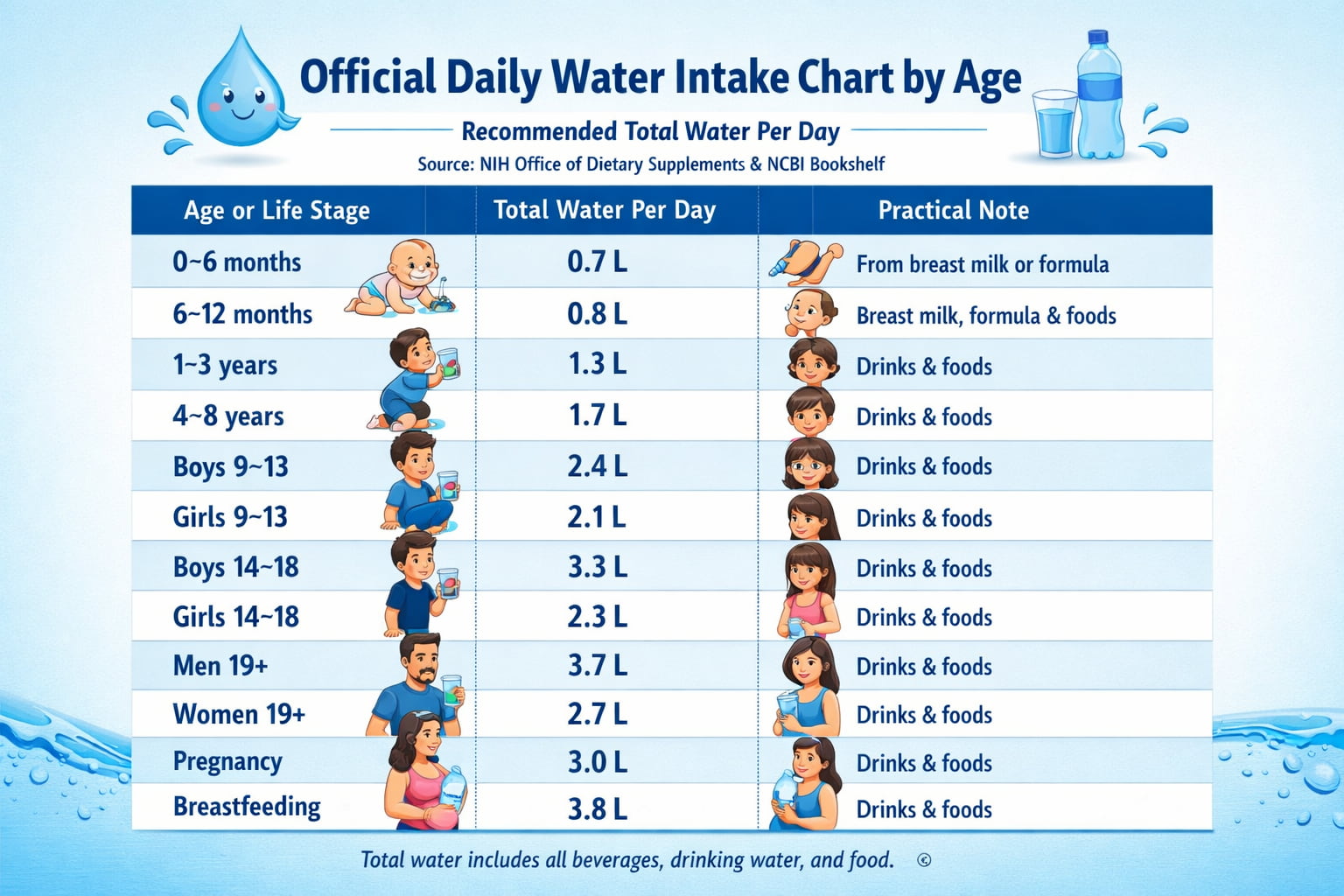
We’ve all heard it: “Drink eight glasses of water a day.” It’s the kind of advice that floats around like a beach ball at a summer festival—ubiquitous, cheerful, but maybe a little simplistic. The truth is, that number isn’t backed by hard science; it’s more of a cultural shorthand. The real question isn’t about a magic number, but about what your body actually needs.
The National Academies of Sciences, Engineering, and Medicine suggests a more nuanced target. For men, it’s about 3.7 liters (or 15.5 cups) of total water per day; for women, 2.7 liters (about 11.5 cups). But here’s the fun part: that includes water from all sources—your morning coffee, that watermelon slice, even the broth in your ramen. You’re not a camel; you’re a sophisticated hydration system.
The Myth of 8 x 8
The “eight glasses a day” rule likely originated from a 1945 recommendation that people need 1 milliliter of water for every calorie consumed. That math roughly works out to 64 ounces, but it’s a lazy translation. We’ve clung to it like a favorite old t-shirt, even though it’s frayed and doesn’t fit everyone. Your personal need depends on climate, activity, and even your mood.
Must Read
Think of water as your body’s ambient soundtrack. Too little, and you get static: headaches, dry skin, that vague afternoon slump. Too much (a rare condition called hyponatremia), and your cells can actually swell. The sweet spot is a steady, easy rhythm—not a flood, not a drought.
Listen to Your Thirst? Not Always.
Thirst is a lagging indicator. By the time your brain sends that dry-mouth signal, you are already slightly dehydrated. It’s like your phone battery hitting 10% before you look for a charger. For athletes or anyone sweating in a heat wave, thirst is not a reliable guide. A better tactic is to sip consistently, not chug erratically.
 B Fit B Hydrated - The Braden Aboud Memorial Foundation
A fun little cultural quirk: in Japan, many people start their day with a glass of water before anything else. It’s called Mizu no Kankō (water therapy), and it’s been a morning ritual for centuries. It’s not a prescription, but it’s a lovely reminder that hydration is a practice, not a chore.
How to Actually Hit Your Mark (Without a Spreadsheet)
Stop obsessing over ounces. Instead, use the pee test—it’s your most honest friend. Pale yellow or clear? You’re golden. Dark amber? Time to refill. This is the hydration equivalent of checking your bank balance: simple, immediate, and brutally honest. No urine? See a doctor.
 Hydration 101: How Much Water Should You Drink Each Day?
Another trick: keep a 1-liter bottle on your desk and aim to refill it twice. That’s roughly your magic mark without the math. Add a squeeze of lemon or a cucumber slice to make it feel like a spa experience, not a penalty. Make it fun, not a chore.
The Coffee Conundrum
Yes, coffee counts—but don’t over-rely on it. Caffeine has a mild diuretic effect, meaning it can make you pee more than pure water would. Think of coffee as a clever illusionist: it hydrates and dehydrates you simultaneously, like a party guest who brings a gift but eats all the snacks. Moderation is key.
And don’t forget electrolytes! If you’re sweating heavily—say, after a hot yoga class or a long hike—you need more than just H2O. A splash of coconut water or a pinch of salt in your glass can replace what you lose. It’s the difference between watering a plant and feeding it nutrients.
 Drinking Water Benefits: Drink Enough Daily for Best Results! | Lose
Cultural Hydration Hacks
In Italy, they serve sparkling mineral water with meals, believing it aids digestion. In India, clay pots (matkas) keep water naturally cool and slightly mineralized. Borrow their wisdom: don’t just gulp—savor. Try a glass of room-temperature water with a pinch of sea salt first thing in the morning; it’s ancient Ayurveda meets modern science.
Fun fact: Your blood is about 92% water, and your brain is about 73%. That means every time you take a sip, you’re literally watering your thoughts. A dehydrated brain processes information slower—so that midday fog? It might just be a hydration signal, not a lack of coffee.
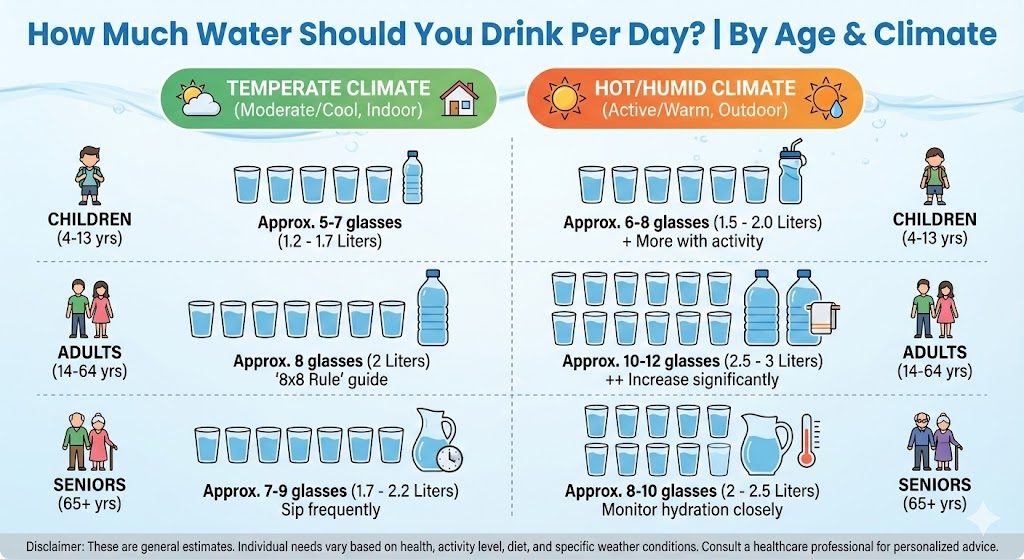 How Much Water Should You Drink Per Day?
Practical Tips for Real Life
- Set a gentle alarm every 90 minutes—not for work, but for a three-sip pause.
- Add a slice of ginger or mint to make your water feel like a ritual, not a duty.
- If you forget, link it to a habit: water after every bathroom break, or before each phone call.
You don’t need a designer bottle with motivational quotes. A simple mason jar or a repurposed wine bottle will do. The best container is the one you actually drink from. Perfect is the enemy of hydrated.
The Bottom Line (It’s Not a Line)
There is no single “best” amount—only a range that gently nudges your body toward balance. Some days you need more; some days less. Your body is not a spreadsheet; it’s a conversation. The goal is to stay in the dialogue, not to win a water-drinking championship.
So next time someone tells you to chug eight glasses, smile. Tell them you’re practicing intuitive hydration. Pour a glass, take a sip, and appreciate that you’re doing something ancient and wonderful: nourishing a body that works hard for you. Now go refill your glass—and enjoy the small miracle of it all.
