Best Well Water Filtration System For Home

Last summer, my friend Dave invited me over for what he called “the best glass of water of your life.” I walked in, expecting fancy filtered water from some high-tech machine....

Last summer, my friend Dave invited me over for what he called “the best glass of water of your life.” I walked in, expecting fancy filtered water from some high-tech machine. Instead, he handed me a mason jar filled with water that tasted so clean, so crisp, it honestly made me question every sip I’d ever had from my tap. When I asked where he bought it, he just grinned and said, “From my well. But the secret isn’t the well—it’s the filtration system I finally installed last year.”
That day, I realized most of us with well water are living in a state of quiet denial. You know the drill—a faint metallic taste, a weird smell when you run the hot water, or those mysterious orange stains on your pristine white sinks. We tell ourselves it’s “natural,” but deep down, we know our water could be better. If you’re rolling your eyes because you’ve been there too, trust me—you’re not alone.
Why your well water needs a serious upgrade
Well water isn’t regulated like city water, which means you’re the lab technician, plumber, and quality control manager all rolled into one. And let’s be honest—you didn’t sign up for that second job. The truth is, your well can pull in everything from harmless sediment to nasty bacteria, heavy metals, or even pesticides from nearby farms.
Must Read
But here’s the thing: not all filtration systems are created equal. I’ve seen people buy a cheap countertop filter and wonder why their hair still feels like straw. The right system depends entirely on what’s actually in your water. And yes, I can already hear you asking, “Do I really have to test my water first?” The short answer is yes—and it’s way easier than you think.
The two main villains in your well water
Before you even look at systems, you need to know your two enemies: sediment and contaminants. Sediment is the obvious stuff—sand, silt, rust particles that make your water look like weak iced tea. Contaminants are the sneaky ones: iron, manganese, sulfur (hello, rotten egg smell), nitrates, and sometimes even coliform bacteria.
 Top 5 Best Whole House Well Water Filtration System Reviews
I’ve talked to homeowners who spent hundreds on a fancy system only to find out their main issue was just a bunch of sand. They could have solved it with a simple $50 sediment filter. Ouch. So take the hint: test your water first, or you’ll be that person wasting money on a Ferrari when all you needed was a bicycle.
Best all-rounder: The whole-house sediment filter combo
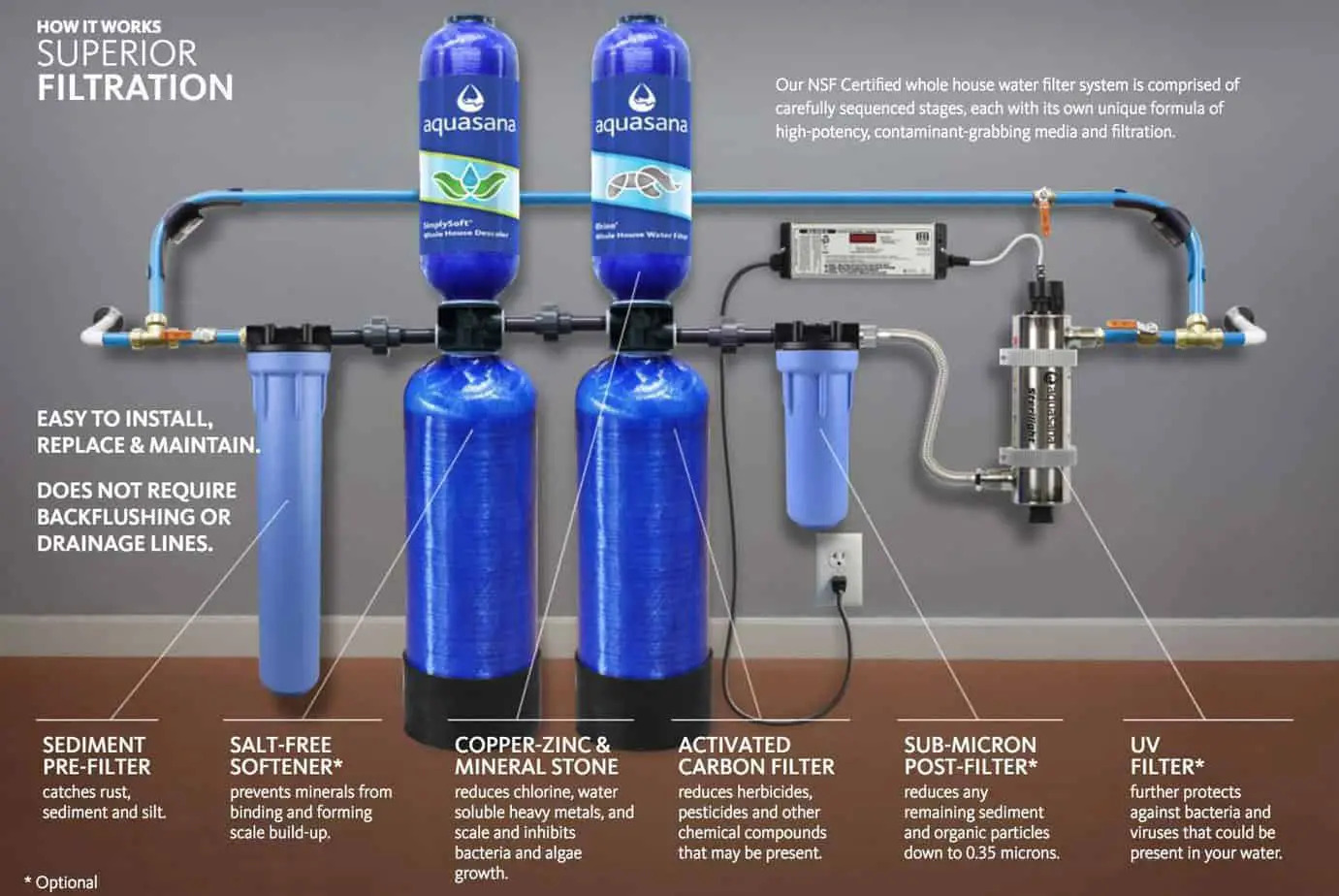
If you’re starting from scratch and your water only has mild issues (a bit of sediment, maybe some iron), go with a two-stage whole-house system. It’s the workhorse of the well water world. The first stage is a sediment cartridge that catches the big junk; the second stage usually has a carbon block to remove chlorine, bad tastes, and odors.
I installed one of these for my parents last spring, and my mom called me two weeks later to say her coffee finally tasted like coffee. The best part? These systems run from $150 to $400, and you don’t need a degree in engineering to set them up. You can literally watch a YouTube video and be done in an hour.
 Water Filtration System for Well Water: How to Choose the Best Well
For iron and sulfur: The catalytic media filter
Now, if your water smells like a flatulent buffalo or leaves orange slime on your shower curtain, you need something heavier. A catalytic media filter (often using materials like Katalox Light or Birm) removes iron, manganese, and hydrogen sulfide without chemicals. This is the system Dave installed—the one that changed my life in a mason jar.
These filters are pricier—typically $600 to $1,200—but they’re mind-blowingly effective. Just note: they need backwashing, which means a drain line and a bit more space. If you hate maintenance, maybe skip this one. But if you want water that feels like it came from a mountain spring, it’s worth every penny.
The heavy lifter: Reverse osmosis for drinking water
Let me be real: no whole-house filter will give you perfect drinking water. For that, you need a reverse osmosis (RO) system under your kitchen sink. It’s the gold standard for removing nitrates, lead, arsenic, and even fluoride. I have one at home, and I swear my tap water now tastes better than bottled water.
 Residential Water Purification Lead Removal Whole House Water Filter
But here’s the irony: RO systems are slow and produce wastewater. You might get one gallon of pure water for every three gallons that go down the drain. Also, they strip everything from the water—including healthy minerals. I compensate by adding a mineral cartridge or just don’t stress about it. Your call, but for drinking and cooking, this is the undisputed champ.
Don’t forget the UV light (seriously)
If your well test shows any bacteria—even trace amounts—you need a UV water sterilizer. It’s not a filter per se; it’s a light that zaps microorganisms instantly. It’s like putting your water through a tanning bed for germs. And it’s affordable: around $200 to $500 for a good unit.
I ignored this advice for two years, and I paid for it with a nasty stomach bug that had me rethinking my life choices. Learn from my mistakes. Pair a UV system with a sediment pre-filter, and you’ll have safe water without tasting chemicals.
:max_bytes(150000):strip_icc()/aquasana-whole-house-well-water-filter-system-68651cbaa66a4921b287057afec93edf.jpg) The 8 Best Whole-House Water Filters to Improve Your Drinking Water
The 8 Best Whole-House Water Filters to Improve Your Drinking Water
The final choice: simplicity vs. perfection
Here’s my honest take: don’t overcomplicate it. If your water is relatively clean, a $200 whole-house system plus a $150 RO under the sink will cover 90% of your needs. If you have heavy iron or bacteria, step up to a catalytic filter and UV combo. Either way, avoid the gimmicky “10-stage” systems that claim to cure everything—they usually just trap your money.
So go test your water today. Order a kit online, or call a local lab. It takes ten minutes and will save you from buying the wrong gear. And when you finally take that first sip of perfectly filtered well water—crisp, clear, and totally yours—you’ll wonder why you waited so long. Trust me, it’s the good kind of life upgrade.
Now go enjoy your well water. You’ve got this.
