Best Water Softener Resin

So, you’re on a quest for the best water softener resin? Welcome, brave warrior against hard water scale! You’ve come to the right place—the digital campfire where we roast th...

So, you’re on a quest for the best water softener resin? Welcome, brave warrior against hard water scale! You’ve come to the right place—the digital campfire where we roast the myths and share the good stuff.
Let’s face it: dealing with crunchy laundry and spotty glasses is no one’s idea of a party. Your water softener is the unsung hero of your home, and its resin is the beating heart of the whole operation. Think of resin as tiny, hungry magnets that lure away calcium and magnesium like they’re offering free pizza.
But not all resin is created equal. Some are like that one friend who promises to help you move, then bails at the last minute. Others are the reliable buddy who shows up with a truck and a cooler of iced tea.
Must Read
Today, we’re diving into the world of ion-exchange beads. We’ll look at which ones keep your water silky smooth without making you cry over your water bill. Grab a glass of (softened) water, and let’s chat.
The Heavyweight Champion: 8% Crosslinked Resin
If resin were a superhero, 8% crosslinked would be Captain America—trustworthy, durable, and ready for a long fight. This stuff is the gold standard for most homes because it can handle a beating from chlorine and iron without crumbling.
It’s like the Toyota Camry of water treatment: not flashy, but it’ll run for 15 years with basic oil changes (read: salt refills). You want a resin that won’t turn to mush when your municipal water smells like a swimming pool. This is your guy.
Sure, it’s a little pricier than the basic 6% stuff, but consider it an investment in your sanity. No one ever regretted buying the good resin, unless they also bought a inflatable hot tub—that’s a different kind of regret altogether.
The Budget Buddy: 6% Crosslinked Resin
Then there’s 6% crosslinked resin, the feisty little cousin who’s fun at parties but can’t hold their liquor. It’s cheaper and works great—at first. But give it a few years of hard water abuse, and it starts to look like a tired sponge.
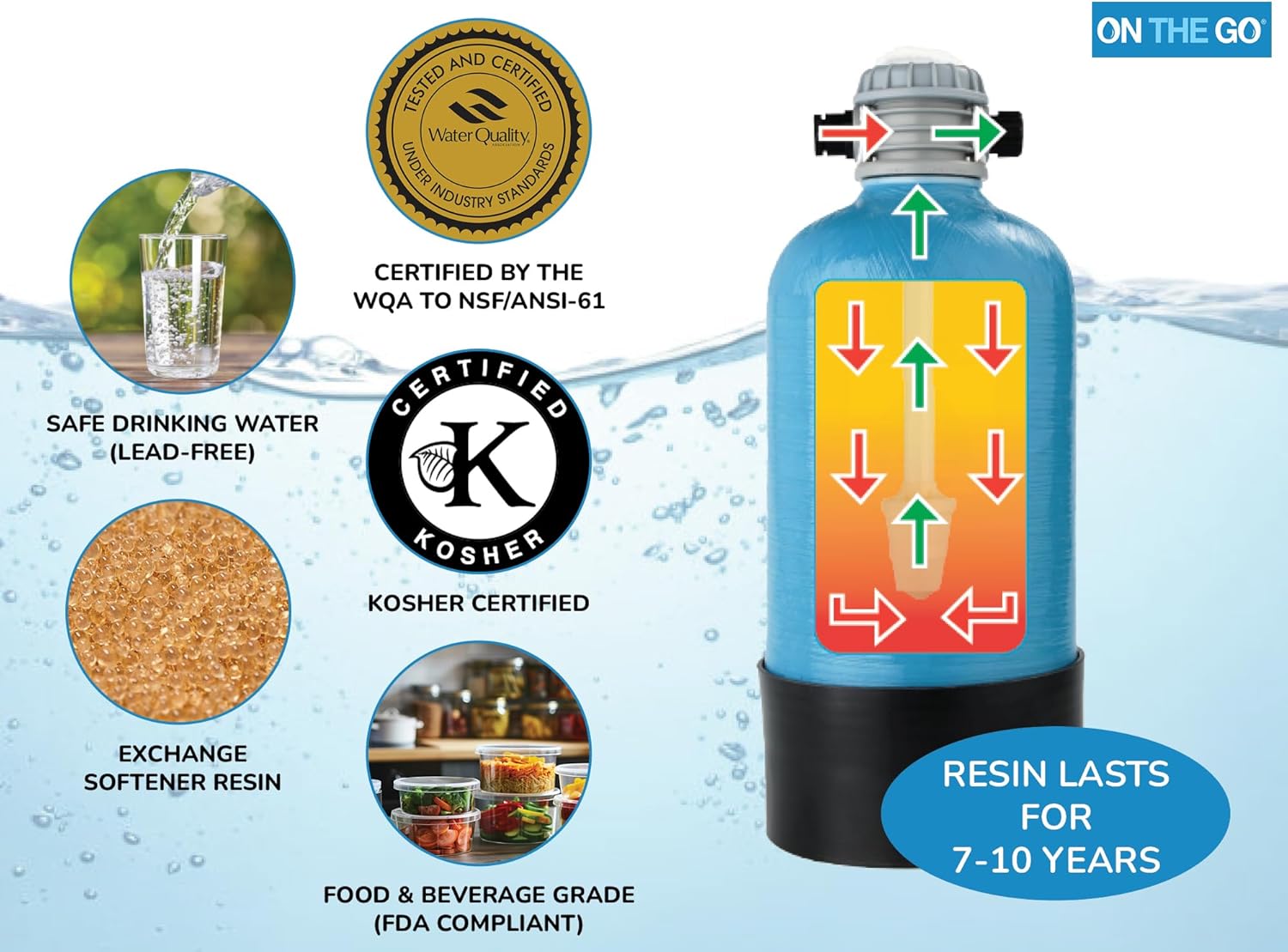 On The Go OTG4-DBLSOFT-Portable 16,000 Grain RV Water Softener
It’s fine if your water is softer than a baby kitten (under 5 grains of hardness) and has zero iron. But if you’ve got well water that could scrub a pan? Pass. You’ll be replacing it faster than you can say “why is my shower head calcified again?”
My advice: only buy 6% if you’re on a strict budget and plan to move in three years. Otherwise, treat your softener to the upgrade—it deserves it.
The Specialty Kid: High-Capacity Resin
Ever wish your water softener had a little more… oomph? Enter high-capacity resin, the espresso shot of the resin world. It packs more ion-exchange sites per cubic foot, meaning it can grab more hardness before needing a salt recharge.
This is perfect if you’ve got a big family (read: teenagers who take 45-minute showers) or water that’s as hard as a physics exam. The trade-off? It might need slightly more frequent regenerations to stay efficient. Think of it as a sports car: fast, but it drinks gas.
But for the love of all things plumbed, check your softener’s manual first. Some units can’t handle the higher capacity because they’re designed for standard resin. Don’t be that person who buys racing tires for a grocery getter.
The Fighter: Iron-Cleaning Resin
If your water tastes like you’re licking a rusty nail, you need iron-cleaning resin. This stuff is specially formulated to resist “iron fouling”—the dreaded rust buildup that turns your white laundry orange and your resin into a brick.
 Products - Amanda Water Tech Inc.
It works best when paired with a resin cleaner (like Rust Out) during each regeneration. Think of it as a spa day for your softener: a little extra effort, but it keeps things running smooth. Without it, the iron will glue the beads together, and you’ll be crying over a $300 service call.
Pro tip: if you have more than 3 ppm of iron, skip the standard resin. You’ll thank me when your socks aren’t Halloween orange.
Brands That Don’t Stink: Puart, Lanxess, and ResinTech
Let’s talk names. Puart is like the reliable friend who shows up early with snacks—it’s the most popular brand in the DIY world, and for good reason. It’s affordable, widely available, and works like a champ for most homes.
Then you have Lanxess (formerly Bayer), the German engineering of resin. It’s premium, lasts forever, and costs like it. If you want the Rolls-Royce of softening, this is your pick. Just don’t tell your wallet.
And don’t sleep on ResinTech—the underdog with serious chops. Their SIR-14 is a beast for well water with iron. It’s like the Swiss Army knife of resin: not fancy, but always gets the job done.
 Water Treatment Softening Resin Water Softener Cation Ion Exchange
How Much Should You Buy?
Your softener’s tank size dictates how much resin you need. A standard 9x48-inch tank holds about 1 cubic foot (around 40 pounds). A 10x54-inch tank? About 1.5 cubic feet. Measure twice, buy once—unless you enjoy having a pile of resin beads in your garage, looking at you like you’ve failed.
When in doubt, hit up a specialty water treatment supplier online. They can tell you exactly what fits. Don’t trust the guy at the big-box store who also sells inflatable reindeer.
The Funnest Part: Installation (Not Really)
Look, replacing resin is like changing a car tire—doable, but it’s messy, and you might spill little beads everywhere. They roll under the fridge and appear in your kitchen for years. You’ll find one in your coffee mug and shrug.
If you want to save money, watch a YouTube tutorial and clear your Saturday. Most softeners have a big cap on top—unscrew it, dump the old resin (wear a mask, it’s dusty), and pour in the new stuff. Easy peasy, if you ignore the cursing.
If that sounds like a nightmare, hire a pro. They’ll do it in 30 minutes while you sip lemonade and pretend you’re a ranch owner. Your call.
Keep It Clean: Resin Care 101
Your resin isn’t invincible. High chlorine, high iron, or high water pressure can shorten its life. Use a whole-house carbon filter before the softener if your water reeks of bleach—your resin will thank you by lasting longer.
 32,000 Grain Resin Water Softener Resin 1 Cu Ft - 32,000 Grain High
Also, never let the salt bridge in your brine tank. That’s when salt turns into a solid crust like a science experiment gone wrong. Break it up with a broom handle, or your softener will run dry and you’ll get hard water again. Tragedy.
Treat your resin like a pet goldfish: feed it good salt, change the water occasionally, and don’t let it sit in the dark for too long. It’s simple, and it works.
So, What’s the Best Resin for You?
For 90% of folks, 8% crosslinked standard resin from Puart is the sweet spot. It’s the Goldilocks of beads—not too cheap, not too fancy, just right. Pair it with a good salt and a clean brine tank, and you’re golden.
If you’ve got iron, go with an iron-specific resin or add a cleaner. If you’ve got more money than time, splurge on Lanxess and never think about water again. The point is: you deserve soft water that makes your skin feel like a dolphin’s.
Now go ahead—pick your resin, order it, and get ready to say goodbye to scale. Your dishes will sparkle, your hair will shine, and you’ll finally understand why people brag about their water softener. It’s a weird flex, but a valid one.
Here’s the uplifting part: You’re not just buying plastic beads in a bag. You’re buying peace of mind, softer towels, and the smug satisfaction of knowing your plumbing will outlast your neighbor’s. Every glass of water you drink will feel like a tiny victory. Cheers to you, and cheers to the resin that makes it all possible. You’ve got this. Your water is about to get very happy.
