Best Water Filter For Iron

So, your tap water tastes like you’re licking a rusty fence from a 1980s playground. Welcome to the club, friend. You’ve got iron in your water, and it’s not the “fortified br...

So, your tap water tastes like you’re licking a rusty fence from a 1980s playground. Welcome to the club, friend. You’ve got iron in your water, and it’s not the “fortified breakfast cereal” kind; it’s the “turns your white laundry orange and makes you smell like a damp basement” kind.
The Iron Age of Your Plumbing
First, let’s be honest: iron water isn’t poisonous. You won’t turn into a less-fun version of Wolverine. But it will ruin your tea—that red-brown sludge floating on top is basically a cry for help from your kettle. It also stains your toilet bowl like a crime scene from a documentary about bad coffee.
The real surprise? Small amounts of iron are actually good for you. Your body needs it for red blood cells! The problem is when your water looks like it ran a marathon in a mud pit. That’s when you need a filter, not a prayer.
Must Read
Meet the Culprit: Iron’s Two Faces
Iron comes in two flavors, and they’re both annoying. Ferrous iron is the sneaky ninja—it’s dissolved and clear, so you don’t see it until it hits oxygen and turns into rust. Ferric iron is the loud drunk at the party; it’s already solid, floating around, making your water look like chocolate milk that’s gone horribly wrong.
Testing is easy: fill a clear glass. If it’s clear but turns brown after sitting out for an hour, that’s ferrous. If it’s already rusty colored, that’s ferric. Either way, you’ve got a lemon, so let’s make lemonade—or at least, not-rust-water.
 Amazon.com: iSpring F3WGB32BMKS 4.5” x 20” 3-Stage Whole House Water
The Filter Hall of Fame (and Shame)
Here’s where most people panic and buy a Brita pitcher. Stop. Right. There. A Brita is like bringing a water pistol to a dragon fight. It’s for taste and chlorine, not for iron. You need the big guns. Let’s break down the contenders.
First up: Oxidation filters. These are the chemical wizards. They force air or something like chlorine to react with the iron, turning it into solid rust flakes that you can then filter out. It’s like telling the iron, “Go to your room and turn into a chunk.” These are great for high levels of ferrous iron, but they require maintenance and sometimes make your water taste like a swimming pool.
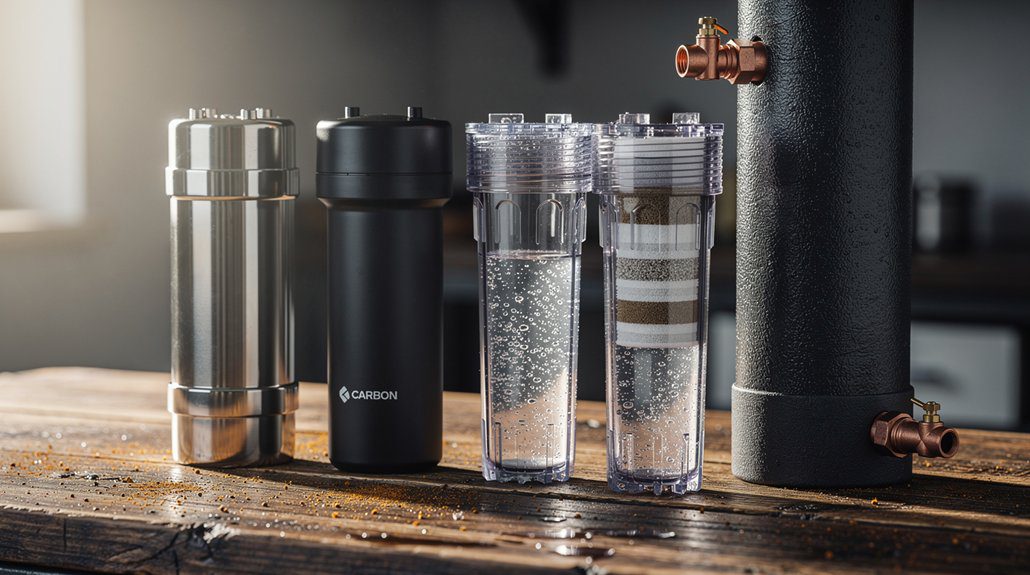 5 Best Water Filters for Well Water with Iron in 2026 - A Garden Diary
Then we have the Catalytic media filters, using stuff like MangOX or Birm. These are the cool kids. They don’t add chemicals; they just use a special rock that makes the iron oxidize on its own. No chemicals, no swimming pool taste. They are my personal favorite for most homes, but they need a backwash cycle (which is just fancy talk for “the filter washes itself while you sleep”).
The “Iron Curtain” Option: Reverse Osmosis
If you want to be absolutely sure, go full nerd and get a Reverse Osmosis (RO) system. It’s the overkill champion. It pushes water through a semi-permeable membrane so tiny that even bacteria get turned away at the door. It removes iron, lead, fluoride, and your will to complain about water quality.
The catch? It’s slow, it wastes a bit of water (like a diva who spills half her drink), and you’ll need to install it under your sink. But if you drink the resulting water, you’ll feel like you’re sipping from a mountain spring in a fancy spa—while your neighbors drink pond scum. You’ll become insufferable at dinner parties. Worth it.
 7 Best Water Filter Pitchers to Remove Iron in 2026
The Surprising Truth About Budget Filters
Can you get away with a $50 sediment filter? Only if your iron is already solid (ferric) and you just want to catch the big chunks. It’s the equivalent of putting a strainer in front of a fire hydrant—it helps, but you’re still getting wet. For dissolved iron? Forget it.
One wild fact: Some people fix iron water by accident. They install a water softener for hard water, and a side effect is that softeners can remove small amounts of dissolved iron (like 1-2 ppm). But if your iron is high, the softener gets gummed up and cries. It’s a “happy accident” that turns into a panic attack.
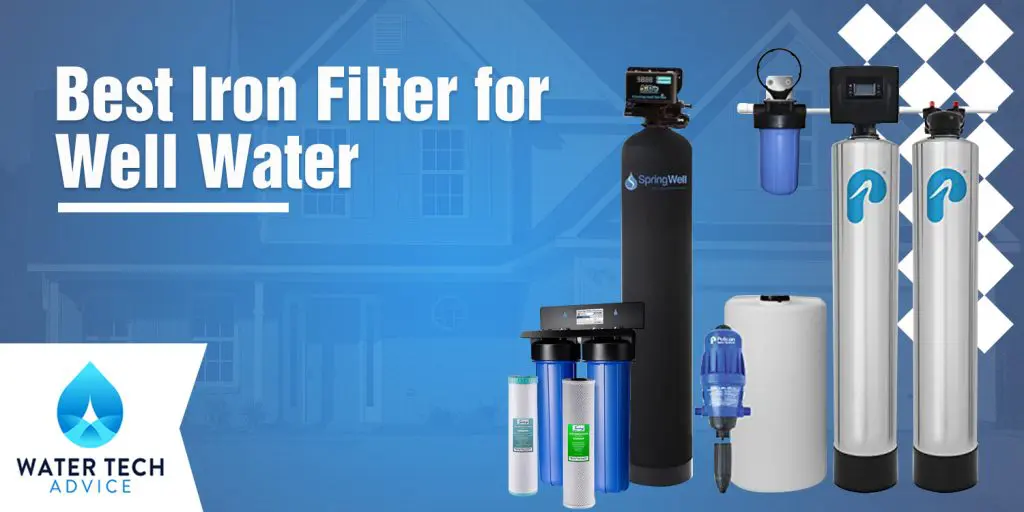 7 Best Iron Filters for Well Water Reviewed (See Our #1 Choice)
The Final Verdict (With a Punchline)
Here’s your cheat sheet. If your iron is low (under 3 ppm), a good whole-house sediment filter plus a point-of-use carbon filter might save you. If it’s medium (3-10 ppm), get a catalytic media filter like a Terminox or a Fleck system. Do not cheap out. Your white socks will thank you.
If your iron is above 10 ppm, you have a geological wonder in your basement. Congratulations. Hire a pro and get an oxidation system with a retention tank. Or move to a house with well water that doesn’t look like the property came with a free rust monster.
In the end, remember this: the best water filter for iron is the one you actually maintain. A fancy system that you ignore is just an expensive paperweight. So pick a filter, set a reminder to clean it, and finally enjoy a glass of water that doesn’t taste like a broken-down tractor. Cheers to not drinking rust!
