Best In Home Water Filtration

Let’s be honest: tap water is a gamble. Some days it tastes like a crisp mountain stream, and other days it tastes like a petri dish that just ran a marathon. You’ve probably...
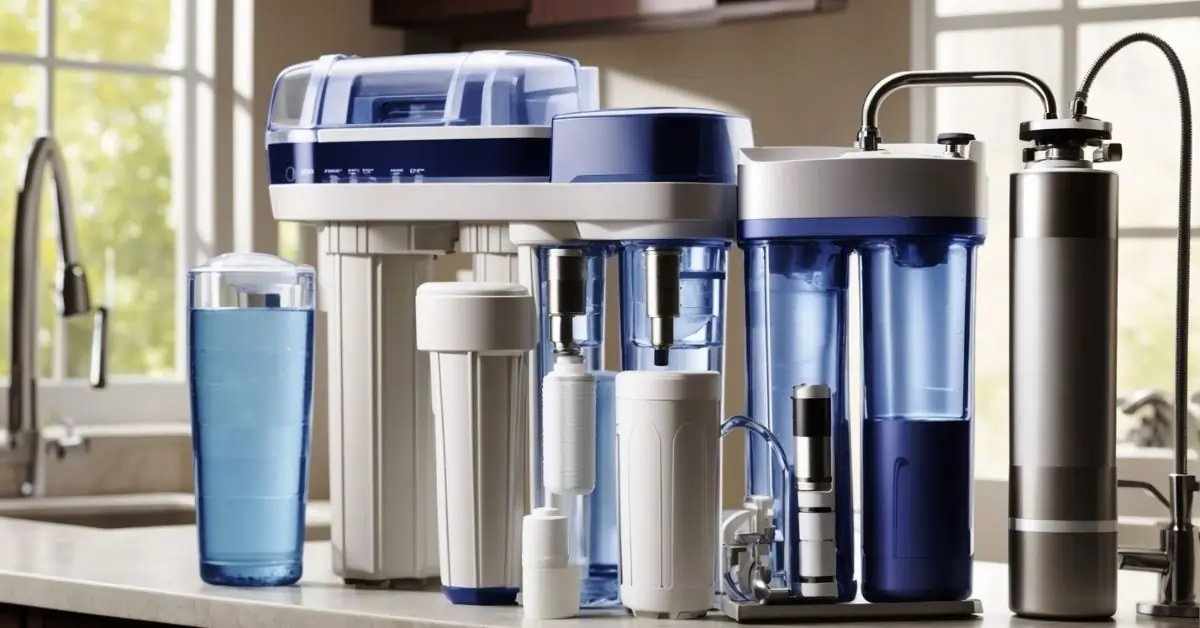
Let’s be honest: tap water is a gamble. Some days it tastes like a crisp mountain stream, and other days it tastes like a petri dish that just ran a marathon. You’ve probably stood in the kitchen, staring at a glass of the stuff, wondering if you should apologize to your kidneys in advance. Welcome to the wonderful, slightly weird world of in-home water filtration—the appliance that saves you from drinking what your pipes have been brooding over for decades.
The Awful Truth About Your Tap Water
I’m not saying your water is plotting against you, but it might be carrying a grudge. According to the EPA, tap water can legally contain trace amounts of over 90 different contaminants, including lead, chlorine, and bacteria. That’s not a conspiracy theory; it’s just the reality of aging infrastructure and a municipal budget. And let’s not even talk about the stuff that’s not regulated, like that faint taste of rubber from your garden hose’s evil twin in the basement.
But here’s the good news: you don’t have to move to a cabin in the woods and collect rainwater in a bucket. A good in-home filter is like a bouncer for your glass—it kicks out the riff-raff and only lets the good stuff through. And no, that doesn’t mean you need to mortgage your house for a system that looks like it belongs on a spaceship. Let’s break it down without the techno-jargon.
Must Read
Filter Type #1: The Pitcher (The Casual Sipper)
The classic Brita or Pur pitcher: it’s the entry-level hero of the filtration world. You fill it, you wait ten seconds, and you feel like a responsible adult. It’s great for removing chlorine taste and a few heavy metals, but here’s the shocking part: it’s basically a glorified carbon sponge. It won’t remove fluoride, viruses, or that weird metallic tang from old pipes. So, if your water tastes like a swimming pool, a pitcher is fine. If it tastes like a swimming pool that also hosted a chemistry experiment, you might need more firepower.
Pro tip: replace the filter every two months, or you’ll be drinking water that’s been sitting in a soggy charcoal graveyard. And yes, I’ve done that. It tastes like regret.
:max_bytes(150000):strip_icc()/spr-best-water-filters-tout-2ff89aaad5d045f292d3b062ff2930b5.jpg) The 8 Best Whole-House Water Filters to Improve Your Drinking Water
The 8 Best Whole-House Water Filters to Improve Your Drinking Water
Filter Type #2: Under-Sink Systems (The Overachiever with a Secret)
These are the sexy cousins of the pitcher world. They hide under your kitchen sink like a ninja, and they use multiple stages—carbon, sediment, sometimes even a reverse osmosis membrane. Reverse osmosis sounds like a medical procedure, but it’s actually just water being bullied through a microscopic filter so fine that it removes everything but H2O. We’re talking 99% of contaminants, including arsenic, nitrates, and even some prescription drugs. Yes, you read that right: there’s a non-zero chance your tap water has a tiny dose of someone’s antidepressants. Cheers to that.
But here’s the kicker: reverse osmosis also strips out good minerals like calcium and magnesium. You’ll essentially be drinking water so pure it’s almost apologetic for existing. Some people add a remineralization cartridge just so their water isn’t spiritually empty. It’s like giving your water a hug after it’s been through boot camp.
 10 Best Water Purifier System for Home, Tested by Experts
Filter Type #3: Whole-House Filters (The Boss of the Water World)
If you’re a total madman or a person with a serious allergy to mineral deposits, go with a whole-house filter. This beast connects to your main water line, so every tap, shower, and toilet gets filtered. You’ll have silky-smooth hair, no more orange stains on your white sinks, and your toilet will never again look like it’s blushing from iron residue. But here’s the cost: installation requires a plumber, a week of your life, and possibly a small sacrifice to the plumbing gods. Expect to spend $1,000 to $3,000, which is either “crazy” or “a bargain” compared to buying bottled water for the next twenty years.
Fun fact: a whole-house filter can increase the lifespan of your water heater by 50%. That’s because it removes the sediment that slowly turns your water heater into a rock-hard calcium tomb. “Sediment” is just a polite word for “crusty despair.”
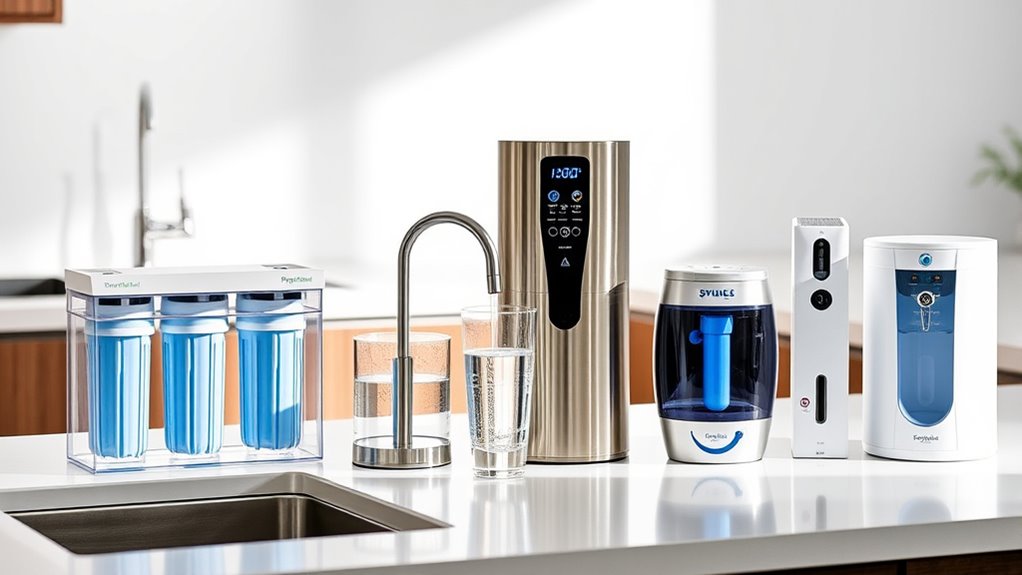 15 Best Water Filtration Systems for Your Home in 2025: Clean Water
The Shocking Fact That Will Make You Rethink Everything
Here’s the wild truth: most bottled water is just tap water that’s been filtered through a machine, then put in a plastic bottle. You’re paying up to 2,000 times more for the same H2O you could filter at home. And that plastic bottle? It takes 450 years to decompose, which means it’ll outlive your grandkids’ grandkids. A home filter isn’t just a purchase; it’s a tiny rebellion against the bottled water empire. You’ll save money, save the planet, and stop storing liquid in a landfill waiting to happen.
So, Which One Should You Buy?
Start by testing your water. You can buy a $10 test kit online, or just taste it and see if you make a face like you just bit into a lemon. If your water is “meh,” get a pitcher. If it’s “offensively metallic,” get an under-sink system. If you’re tired of scrubbing white film off your shower door, go whole-house. And remember: the best filter is the one you actually use. A $500 system in a box under your sink is useless if you never install it. I speak from the shame of a dusty box I bought in 2019.
Final tip: don’t overthink it. Your water is not a fine wine. It just needs to be wet and not taste like a municipal janitor’s closet. Get a filter, drink up, and enjoy the smug satisfaction that your kidneys are about to become five-star reviewers of your plumbing.
/SPR-HOME-8-best-home-water-filters-4159152-b0324b8bd84749adadc5834d727532fe.jpg)
