Best Reverse Osmosis Under Sink

Okay, let’s talk about water. Not just any water, but the good stuff. You know, the kind that doesn’t taste like a swimming pool or your neighbor’s basement. I’m talking abou...

Okay, let’s talk about water. Not just any water, but the good stuff. You know, the kind that doesn’t taste like a swimming pool or your neighbor’s basement.
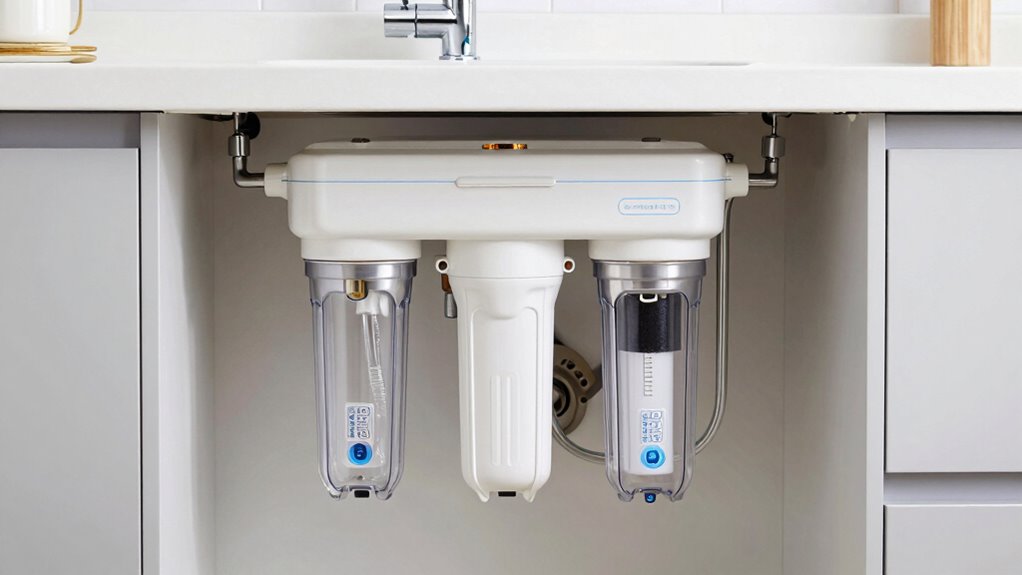
I’m talking about a Reverse Osmosis under sink system. Sounds fancy, right? It’s basically a tiny water treatment plant hiding under your kitchen sink.
And honestly? It’s a game-changer. Let’s dive in like a thirsty camel at an oasis.
Must Read
Why Bother? Isn’t Tap Water Fine?
Look, I love tap water. It’s cheap and convenient. But have you really tasted yours lately? Sometimes it’s got a weird mineral tang, or a hint of chlorine that makes your coffee taste like a science experiment.
Reverse Osmosis (RO for the cool kids) fixes that. It forces water through a super-fine membrane. Think of it as a bouncer at a club. Only the H2O molecules get in. Everything else—lead, chlorine, fluoride, microplastics—gets kicked to the curb.
You end up with water so pure, it almost tastes too clean. Your tea will thank you. Your ice cubes will look like diamonds.
What to Look For (Without Losing Your Mind)
So you want one. Great. But there are a million options. Don’t panic. I’ve got your back.
 Under Sink Ro Connection at Mark Cox blog
First, check the filtration stages. Some systems have three filters; some have five or six. More isn’t always better, but three is the bare minimum. Four or five is the sweet spot. You want that water going through sediment, carbon, and the RO membrane—at least.
Second, look at the tank size. Bigger tanks hold more purified water. If you drink a ton of water or have a big family, get a 3-gallon or larger tank. For just you and your cat? A smaller one is fine. Your cat won’t judge you for the water pressure, I promise.
Third, and this is sneaky: the flow rate. Some systems drip like a leaky faucet. Look for one that says “400 GPD” or “600 GPD” (gallons per day). That means it fills your glass in seconds, not minutes. Life’s too short for slow water.
Finally, installation. Do you want to play plumber for an afternoon? Some systems are dead simple. Others require a degree in engineering. If you’re like me and can barely change a lightbulb, get a model with a quick-connect kit. YouTube will be your best friend.
 14 Best Reverse Osmosis Water Filters Under Sink in 2026 - LifeStyles
The Big Players: Who’s Who?
You’ll hear names like APEC, iSpring, and Waterdrop. They’re the big dogs. APEC is like the reliable Honda of RO systems. It’s solid, lasts forever, and doesn’t try to be flashy.
iSpring is the upgrade. They make systems with a digital TDS meter. That’s a little screen that tells you exactly how pure your water is. Very satisfying to watch the numbers drop to zero. It’s like a video game for clean water nerds.
Waterdrop is the sleek, modern one. It often comes without a tank, which saves under-sink space. It filters fast and looks spiffy. Their systems are great if you hate bulky things cluttering your cabinets.
The Installation Adventure
Here’s the truth: installing an under sink RO system is 80% easy and 20% head-scratching. You’ll attach a faucet to your sink (yes, you get a separate little spout—it’s cute). Then you connect tubes under the sink. Lots of tubes.
 15 Best Reverse Osmosis Systems Under Sink for 2026 - Perfect Fit Living
You’ll probably get a twist of green tube that looks like aquarium hose. Don’t panic. Just follow the color codes. Blue for filtered water. Red for wastewater. White for, uh, confusion? It’ll make sense eventually.
Pro tip: clear out your under-sink cabinet first. That bottle of Windex from 2018? Toss it. You want room for your new little water factory.
If you hit a snag, just blame the instructions. They’re always written by someone who assumes you have three hands and a PhD in plumbing. Ignore them. Use the YouTube video from a guy named “Plumber Dan.” He gets it.
Is It Worth It? (Spoiler: Yes)
I’m not going to lie: it’s not the cheapest upgrade. A good system runs $150 to $400. But think of it this way: you’ll never buy bottled water again. Ever. That plastic addiction? Gone.
:max_bytes(150000):strip_icc()/best-reverse-osmosis-systems-4586893-jay-wilde-b88c627b82da4a93827ca422b1ad9b8e.jpg) Our Top Reverse Osmosis System Picks You'll Want to Grab
Our Top Reverse Osmosis System Picks You'll Want to Grab
Your skin might look better. Your plants will drink like royalty. And your morning coffee? It’ll taste so smooth, you’ll wonder if you accidentally became a barista. “Who is this? Me, with skills?” you’ll whisper.
Also, you get the bragging rights. Friends come over, see the little faucet, and ask, “Is that a fancy soap dispenser?” You get to smirk and say, “No, that’s my reverse osmosis system.” Boom. Instant kitchen cred.
So go ahead. Ditch the water jugs. Embrace the under-sink revolution. Your sink is waiting for its superhero upgrade.
Now, go drink some pure, crispy water. You’ve earned it.
