What Are The Symptoms Of Water Poisoning

You’ve heard it a thousand times: drink more water. It’s the golden rule of wellness, right? But what if we told you that drowning your body in H2O can actually backfire in a...

You’ve heard it a thousand times: drink more water. It’s the golden rule of wellness, right? But what if we told you that drowning your body in H2O can actually backfire in a terrifyingly literal way? Welcome to the weird world of water poisoning—a condition so ironic it sounds like a bad joke.
Officially called hyponatremia, it happens when you drink so much water that your blood’s sodium levels drop to dangerously low. Think of sodium as your body’s bouncer; it keeps fluids balanced. When you flood the system, that bouncer gets overwhelmed, and your cells start swelling like overfilled water balloons.
Your Brain, The First Victim
The scariest symptoms hit your brain, and they hit fast. Headache is the opening act—and not the kind you shake off with ibuprofen. As your brain cells swell, they press against your skull, creating a dull, throbbing pain that screams “something is wrong.”
Must Read
Then comes nausea and vomiting, because your body is desperately trying to eject the excess fluid. “But I’m just hydrating!” you protest, reaching for another bottle. Meanwhile, your stomach is staging a full rebellion.
If you ignore these early warnings, things get surreal. Confusion and disorientation creep in like a foggy morning; you might fumble words or feel suddenly clumsy. It’s the same neurological hiccup that happens in extreme exhaustion—except here, your brain is literally swelling.
The Deceptive “Drunken” Feeling
Here’s where pop culture sneaks in: water poisoning mimics being blackout drunk, minus the fun. Slurred speech, unsteady gait, muscle cramps—you look like you’ve gone three rounds with a margarita. But you’re completely sober, just dangerously overhydrated.
Remember the “Hold Your Wee for a Wii” contest disaster? Yes, that’s a real thing from 2007—a California radio station held a water-drinking competition, and one contestant died from acute water toxicity. Morbid, yes, but it perfectly illustrates how fast this can escalate. Your body isn’t a storage tank; it’s a delicate chemistry set.
Another cultural touchpoint: runners who chug water after a marathon and collapse. “I just need to rehydrate!” they say. But if you sweat out salt and replace it with pure water, you’re essentially flushing your system. That’s why sports drinks exist—they contain electrolytes, the unsung heroes of fluid balance.
The Sneaky Physical Signs
Your hands and feet might start swelling, a condition called peripheral edema. Take off your rings or watch; if they feel tight, your body is retaining water like a sponge. It’s not cute—it’s a red flag. Your skin may also feel puffy or “spongy” when pressed.
Another odd signal? Extreme fatigue that hits out of nowhere. You might yawn or feel heavy-eyed despite eight hours of sleep. That’s your cells crying out for sodium to restore normal function. If you’re yawning through a work meeting after downing a gallon of cucumber water, consider the cause.
Muscle cramps or spasms are also common—especially in your legs, like a charley horse from hell. These cramps are your nerves misfiring without enough electrolytes. It’s your body’s way of shouting, “Stop drinking and find some salt!”
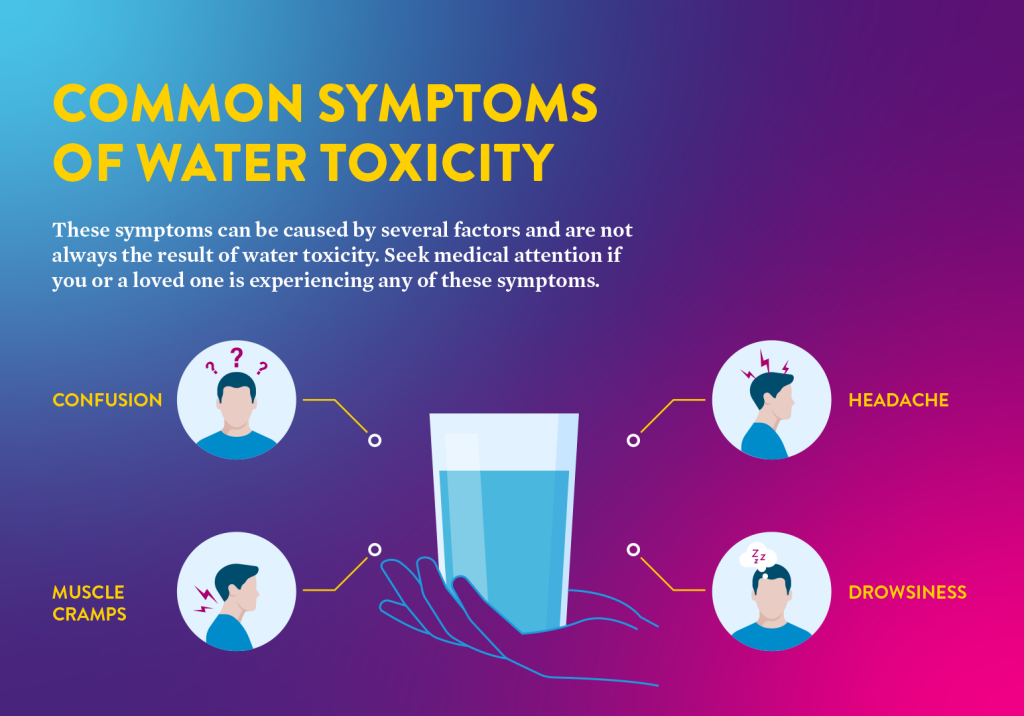 Water Intoxication Symptoms
When It Gets Real: Seizures and Coma
If severe, water poisoning can trigger seizures. The swelling brain can disrupt electrical signals, causing your body to convulse uncontrollably. At this stage, it’s a medical emergency—call for help immediately. Coma and even death are possible if sodium levels drop below 120 mmol/L (normal is 135-145).
But let’s pump the brakes: you’d need to drink gallons in a short time to hit this point. For reference, an adult kidney can process about 0.8 to 1 liter of water per hour. Downing three to four liters in an hour? That’s flirting with danger.
Fun fact: the human body is about 60% water, but your brain is 73%. So when you overdrink, you’re literally drowning your most vital organ. Irony level: expert.
Practical Tips to Stay Safe
First, don’t chase a “full gallon a day” trend without listening to your body. Thirst is your best guide—if you’re not thirsty, stop sipping. And if you’re sweating heavily from a workout, reach for something with electrolytes, not just plain water.
Second, spread your water intake throughout the day. Downing a giant bottle before bed isn’t virtuous; it’s a recipe for midnight bathroom trips and potential swelling. Sip slowly, like you’re enjoying a fine wine—not chugging like a frat pledge.
Third, watch for clear or near-colorless urine throughout the day. Pale yellow is ideal; totally clear can mean you’re overdoing it. It’s a simple, free health check your body provides daily. Use it.
The Cultural Lesson: Moderation Wins
We live in a world of extremes—keto, juice cleanses, “hydrate or die.” But wellness isn’t a sprint; it’s a long, lazy bike ride. Water poisoning is a rare but real reminder that more isn’t always better. Even the most essential element can turn toxic when you lose perspective.
So next time you see a influencer bragging about their 2-gallon challenge, smile and remember: your body isn’t a competition trophy. It’s a finely tuned ecosystem that craves balance. Pour a glass of water, maybe add a lime, and toast to enough—not more.
Because in a world screaming “drink up,” the bravest thing you can do is listen to your own thirst. And maybe keep a bag of pretzels nearby.
