Are There Microplastics In Bottled Water

So, you’re parched. You grab a shiny bottle of water. But what if I told you there’s a secret ingredient in there? It’s not a refreshing mineral. It’s microplastics. Tiny, inv...
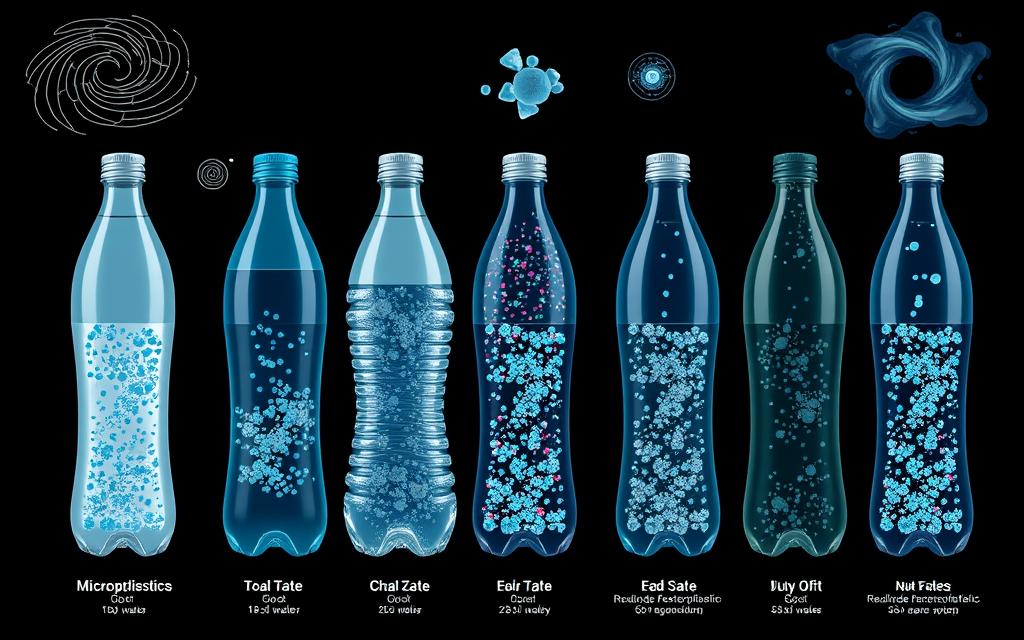
So, you’re parched. You grab a shiny bottle of water. But what if I told you there’s a secret ingredient in there? It’s not a refreshing mineral. It’s microplastics. Tiny, invisible hitchhikers that might be crashing your hydration party.
What Even Are Microplastics?
Think of them as the glitter of the plastic world. But way less fun. They’re tiny plastic fragments, smaller than a sesame seed. They come from bigger plastic stuff breaking down. Your water bottle sheds them like a snake sheds its skin.
The Big Study That Spilled the Tea
In 2018, a big study dropped a bomb. Scientists tested bottled water from major brands. They found microplastics in 93% of the samples. That’s almost every single bottle! One liter had an average of 325 particles. Some had thousands. Yikes.
Must Read
It gets weirder. They found a specific plastic called polypropylene. That’s the same stuff your bottle cap is made of. So, the cap is probably shedding flakes into your drink. Cheers to that!
The truth is, plastic is everywhere. It’s in the air we breathe. It’s in the rain. It’s even in Arctic snow. Your bottled water is just another victim of our plastic-wrapped world.
How Does Plastic Get Into Water?
The journey is a comedy of errors. First, the manufacturing process creates dust particles. Then, the bottling machine shakes everything up. Finally, you twist off the cap and pop—more particles fly in. It’s like a microscopic snow globe in your hand.
Heat makes it worse. Leave a bottle in a hot car? The plastic gets soft and releases more particles. So that warm bottle in your gym bag might be a plastic soup. Fun thought.
Don’t worry about the cap. Don’t squeeze the bottle. Don’t even look at it too hard. Okay, that’s a joke. But seriously, every action releases a few more pieces.
The Numbers Game
One study found up to 10,000 particles per liter. But that’s the tiny ones. They use a fancy laser to find them. Most are smaller than the width of a human hair. Your eyes can’t see them, but your stomach will meet them.
Let’s break it down. You drink about two liters of water a day. In a year, you might swallow over 90,000 microplastic pieces from water alone. That’s a whole plastic dinner. No utensils needed.
Still not convinced? A 2019 study found microplastics in human stool samples from eight people worldwide. Every single sample was positive. We are literally eating and drinking our own waste. It’s a full-circle plastic cycle.
Are They Dangerous?
The jury is still out. Scientists are scratching their heads. They know plastic can carry nasty chemicals. Things like BPA and phthalates. But whether these tiny particles cause real harm? We don’t fully know yet.
Small studies on mice show some nasty effects. Liver inflammation. Hormone disruption. But mice are not people. Though, honestly, it doesn’t sound great for mice either.
The real funny part? We’re worried about microplastics. But we’re surrounded by macro-obvious plastic. The bottle itself is a giant piece of plastic. Maybe the solution is simpler than we think.
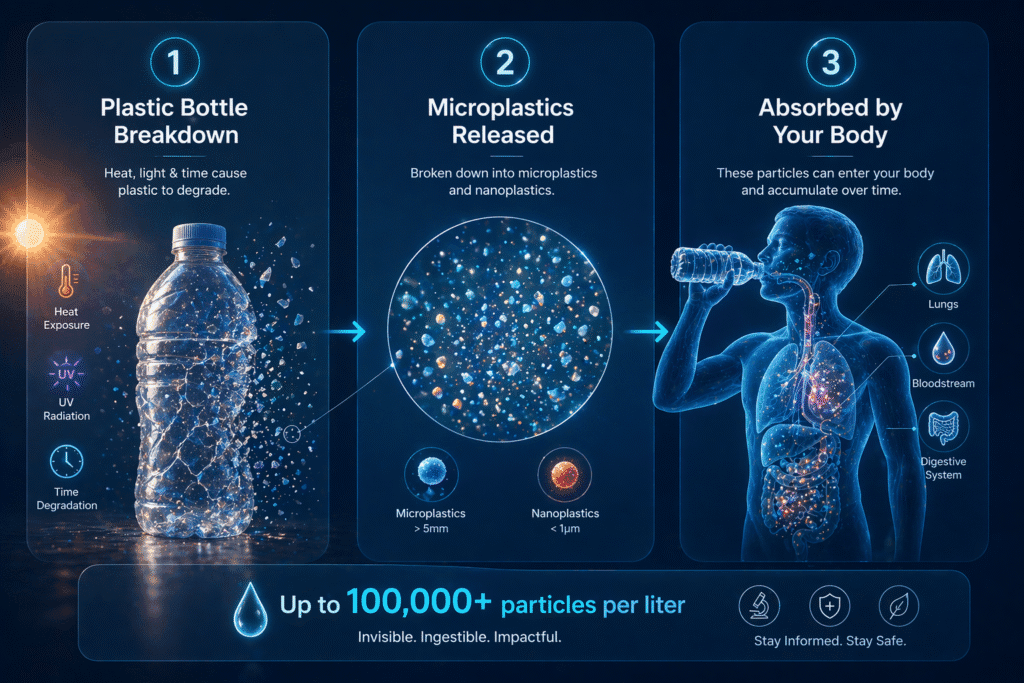 Microplastic in Water: Is Bottled Water Really Safe in 2026?
What About Tap Water?
Good news! Tap water has fewer microplastics. One study found tap water has about half the plastic particles. Plus, it’s tested more often than bottled water. And it’s basically free. Your wallet will thank you.
But wait—tap water can still have microplastics. They come from pipes, dust, and runoff. No water is perfect. Unless you’re drinking from a magical glacier. And even then, someone found plastic in Swiss mountain snow.
The ultimate hack? Filter your own tap water. Use a carbon filter or reverse osmosis system. It’s not a perfect shield, but it helps. And you’ll save money on single-use bottles. That’s a win for your wallet and the planet.
Funny, Quirky Facts to Impress Your Friends
Here’s a good one: a single plastic bottle can shed over 2,400 particles in a week. That’s like a tiny plastic factory in your fridge. Leave it there long enough, and you’re basically drinking from a recycling bin.
Also, microplastics can carry bacteria. They’re like tiny buses for germs. So you might be drinking a probiotic of plastic and microbes. Not the kombucha you signed up for.
One scientist called microplastics “the new asbestos.” Scary, right? But other scientists say it’s harmless. The debate is a mess. Kind of like the plastic itself.
What Can You Actually Do?
Don’t panic. Panic doesn’t come in a bottle. But you can make small changes. Stop buying single-use plastic bottles. Get a reusable stainless steel or glass bottle. They don’t shed plastic. And they look cooler.
If you must buy bottled water, choose glass bottles. They’re heavier, but they don’t leach plastic. Or look for brands that use a “microplastic reduction” technology. They exist, but they’re rare.
And remember: the plastic problem is bigger than your water bottle. It’s our whole culture. But you can start by ditching the clear plastic. One sips at a time.
The Final Sip
So, are there microplastics in bottled water? Yep, probably. Should you stop drinking water? No way. Dehydration is worse. But maybe rethink where your water comes from. Curiosity is the first step to change.
Next time you twist that cap, think of the tiny plastic planets floating inside. It’s a funny, weird, and slightly gross thought. But that’s exactly why this topic is so fun to talk about. It makes you look at something ordinary in a whole new way.
Stay hydrated. Stay curious. And maybe buy a reusable bottle. Your future self—and your stomach—will thank you. Now go drink some water. But maybe check the label first.
